Wochenendtrip nach Berlin
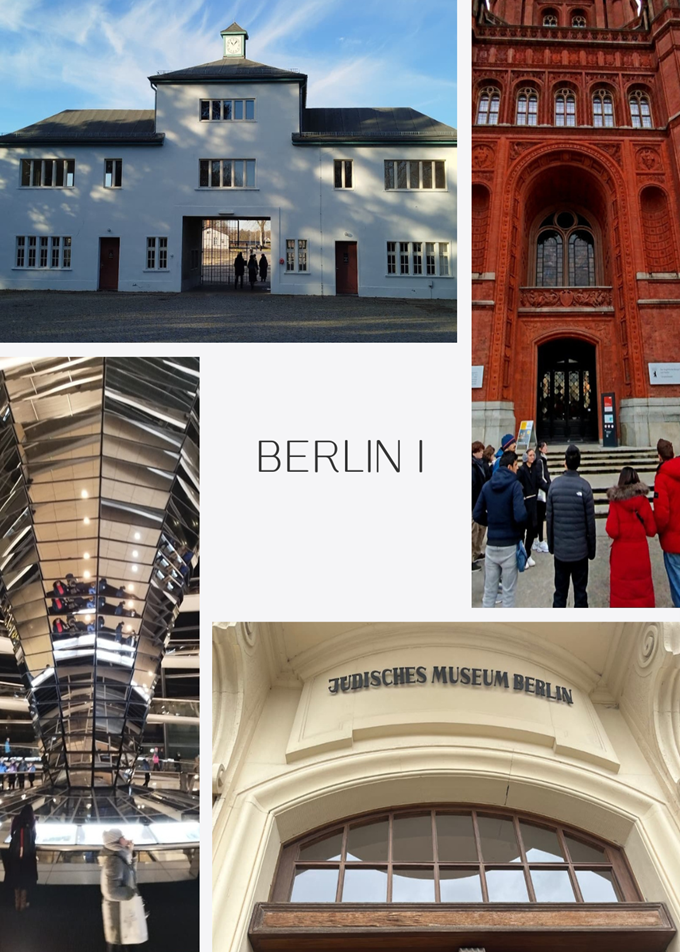
In December 2024, the International Students Team (IST) from the University of Wuppertal set off for the German capital together with a group of international students. The aim was to get to know Berlin with its unique mix of history, politics, culture, and student life.
Upon our arrival, it became clear that Berlin is a city full of contrasts—shaped by historical memorial sites, political present, and modern urban culture.
Insights into history and remembrance culture
A central part of our trip was examining Germany's past. At the Sachsenhausen concentration camp, we gained an impressive and at the same time depressing insight into the crimes of National Socialism. The tour of the former camp grounds gave us an intense understanding of the historical responsibility that continues to have an impact today.
To deepen our understanding, we visited the “Topography of Terror” documentation center, which was built on the site of the former Gestapo and SS headquarters. Here, the history of Nazi persecution and power structures is impressively documented.
The Jewish Museum also left a lasting impression on many participants. The extraordinary architecture of Daniel Libeskind's building, combined with the exhibition on Jewish culture, history, and the present in Germany, opened up new perspectives and sparked many conversations.
Finally, the Holocaust Memorial in the heart of Berlin was another important moment of the excursion. As they walked through the monumental fields of steles, the group took time for quiet reflection—a shared moment of remembrance.
Experiencing Berlin up close
In addition to the intensive study of history, there was also time to get to know Berlin as a modern metropolis. On a city tour, we discovered famous landmarks such as the Brandenburg Gate, Alexanderplatz, and the historic Checkpoint Charlie.
A highlight was the visit to the German Bundestag, where we climbed the famous glass dome and enjoyed a fascinating view of the capital. The connection between the political center and architectural symbolism was particularly tangible here.
The East Side Gallery with its artistically designed remains of the Berlin Wall and the museum in the Berlin Story Bunker, which shows the rise and fall of the Nazis, rounded off the program.
Community & culture
Of course, the Berlin way of life was also a must: a visit to the Christmas market put us in a festive mood and gave us the opportunity to try mulled wine, roasted almonds, and other specialties. For many international students, this was their first encounter with Germany's unique Advent culture.
In true student style, we also treated ourselves to a real Berlin kebab – a culinary experience that was just as unforgettable for many as the view over the rooftops of the capital.
Conclusion
The first part of our Berlin trip combined historical reflection, political education, cultural impressions, and shared experiences in a special way. The mix of serious moments of reflection, lively city impressions, and convivial evenings made the trip an impressive experience that strengthened the international exchange within our group.