Systematic climate protection
Universities in North Rhine-Westphalia record their CO2 emissions jointly across the state for the first time
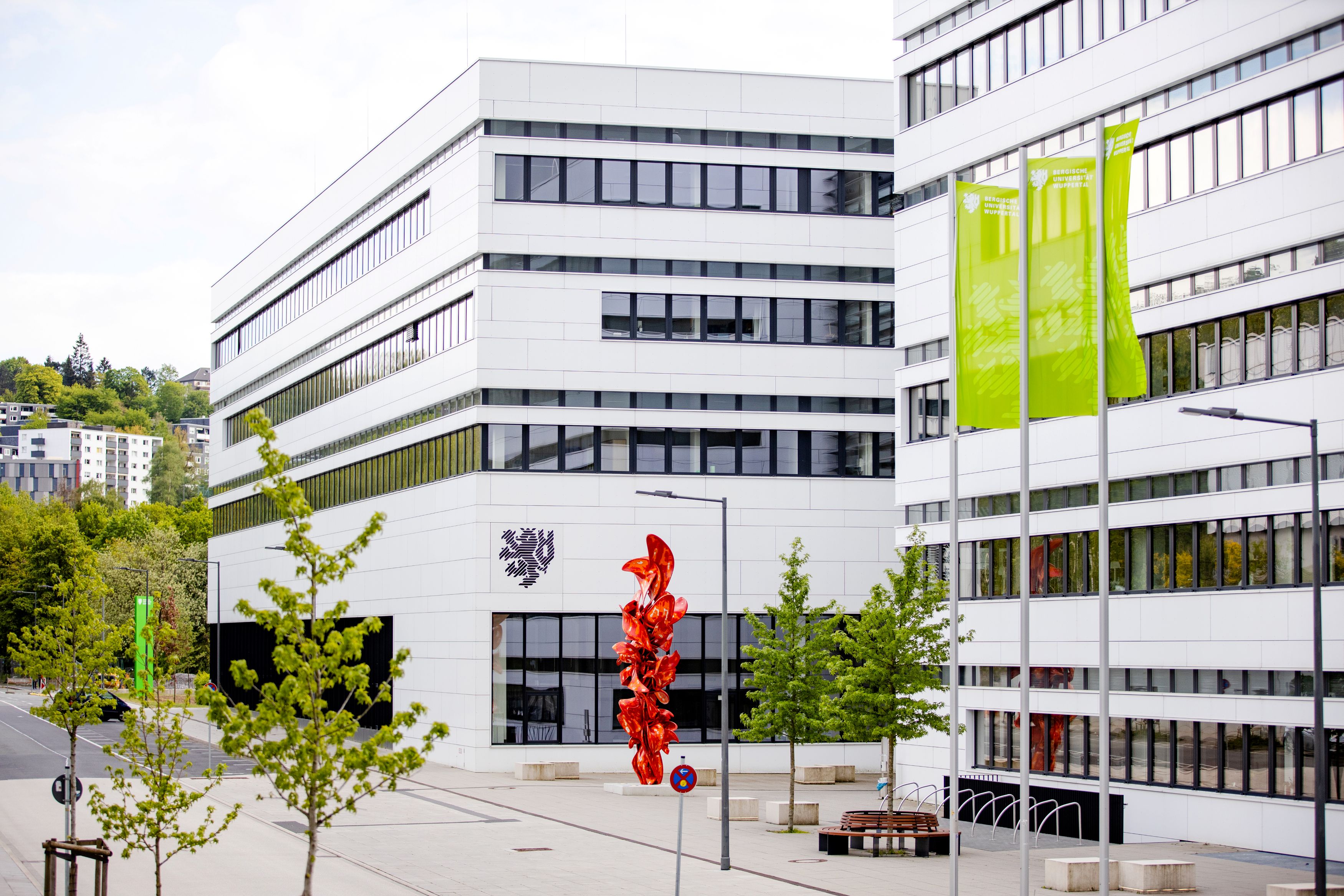
North Rhine-Westphalia is one of the first federal states in which all universities and universities of applied sciences have jointly compiled and published annual greenhouse gas balances in accordance with uniform standards. // Photo Sebastian Jarych
The results show that climate protection efforts are working: Between 2019 and 2021, emissions from electricity consumption fell by 28 per cent thanks to the use of green electricity. In total, the 30 public universities in North Rhine-Westphalia emitted around 441,000 tonnes ofCO2 equivalents in 2021 - about as much as a city with a population of 40,000. The joint greenhouse gas balance according to uniform standards is the result of an initiative by the state government. Annual monitoring is planned for the future. The balances for 2022 and 2023 are already in progress.
Minister of Economic Affairs and Climate Protection Mona Neubaur: "With the jointcarbon footprint, our universities are making climate protection systematically measurable for the first time - transparently, based on data and through joint action. This will strengthen targeted measures. Efficient universities are a targeted location factor and a key driver for innovation, competitiveness and a future-proof science location in North Rhine-Westphalia."
Science Minister Ina Brandes: "Research is the best climate protection. Our universities are training the researchers of tomorrow who will develop ways in which we can protect the climate even better. At the same time, our universities are already making great efforts to reduce greenhouse gas emissions, as the data in the assessment report impressively demonstrates. This transparency is the prerequisite for the individual universities to now develop individual measures for greater energy efficiency. This helps the climate and saves money."
Simone Probst, spokesperson for the Conference of University Vice-presidents for Administration and Finance and Markus Hinsenkamp, spokesperson for the Conference of Universities of Applied Sciences: "This report shows that universities and universities of applied sciences are aware of their social responsibility and are making their contribution to reducingCO2 emissions. The first uniform and standardised GHG balance sheet is also an expression of the high level of commitment at the universities and the good cooperation with the ministries involved. We look forward to continuing to work together on the path to climate neutrality and to meeting the challenge of fulfilling the high requirements for a climate-neutral campus."
Further key results of the greenhouse gas balance:
- The majority of emissions are attributable to the energy consumption of the buildings. Heat and electricity supply each account for half of this.
- From 2019 to 2021, the number of electric vehicles increased by 32 per cent. This means that around 14 per cent of vehicles in the fleets were already battery electric in 2021.
- Compared to the base year 2019, greenhouse gas emissions remained largely constant in 2021. Meaningful trends can only be expected with further balance years.
The greenhouse gas balance sheet provides numerous universities with a structured overview of their emissions for the first time, enabling them to draw up action plans and derive measures. This puts them in a position to fulfil their legally standardised role model function. The state government is supporting the universities in this endeavour.
North Rhine-Westphalia is one of the first federal states in which all universities and universities of applied sciences have jointly compiled and published annual greenhouse gas balances in accordance with uniform standards.
The greenhouse gas balance sheet is available here available here.
Effective measures for climate protection in building operations at the University of Wuppertal
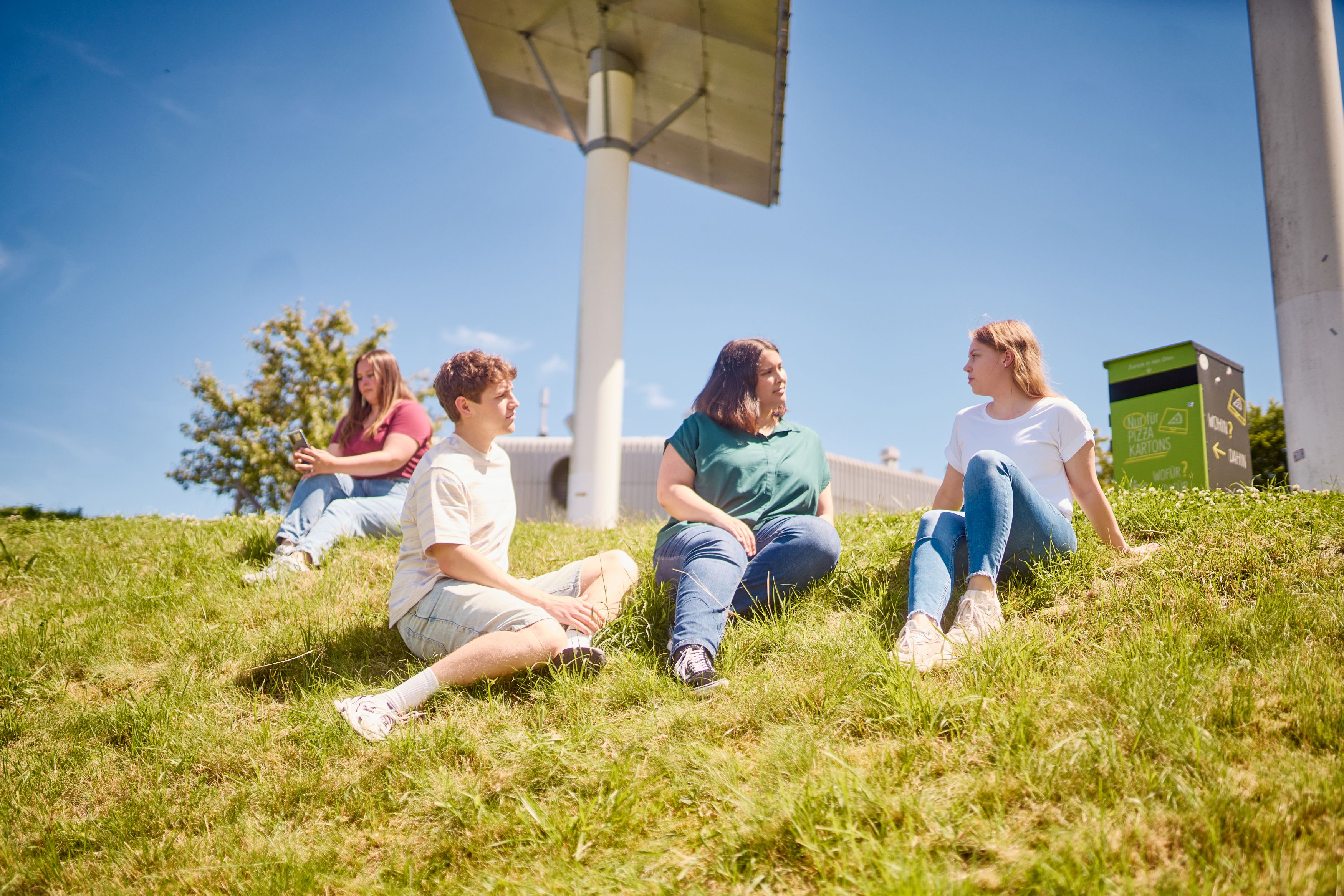
Renewable energies are a central pillar of the energy transition. With a special financing concept, the University of Wuppertal is driving forward the expansion of photovoltaic systems on campus, among other things // Photo Peter Gwiazda
Over the past two years, the University of Wuppertal has implemented key measures to save energy and reduce emissions .
This includes the challenging conversion of the lighting to LED technology: no LED replacement solutions were available for the existing luminaires from the 1970s. Therefore, together with an external partner, customised LED luminaires were developed for the University of Wuppertal, which could be installed without structural alterations and without disposing of the existing housings. They can save up to 400,000 kilowatt hours of electricity per year. By way of comparison, this corresponds to the average annual consumption of 125 four-person households.
The optimisation of the heating systems also has positive effects: Around 5,000 radiator valves were replaced in the university's existing buildings. In addition, around 3,900 thermostats were installed and adjusted. Hydraulic balancing of the buildings was also carried out. These measures allow heat to be distributed in the rooms as required and significantly reduce energy consumption.
In addition, the expansion of photovoltaic systems on the campus is being driven forward with a newly introduced financing concept known as intracting. The costs saved through solar power are used directly for the further expansion of photovoltaics and other climate protection projects.
These projects are being implemented under the leadership of the Building, Safety and Environmental Management department.
University vice-president for administration and finance Dr Ursula Löffler emphasises: "With these measures, we are using our scope to reduce thecarbon footprint of our buildings step by step - even if the effects will only become apparent in the coming greenhouse gas balances. At the same time, we not only want to save energy, but also make our contribution to the energy transition and reduce our external energy requirements by expanding our photovoltaic systems."
The most important information on the greenhouse gas balance and what it means for the University of Wuppertal can be found here: www.uni-wuppertal.de/de/universitaet/nachhaltigkeit/betrieb-infrastruktur/treibhausgasbilanz