New materials
Hard, harder, periwinkle tooth: Nature as a model for product development
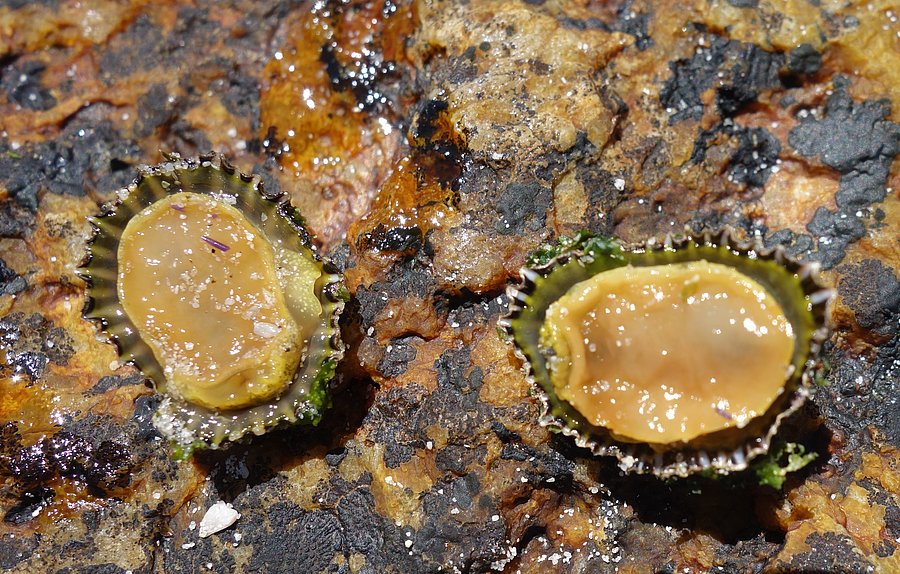
Cup snails have particularly hard teeth. // Photo: Swantje Bargmann
What do cows, kangaroos, and cup snails have in common? Their teeth are exceptionally hard, which makes them very interesting to researchers. They serve as particularly good models for developing suitable artificial materials through simulations—materials that, after various further research and development steps, could find applications in our everyday lives, for example as wear-resistant materials, protective coatings, or in medical technology.
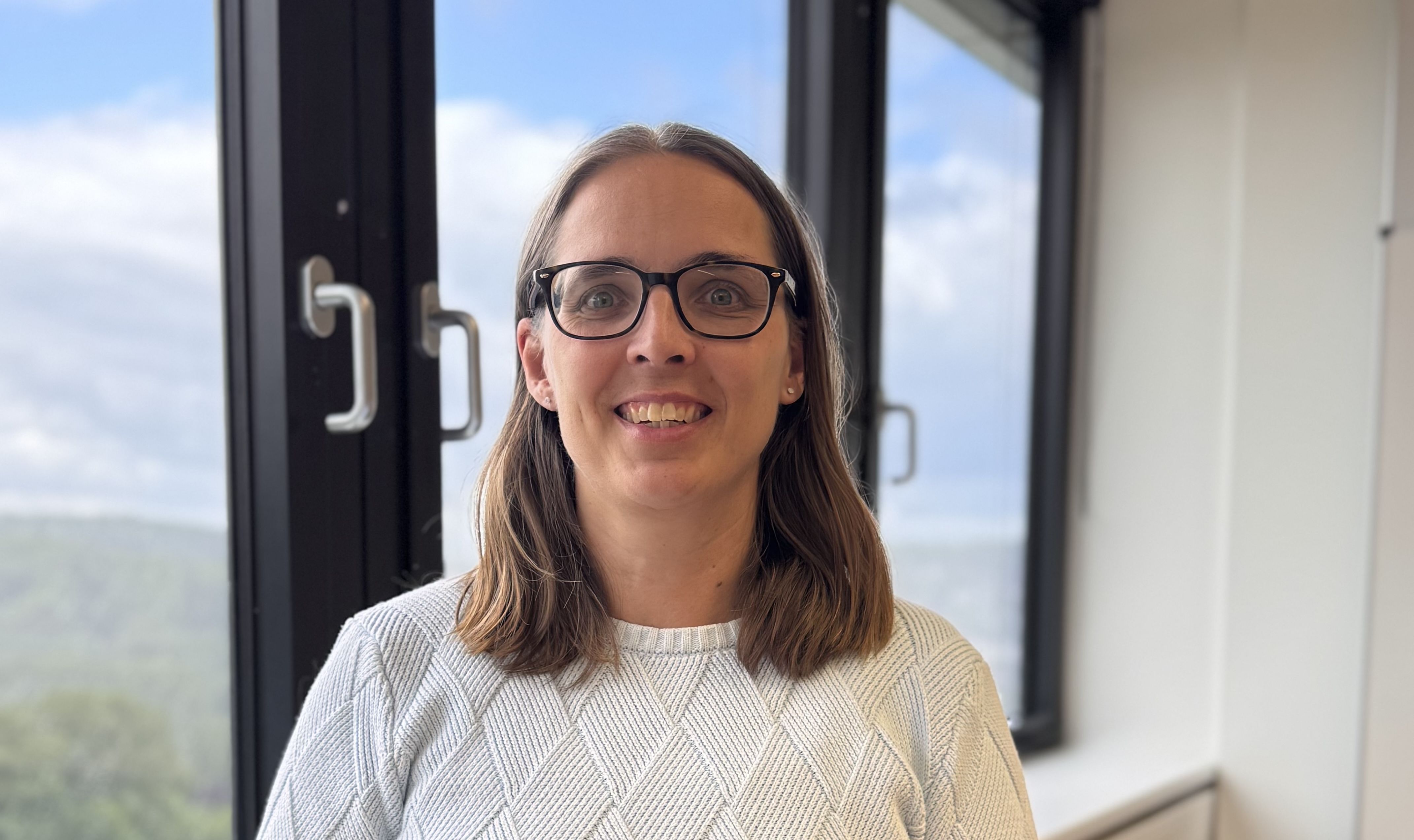
Swantje Bargmann is a professor at the University of Wuppertal. With her specialization in computer-aided modeling in product development, she is at the very beginning of the process and conducts basic research on biological materials. “It’s always about learning from nature,” she says. The researcher is interested in the structure of materials so that they can be artificially replicated.
The hardest material in the world
Just under two years ago, Bargmann drew international attention to her field of expertise when, together with scientists from the USA, Singapore, Austria, the Netherlands and Germany, she discovered that the teeth of the cup-and-saucer snail are the strongest natural material found on Earth. “Whelks can be found all over the world’s oceans,” she explains. “They’re about four by four centimetres in size and have tiny teeth that you can’t see with the naked eye.” These teeth are slightly curved, and the snails use them to scrape their food off rocks. “That’s why the teeth have to be so hard,” concludes Bargmann. The professor and her team are examining the microstructure – that is, the internal structure of the tooth – and then applying their findings to other engineering materials.
Research into cup snails began in the UK
For a long time, spider silk was considered the strongest natural material in the world. Bargmann explains that the first scientific studies on periwinkles began in the UK in 2015. The British had already been studying the teeth of animals from the region and from the sea for some time. It was already suspected, based on the snails’ diet, that their teeth might be particularly hard. “We started our investigations here in 2018 and took a closer look at the structure of the teeth,” explains the Wuppertal-based scientist. After numerous tests, the team discovered another, previously unknown property of the teeth that seems inexplicable to the layperson. “The material is auxetic,” says Bargmann.
Auxetic material
“If I pull something in one direction, it usually shortens in the other direction. This is how the vast majority of materials in the world behave, and that is also the picture we have in mind,” says Bargmann. However, this does not apply to the teeth of the cup snail. “When I pull on it, the material expands in both directions,” explains the researcher.
What sounds like magic only becomes clear to even experts once they have seen several images and got a sense of how the material moves. “This was previously unknown, and we hadn’t expected it either,” reports Bargmann.
The overriding research principle: the material must be strong and hard
Many materials found in nature have already been adapted and used in product development. “But every material breaks at some point,” says Bargmann. “Here at the department, we generally focus on very strong structures and are interested in materials that last a very long time, can withstand heavy loads and are sustainable.” Nowadays, materials should also be as light as possible, as this reduces the financial burden of transporting the products.
As well as the teeth of the cowrie snail, the basic researchers are also studying the teeth of other animals. “We started with cows because cow teeth are relatively easy to come by. A cow’s tooth consists of two different materials, which in a synthetic material would be replaced by entirely different ones. For us, it’s not about which specific material is used, but rather we provide guidance to materials science on what properties this material must possess.”
The tooth material of an Australian kangaroo has also already been examined. The scientist explains: “A teaching laboratory had a kangaroo skull that had fallen and could no longer be used for their purposes. However, they knew I was interested in it and gave me the skull.” Many materials have cracks of their own, including our teeth. However, it is rare for a tooth to fracture. Bargmann also studies the outer protective layer of mussels, particularly mother-of-pearl, because this layer is also extremely hard.
Simulations have even been carried out using human muscles, as we perceive the tiniest micro-cracks in muscle tissue as painful muscle soreness, which, however, subsides of its own accord after a few days. These materials are therefore of great interest for practical applications. “So we always try to understand the biological structures so that we can then design new materials based on their structure.”
Product development benefits from fundamental research
The findings generated from the simulations are passed on by the basic researchers to the materials scientists. Bargmann’s basic research therefore marks the starting point; the findings she passes on are what ultimately lead to the production of the alternative material. “To make a product, I need a material. So the next step is for materials science to produce the material. Then the product still needs to be designed and put into use. That’s where product development comes in.”
Progress is already being made with regard to periwinkle teeth. The fine structures of the teeth were artificially replicated in 2022 at a laboratory at the University of Portsmouth in England. The scientists are now working on optimising these artificial periwinkle teeth, as the material is suitable, amongst other things, for the manufacture of bulletproof vests, which are currently still made from Kevlar – a material that is toxic during the manufacturing process and cannot be recycled.
Bargmann concludes by emphasising that she is not tied to any particular material in her research, saying: “As long as the materials are fascinating and complex, and can do something particularly well, I find them exciting.”
Transfer stories
This article is also published by the University Communications department at the University of Wuppertal. The ‘Bergische Transfer Stories’ use numerous examples to illustrate how researchers actively shape society, the economy, the region and everyday life through their findings.
You can find the full article on the UniService Third Mission website.