Future energy in the neighbourhood
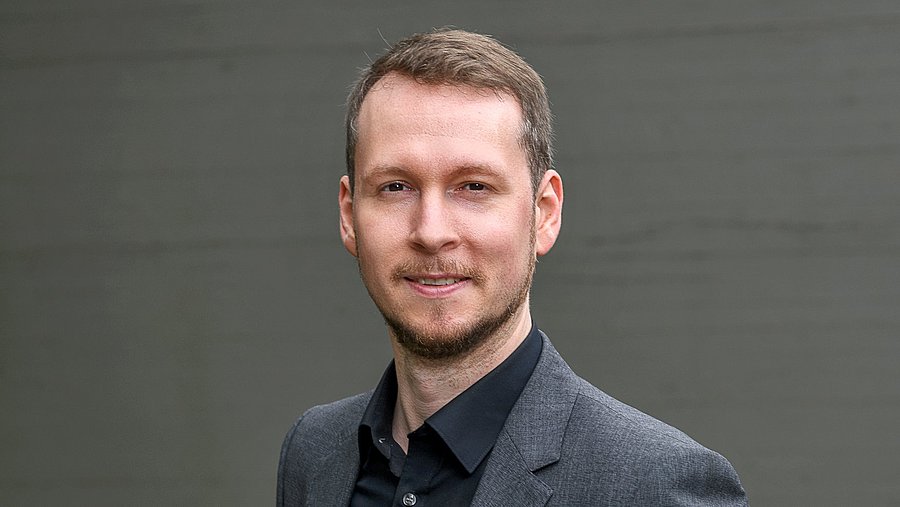
Dr Kevin Kotthaus / Electrical energy supply technology
Photo: Mathias Kehren
Future energy in the neighbourhood
Kevin Kotthaus from the Chair of Electrical Power Supply Technology on a Bergisch energy transition project in the Wuppertal Ölberg and Solingen Ohligs neighbourhoods
How can the energy transition be made understandable to citizens? Last year, the Federal Ministry of Research, Technology and Space (BMFTR) funded the 'Future Energy in Neighbourhoods' project, which was carried out by Neue Effizienz gemeinnützige GmbH and the Chair of Electrical Energy Supply Technology at the University of Wuppertal. The aim of the project was to bring scientific findings closer to the population. Senior engineer Dr Kevin Kotthaus played a key role in the project and says: "When we, as trained engineers, talk about our topics, it's easy for people to stop listening to us. So we had to get to a level where the topic of the energy transition became more accessible to every citizen in order to create acceptance, clear up 'image' opinions that are effective in the media and invalidate right-wing populist movements that spread misinformation."
The Ölberg hub in Wuppertal and the Solingen Ohligs neighbourhood
The first step was to find suitable neighbourhoods in which the project could take place. The organisers finally decided on the Ölberg district in Wuppertal and the district in the neighbouring Bergisch town of Solingen-Ohligs. "The Ölberg Hub (HUB is a kind of hub, a place where things arrive, are collected, sorted and redistributed, editor's note) is already a very well-organised initiative in the overall urban development. Implementing the energy transition here makes sense due to its structure - we have many old apartment blocks here - it is the most challenging variant on the subject of the heating transition," explains Kotthaus. "If you have a detached house on the outskirts of the city, it's structurally unproblematic to install a heat pump there. But if you have a ten-party house in the north of the city with no space around it, it's much more difficult to implement." The various networks that have existed for years on the Ölberg with people who are interested in the energy transition and were willing to get involved were also helpful. The situation was similar in Solingen Ohligs. "There were also initiatives there that dealt with this topic. We found ourselves in the Ideenwerk Ohligs as an event location. We had the same starting point here due to similar building structures and boundary conditions."
Local residents support the project
"Our colleagues from Neue Effizienz, who were in charge of the project, were of course involved in the neighbourhoods," explains the expert. "We always acted in combination and worked with the people there who are active in the individual initiatives. That's a very important aspect. You realise that there are people who want to promote the issues, who want to get involved, and they are often really local residents." Kotthaus describes the example of a campaign through the neighbourhood that was only possible with the support of local residents. "We had a format for an energy revolution scavenger hunt on the Ölberg. People went from building to building. We talked to residents in advance, who then made their wallbox (a special wall charging station for electric cars and plug-in hybrids that enables private charging in the garage, carport or car park, editor's note) available or gave us access to their homes so that we could take a look at their heat pumps on site. The residents actively helped with our formats, which we were then able to implement."
Science bench at the city festival or the quiz in the pub
Kotthaus repeatedly emphasises that an energy transition can only be implemented with the acceptance and support of future users. For this reason, the project participants also used another low-threshold format to familiarise citizens with research: the so-called 'science bench' (A 'science bench' is a low-threshold format of science communication in which researchers take a seat on a bench in a public space (e.g. pedestrian zone). Editor's note) Two scientists from the University of Wuppertal mingled with visitors at a city festival. "So we had a stand, a bench," explains Kotthaus, "where two of our scientists sat in a good, relaxed atmosphere during this city festival and waited for passers-by who were walking around the city festival to sit down with them and talk to the researchers about the energy transition." Even in a normal pub, an employee tried to bring the topic of the energy industry to the guests in a playful way. "A colleague actually organised a pub quiz at the Hutmacher in Utopiastadt. About 40 people were sitting there drinking their after-work beers and then the pub quiz began. Everyone was allowed to take part to answer questions about the energy industry and the energy transition." Excursions were also organised. "We also took people to the cogeneration plant at Küllenhahn here at AWG," Kotthaus continues. "They were able to see the entire CHP plant from the inside and also learn what happens when there is a blackout. This waste-to-energy plant is black-start capable, which means that if we were to run into a blackout, our waste-to-energy plant could supply parts of Wuppertal from its own power." Other presentations rounded off the programme. These included a presentation by Kotthaus himself on the topic of 'Myths of the energy transition' with questions such as: "Do wind turbines really kill so many birds in Germany? Are solar panels really worthwhile ? Will the lights go out without coal? "This is really misinformation that is being spread in Germany and we are refuting it." All of the campaigns were a success and the feedback was consistently positive. "Our audience consisted of both laypeople and knowledgeable citizens from the city. One of the suggestions was that this work should be continued alongside the project." And you can start with the little ones. Kotthaus carried out the first campaign at the zoo festival at the Green Zoo in Wuppertal and says: "We had a photovoltaic cell there that could be used to power a small device. Even children were fascinated by it. And that's important, because we're talking about a generational task with the energy transition and you have to generate understanding across all age groups, because it's about the need for system change."
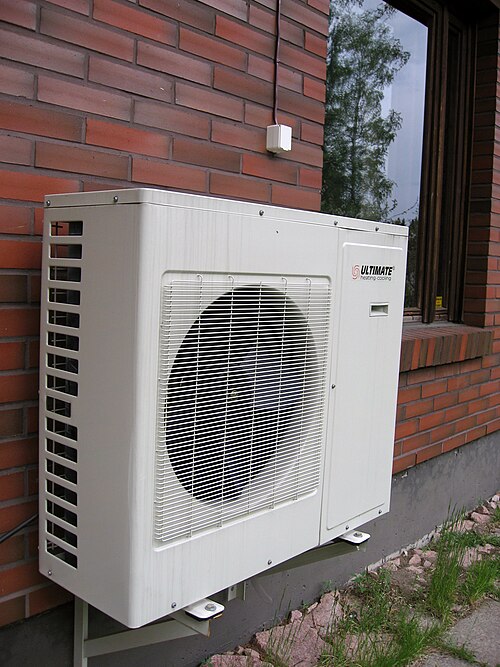
Heat pump (example image)
Photo: public domain
Learning to understand the world of the energy transition
The topic of the energy transition is very abstract. Although people are experiencing the price increases in the gas and electricity sector following the Russian invasion of Ukraine, they can't necessarily explain why the price of electricity is rising while the price of gas is going up. "That was a starting point that we also took up, because no one is clear at first why this is the case. But in terms of energy economics, it has a lot to do with each other. Just understanding why a gas price increase due to a shortage, due to geopolitical uncertainty, leads to the supplier, the municipal utility, now starting to increase the electricity price. Only when you understand the whole mechanism do you get a certain level of acceptance. These prices affect every citizen immediately and an important point is to clarify these things. At the moment, unfortunately, we are combining the worst parts of the old world with the teething troubles of the new world." For the engineer, there is no question that energy prices will become more favourable in the coming years if we stringently pursue the energy transition.
Right-wing populist false reports and their effects
Kotthaus also had to deal with right-wing populist tendencies in this project, which he had to work against. "When a Mrs Weidel appears in the Bundestag and says: 'Our wind turbines make people ill', or 'Our wind turbines are inefficient', then that is simply factually false and a lie." The problem is the fact that she is expressing this false information on such a prominent stage. Many municipalities in eastern Germany with a high level of AfD support are not getting anywhere in terms of a sustainable energy transition due to false reports. Kotthaus cites a current example: "In the context of this future energy and neighbourhood project, I recently spoke to an association of 15 Saxon mayors. I was called in because of this 'myth of the energy transition' lecture, because they said they were struggling with extreme hurdles in their everyday lives with 40 - 50 % AfD election results. One of these extreme right-wing opinions was shared with me by a mayoress. She has a farmer who actually claims that a wind turbine would evaporate the water from his field and cause the soil to dry out." Kotthaus' expertise can then help with local arguments.
Energy and heat transition planning in neighbourhoods is a lengthy process
"The specific measures for heat supply on the Ölberg in the future are currently being determined in parallel with the municipal heat planning that is being carried out," says Kotthaus. These are developments. You have to find out where which energy source is most likely to pay off and what infrastructure you have on site. "This is a holistic task that the municipal utilities, the city and other parties are also trying to answer. You have to realise one thing. When it comes to the energy system in particular, we often don't have the opportunity to take action within a very short space of time, because when we talk about construction measures, these are infrastructure measures that can sometimes take up to ten years and then have a lifespan of up to 70 years." This is why education is so important in order to raise awareness among citizens that cost-intensive and resource-intensive measures will protect assets for decades.
Project results can be used by local authorities
Although the project has come to an end, Kotthaus explains, the results are still available to all interested parties. "The presentations are all online, it's publicly available. You can see it just by typing the term "future energy" into a search engine, which will take you to our website and the relevant contacts. Local authorities can therefore all participate in this topic, we are extremely flexible in our support and are happy to answer any questions."
Information pages on the Internet:
https://evt.uni-wuppertal.de/de/personen/detail/kotthaus/
https://zukunftsenergie.nrw/
https://neue-effizienz.de/ziq/
https://www.wissenschaftsjahr.de/2025/foerderprojekte/zukunftsenergie-im-quartier
Uwe Blass
Dr Kevin Kotthaus is a senior engineer at the Chair of Electrical Power Supply Technology in the Faculty of Electrical Engineering, Information Technology and Media Technology at the University of Wuppertal.