
Semelparity – The phenomenon of single reproduction
Prof. Dr Gela Preisfeld / Biology
Photo: Preisfeld
The first and, at the same time, the last mating season
Biologist Gela Preisfeld on the phenomenon of semelparity, a life cycle in which the organism in question reproduces sexually only once in its lifetime.
In popular science, the phenomenon of semelparity is also referred to as ‘suicidal reproduction’, a term which Gela Preisfeld, a biologist from Wuppertal, finds misleading. “There’s no intention behind it, because the organisms don’t actually plan their own deaths,” she says, explaining the term as follows: “Semelparity essentially refers to a life strategy in which an organism concentrates its reproductive output into a single reproductive phase – not necessarily a single act – in its lifetime. No further reproduction takes place thereafter. In distinctly semelparous species, this is followed by death.” As a contrasting model, there is the strategy of iteroparity, which involves repeated reproduction across several occasions or even reproductive periods. From an evolutionary biology perspective, there are of course still all manner of intermediate forms in between. “The key aspect of semelparity is that so many resources are channelled into reproduction, mating and brood care that, afterwards, there are hardly any—or no—reserves left for sustaining one’s own life, let alone for further reproduction.”
Life-history trade-offs
Today, there are many hypotheses and theories regarding semelparity, all of which are based on what is known as life-history theory. This states that organisms must divide limited resources such as energy or food amongst several vital, competing processes, such as growth or reproduction, which means that any investment in one process reduces the available reserves for other processes. “Natural selection, as a process of evolution, can favour a high investment in a single reproductive period, particularly when the expected benefit of subsequent reproduction is low,” explains the biologist, “it can make particular evolutionary sense when adult animals are highly likely to die after their first reproduction anyway, or when a large, one-off reproductive effort produces a disproportionately large number of successful offspring.” There are always exceptions – for example, frogs produce large numbers of offspring on several occasions – but this must always be viewed in the context of evolution. “Iteroparity tends to be favoured when adults have a higher probability of survival and good prospects for several successful reproductive cycles. It is therefore not death itself that must be adaptive, but rather selection favours the reproductive strategy whose benefits must outweigh the costs. Death is merely the consequence of this strategy.” For this reason, the term “suicidal reproduction” also conjures up false associations.
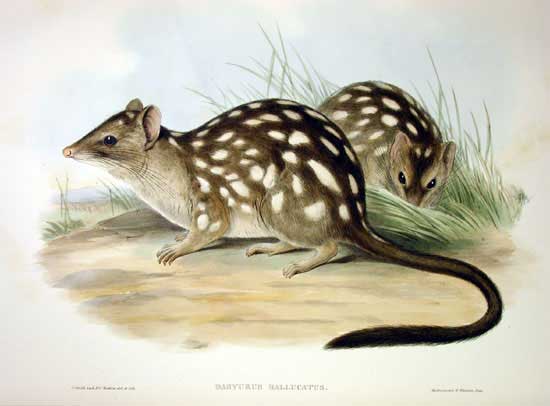
Pygmy possum
Photo: public domain
Semelparity in mammals
This form of one-off reproduction even occurs in mammals. Researchers have carried out experiments on the dwarf marsupial marten (Dasyurus hallucatus) and were able to demonstrate that the sex drive weakened the males to such an extent that they did not take any rest breaks and therefore died after mating. “In many populations of these animals, there is a marked mortality rate among males following the breeding season, whilst the females are able to give birth to offspring several times,” says Preisfeld, referring to a study carried out in 2023. “The marsupial mongooses were fitted with transmitters and so-called accelerometer studies (scientific studies using acceleration sensors to measure movement, editor’s note) were carried out to measure their speed. The findings revealed that males take significantly fewer rest periods during the mating season and spend more time moving at a faster pace than females. Whilst a lack of sleep and rest is not necessarily linked to sexuality, it does provide an explanation for the physical decline.” In other Australian marsupial weasels, it was also discovered that, during their short mating season, corticosteroids (corticosteroids are a group of steroid hormones produced by the adrenal cortex that have strong anti-inflammatory and immunosuppressive effects, Editor’s note) rise massively. This, in turn, damages the tissue, so that the males are no longer able to defend themselves against anything and thus die after the breeding season. The situation is different for the females: “Interestingly, these corticosteroids are also produced in females, but they additionally produce corticoid-binding globulins, which then bind these corticosteroids, preventing this negative effect from occurring.” External factors also complicate this mode of reproduction. In the case of the marsupial marten, invasive species such as the Aga toad now pose an additional threat to the already small populations, as they prey on the small mammals.
Division of labour in the insect kingdom
Butterflies also belong to the group of semelparous animals, some species of which cannot even feed during their short lifespan. However, this does not apply to all species, the expert emphasises, saying: “A great many adult butterflies can – and indeed must – feed. Many also hibernate, such as our brimstone butterfly. They have in fact developed a new, specialised organ for sucking: the proboscis. They use this to take in nectar, plant sap or water. This is truly a unique new development in evolution and, with a bit of luck, can be observed. However, there are also groups of butterflies whose imagoes (imago is the technical term for the adult, sexually mature insect after metamorphosis, editor’s note) no longer feed at all. Well-known examples include the Atlas moth or, here in our local fauna, the small peacock moth from the peacock moth family.” These animals have greatly reduced mouthparts, some of which are non-functional, meaning that the moths can no longer feed and must rely on the reserves built up during the larval stage. “This principle is known as ‘capital breeding’ (reproduction based on stored resources, editor’s note). Behind this lies a very clear division of labour between the larva (the caterpillar) and the butterfly. The caterpillar feeds, grows and stores energy. The adult is then solely responsible for finding a mate, mating and laying eggs. To further illustrate the concept of semelparity with an example: If a moth lives for only a few days anyway and future chances of reproduction are slim, maintaining a complex digestive and foraging system may be selectively less advantageous than investing the available resources in flight, mate-finding and reproduction. The fact that an adult butterfly does not feed is irrelevant to semelparity. The two characteristics must be distinguished conceptually
Longer mating increases offspring numbers
“With the black widow spider, it’s even more complex,” explains Preisfeld, “because in that case the male effectively offers himself to the female as food. The strategy behind this is that this cannibalism is associated with a longer and more complete copulation.” The research has yielded interesting results in this regard. “We know, in fact, that males who are cannibalised achieve a higher paternity rate than those who are not. The longer sexual act ensures that both of the female’s available spermathecae are filled, thereby doubling the offspring of a single animal.”
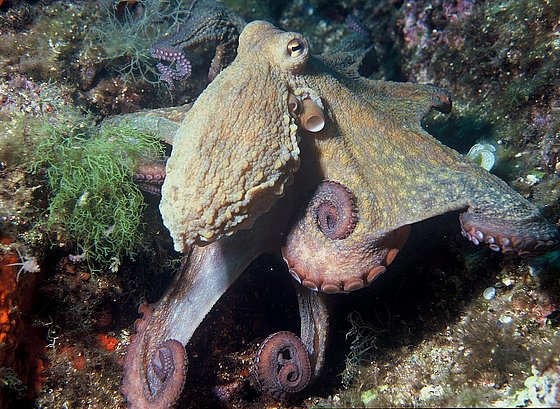
Octopus
Photo: public domain
Semelparity in aquatic animals
Despite their high level of development and large brains, female octopuses bring about their own deaths after laying their eggs, as they stop eating and do not even live to see their young hatch. Researchers have discovered that the cephalopods’ visual gland releases a kind of ‘suicide’ neurotransmitter, a precursor to cholesterol. ‘There are in fact a great many neurotransmitters in this so-called optic gland, which is a neuroendocrine organ that corresponds somewhat to our pituitary gland (the pituitary gland is a hormone-producing gland about the size of a pea situated at the base of the brain. It is regarded as the central control centre for the body’s hormonal balance, editor’s note) and whose activity changes dramatically in female octopuses after they have laid their eggs.’ And this is merely a small part of a vast molecular biological process taking place in the background, the significance of which has not yet been fully elucidated. The fact is, however, “that the female invests her remaining resources in her single brood. The eggs are guarded, aerated and cleaned by the female over many weeks and months, enabling them to reproduce successfully. Once the young hatch and the mother is dead, she can no longer compete with her own offspring or even eat them, as cannibalism is not uncommon amongst cephalopods. Nature is relatively brutal in this respect. The purpose is fulfilled once reproduction has been successful.”

Red salmon
Photo: public domain
Pacific salmon are another fascinating example. After spending years in the ocean, they swim thousands of kilometres upstream to their spawning grounds, where they produce offspring and then die. Today, we know quite precisely why this is the case. Hormonal maturity, as well as environmental factors such as day length and temperature, play a key role when they enter the reproductive phase. “That is why fish from the same year class react at roughly the same time of year. So it is not the fish that determines this, but external factors. If you look at their navigation, you realise that fish have a two-stage orientation system. In the open ocean, they use information from the Earth’s magnetic field; in other words, when the juveniles leave their home region, they imprint local geomagnetic currents in their memory, which they can apparently recall later. That’s absolutely fascinating.” Using this information, they would then find the correct coastal region. “Then they still have to work out exactly where they need to go. To investigate this, sockeye salmon in the Fraser River (Canada) were studied. When the salmon want to find their own region, their sense of smell comes into play as a second orientation system. So as soon as the fish reach the coastal region and their own river system, they can recognise where they need to go based on the chemical signature of their home waters. They too have committed this to memory as juveniles. This enables them to navigate back to their home waters even years later.” If they stray from this path, they die of exhaustion and hormonal decline after spawning.
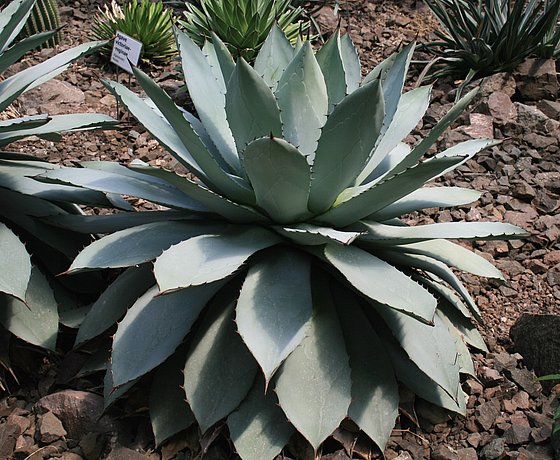
Agave potatorum, Karelj,
Photo: public domain
Semelparity in the plant kingdom
Semelparity also occurs in plants. The agave is a fine example of this. Once the flower has bloomed, the plant dies. However, this can take decades. But how does the plant know that the time to flower – and thus its end – has come? This, explains Preisfeld, is again down to the interplay of many different factors. “Age, stage of development, size, resource status and molecular flowering signals are all responsible for this. We know, particularly from Agave tequilana, that there is a master control gene which, in flowering plants, governs the transition from vegetative to reproductive growth. The plant can determine its age based on internal factors. A young agave therefore remains in a vegetative state for a long time, during which it does not respond to daylight and so on, unlike most other plants. Only when a certain growth phase is reached does it respond to endogenous and exogenous factors such as day length, temperature and light, and only then is the transition to flowering triggered.” Following the reproduction of the flower, very large quantities of stored carbohydrates are transported into this inflorescence, which is often metres high. The flower, fruit and seeds then develop, and this immense expenditure of energy can ultimately lead to the death of the plant.
Programmed cell death
In plants, sometimes only certain parts of the plant die off, and this can even be very useful. “In this context, we speak of programmed cell death in plants,” explains Preisfeld, “and this is indispensable in plants for two reasons: firstly, for development, and secondly, for defence.” During development, the plant can allow individual parts to die off. This is important when considering the plant’s water transport system. “The conduits (the tracheids) inside become hollow, so the plant’s own cells are broken down. Only then can the water be transported. A system of tubes can only function in a tree if cells that are in the way of the tube die off.” Programmed cell death is also important in the formation of flowers, he adds, as flowers are, after all, nothing more than a reduced shoot. “They are organs that have been repurposed as reproductive organs.” When it comes to defence, the plant simply allows the cells around the site of infection to die off in order to protect itself. “In the case of programmed cell death, we see, for example, a damaged leaf as the result. But even before that, important substances such as nitrogen, phosphorus and carbohydrates are withdrawn from the leaf and transported elsewhere. This can enhance the fitness of the organism as a whole. The key point from an evolutionary biology perspective is thus similar to that of semelparity at the organismal level: the death of a single cell, a tissue or an organ can increase the fitness of the organism as a whole.
Uwe Blass
Professor Dr Gela Preisfeld studied, obtained her PhD and completed her habilitation at the University of Bielefeld. Following brief research stays in Australia and a temporary appointment at Goethe University Frankfurt am Main, she accepted the chair in Biology and its Didactics, Zoology, at the University of Wuppertal, which she held from 2006 to 2026.