The desire to have children in the hands of science
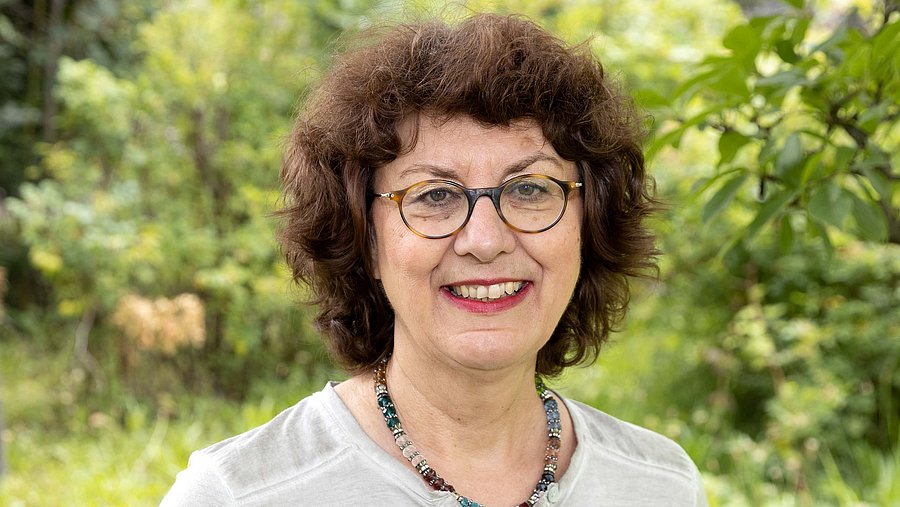
Dr Heike Baranzke / Catholic Theology
Photo: Sebastian Jarych
When the desire to have children lies in the hands of science
Ethicist Heike Baranzke on the psychosocial dimensions of reproductive technology
Since the 1960s, life sciences have increasingly influenced family planning. This research approach – also known in German as ‘bio-’ or ‘life sciences’ – developed following the decoding of the genetic code in 1953 by scientists James Watson and Francis Crick (Watson and Crick proposed a double helix as the molecular structure of DNA in 1953, editor’s note), which provided a common theoretical foundation for the biological sub-disciplines dealing with the structures and processes of living organisms. “Since then, the sub-disciplines of biology, including those in the fields of embryology and cell research, have increasingly converged,” Dr Heike Baranzke, a former ethicist in the Department of Catholic Theology at the University of Wuppertal, says. The crucial point, however, is that this development means that biological processes are also becoming increasingly controllable and manipulable through biotechnology.
Humans are losing control over their fertility
“The contraceptive pill and in vitro fertilisation (IVF) (artificial insemination outside the body, editor’s note) are two sides of the same coin when it comes to controlling human fertility by dismantling the real-life context of sexual encounter as a necessary prerequisite for human reproduction,” Baranzke says and emphasises: “There is nothing wrong with enjoying sexual pleasure and practising responsible family planning.” However, every technology comes at a price. The price of reproductive biotechnology, she argues, is that the human body is increasingly becoming research material and a testing ground for life sciences. “If, in order to start a family, one turns to in vitro technology, one cannot do so at home in one’s own private bedroom, but has to go to a laboratory, i.e., into the public sphere. You place yourself in the hands of the relevant scientists and an increasingly complex reproductive technology. The question then is: for how much longer will you still be in control of the situation yourself?”
In vitro fertilisation – the first step towards the technologisation of human family formation
When couples wishing to have children are unable to conceive naturally, many hope to still have children who are genetically their own with the help of in vitro fertilisation. However, once one embarks on a particular technology, new applications are discovered which usually raise fresh questions regarding the social and psychological consequences for those affected by these scientific and technological developments. In many cases, people are initially unaware of these consequences. In particular, the perspective of the child’s best interests has long been ignored and continues to this day to be overshadowed by the parents’ desire to have children. “When IVF technology was first introduced, the issue of selection – in the form of pre-implantation genetic diagnosis (PGD), which has been permitted since 2011 for high-risk couples with a genetic predisposition – was very much at the forefront,” Baranzke says. “This method involves diagnosing an early-stage embryo in a Petri dish to determine whether it has inherited disease-causing genes from its parents,” the ethicist explains. This was followed by the ‘designer baby’ debate, i.e., the idea that selecting embryos in a Petri dish could also be used to pursue more far-reaching goals. For example, a genetically healthy child could be designated to be born as a ‘helper sibling’ for a sick child who is in need of a bone marrow transplant. New genetic engineering methods, such as the much-discussed CRISPR-Cas gene-editing tool, enable not only passive selection, such as PGD, but also active improvements to the genetic makeup. Admittedly, the Western world has imposed a moratorium on the use of this method in humans, as it would not only affect the modified individuals but would also constitute a heritable intervention in their genome. However, a scientist in China disregarded this view and announced the birth of the first pair of genetically modified twins in 2018.
“It is the norm to reduce biomedical ethical debates to technical feasibility and the associated medical opportunities and risks, whilst ignoring the social implications. In the discourse on reproductive technology, this is compounded by the systematic disregard for the biopsychosocial implications for the children concerned, which becomes particularly evident when intended parents use gametes from third parties,” Baranzke laments. Through the ‘Spenderkinder’ association, those affected have therefore been speaking out for several years. The organisation also takes a critical look at the established terminology of ‘donation’ and ‘donor’. On the one hand, this language obscures the economic aspect of the fertility market; on the other hand, by referring to themselves as ‘Spenderkinder’, they establish a relationship with their gamete donors that the legal parents generally prefer to ignore. “In donor sperm treatments at so-called ‘fertility clinics’, the woman was not informed of the identity of the sperm donor whose sperm was ultimately used to fertilise her egg,” Baranzke explains. “In this context, so-called gamete donors are effectively reduced to their gametes, which are regarded as a remedy for infertility, even though they pass on the donor’s genetic information to the child. However, whilst it is important to consider the family-systemic and biopsychosocial consequences for family members – above all for the children resulting from such procedures – there was, and to some extent still is today, little awareness of the issue and little willingness to address it.” Indeed, well into the 1990s, reproductive medicine specialists advised prospective parents to keep the use of donor sperm a secret from the child. However, this practice violates the human right to know one’s biological origins, a fact of which the medical profession has been aware since the 1970s. In Germany, this has been partially addressed since 2018 by the Sperm Donor Register Act (Samenspenderregistergesetz, SaRegG), as sperm donor anonymity can no longer be guaranteed anyway due to the simplification of genetic paternity testing. Consequently, a key driver behind the development of the legislation was to protect registered sperm donors from being later claimed as legal fathers by their biological children. Neither egg donation and surrogacy are covered by the Act, as they are prohibited in Germany, nor does embryo donation, which is not regulated by law, fall within the scope of the Act.
Sperm donation permitted – egg donation prohibited
In Germany, sperm donation is permitted, but egg donation is prohibited under the Embryo Protection Act (Embryoschutzgesetz, ESchG) of 1990. “Two factors are worth noting here: On the one hand, against the backdrop of a conservative view of women, the aim was to prevent split motherhood, without even considering the issue of anonymous biological paternity. On the other hand, sperm donation is technologically straightforward and poses no health risk to men,” Baranzke explains. “The situation is quite different when it comes to egg donation. Liberals are calling for it to be permitted, arguing that the ban constitutes discrimination against women and a breach of Article 3 of the Basic Law (Grundgesetz, GG).” However, the medical risks to women are greatly downplayed in this context, because women’s eggs cannot simply be retrieved; instead, women must first undergo hormonal stimulation and the eggs must then be retrieved from the abdominal cavity. “It is also not taken into account that, unlike men, who produce sperm throughout their lives, women develop only a limited supply of egg precursor cells as early as the embryonic stage. Consequently, the female egg reserve is limited. These are asymmetries which, should the legal ban on egg donation be lifted, would also have to be explained in a serious and legally binding manner. For it is clear that the fertility market behind this also has strong economic interests at stake, which harbour a real risk of exploitation for women.”

Sperm and egg cell
Photo: public domain
Who is the anonymous sperm donor?
Baranzke warns against a naive approach to modern reproductive technology and says: “The problem is that, ultimately, one adopts only the biological or biotechnological perspective of feasibility, thereby reducing the genetic parents to the role of gamete donors. Their enduring biological and psychosocial significance for the children born as a result is not taken into account. For this reason, the ‘Spenderkinder’ association not only publishes personal accounts on its website but also supports those affected. meaning people who have learnt that they are not biologically related to some of their legal parents (almost always the father), in their search for their biological father. For every male or female germ cell is 50 per cent responsible for our physical identity, from blood group to character traits and talents. The resulting children then owe aspects of their personality to a person they do not know.” Furthermore, the significance of an unknown, and in some cases high, number of potential half-siblings in Germany has so far been recognised only very selectively, whilst in the USA a ‘donor sibling registry’ has existed since 2000 to support donor-conceived children in their search for their half-siblings. The perspective of donor-conceived children is usually overlooked by both intended parents and those involved in the fertility industry. “To this day, sperm banks do not really make the young sperm donors aware of the lasting influence they have on the child’s physical and psychological identity, even though adoption research has long established the significance of the desire, —which usually arises during puberty,— to find out more about one’s own origins. From the prospective parents’ perspective, the children’s genetic lineage is often downplayed as the children’s problem, with the argument: ‘But you were the very child we’d always wanted!’” Therefore, it is claimed, on the one hand, it does not matter at all where half or even all of the child’s genes come from. On the other hand, intended parents go to great lengths to ensure the greatest possible degree of genetic kinship, particularly on the internationally unregulated fertility market—either for themselves or, at the very least, by repeatedly using the same donor sperm to ensure full genetic kinship amongst siblings, or by simulating this kinship—at least visually—through so-called ‘genetic matching’ of phenotypes between parents and sperm donors.
However, the potential psychosocial repercussions on the prospective parents themselves of thoughtlessly fulfilling their desire for children using gametes from third parties are also underestimated. For the knowledge of their children’s non-genetic parentage remains a potent issue within the family system. “Of course, parents also constantly compare themselves with their children, both physically and psychologically. Typical stories, often sparked by looking through family photo albums, about whether the child resembles their paternal or maternal grandfather more often go untold or become a family secret,” Baranzke says. “From the child’s perspective, during puberty when their own body and sexuality are developing, there is the added factor that the children can no longer see themselves as a reflection of their parents. And anyone who then, perhaps by chance, discovers that their father is not their biological father is plunged into a crisis of trust that can shake the entire family system to its core. The players in the fertility market do not feel responsible for these broader dimensions of responsibility,” emphasises the ethicist. “Rather, they provide financial incentives in the form of expense allowances, which are undermined by the revelation of a lifelong physical connection between sperm donors and their offspring.” Although the Sperm Donor Register Act (SaRegG) now guarantees access to personal data for 110 years, it does not oblige the sperm donor to comply with his offspring’s wish to establish contact. The likelihood of profound emotional distress is high in this context, Baranzke explains.
Surrogacy – a risk to women, devaluation of pregnancy
Surrogacy is prohibited in Germany under the Embryo Protection Act. However, we repeatedly hear in the media of high-profile cases that flout the German ban. “Just recently, in April, Hendrik Streeck, the Bonn-based virologist and government commissioner for addiction and drug issues, returned from the US with his husband and announced the birth of their child,” says Baranzke. It appears that the CDU Member of the Bundestag made use of surrogacy, which is legal in the US. Yet even with surrogacy, which is often touted under the banner of women’s reproductive autonomy, there are a number of concerns to consider. “Every pregnancy carries a medical risk, and one must ask oneself: what right do I have to ask a woman a woman to do this for me? Admittedly, she does receive what is, in the US, actually a quite substantial allowance. However, there are low-cost countries in Asia and Eastern Europe where women’s poverty is exploited, and where, in addition to the ever-present medical risks of pregnancy, they also face the risk of social ostracism in their home countries. Furthermore, people tend to overlook the fact that pregnancy marks the beginning of a prenatal bond between the pregnant woman and the child growing inside her. In the case of surrogacy, however, this bond is severed through a sophisticated system of emotional management, and the woman is effectively reduced to the role of a human incubator. In most cases, the intended parents are not willing to integrate the surrogate mother of their ‘ordered’ child into their private relationship.” Instead, the child becomes the subject of a contract.
Embryo adoption
In addition to gamete donation, there is also embryo adoption. “Embryo adoption involves fertilised eggs from couples who have undergone assisted reproduction. As this process often results in more fertilised eggs than the couple themselves wish to carry to term, the ‘surplus embryos’ are cryopreserved in biobanks. Years ago, a Bavarian association committed to the protection of life considered making the cryopreserved embryos available to childless couples, so the embryos would not have to be destroyed or handed over to embryonic stem cell research.” Unlike in some other countries, this Bavarian pro-life initiative is not regulated by law in Germany, nor is it prohibited. Instead, embryo adoption is governed by private law and notarised between the owners of surplus embryos, whose fertility treatment has been completed, and infertile couples wishing to have children. Under the Civil Code, as the intended mother carries the embryo to term herself, she is regarded as the legal mother of the child she gives birth to and her husband automatically becomes the legal father. The greatest difference from the more familiar form of child adoption lies in the intended mother’s pregnancy and the automatic establishment of legal parenthood upon birth.
“At first glance, this ‘pro-life’ initiative comes very close to the ‘natural’ formation of a family, particularly as the relationship between the embryo and the intended mother can begin as early as the pregnancy itself. However, on closer inspection, it becomes clear that even embryo adoption is not suited to an idyllic nuclear family in private seclusion if the perspective of children born in this way is to be taken into account.” Embryo adoption is not covered by the Sperm Donor Register Act (SaRegG). However, the children’s human right to know their biological origins could at least be upheld by disclosing the identity of the contracting parties, provided the child is made aware of the contract. “Children born through embryo adoption differ from, for example, children conceived via sperm donation in one key respect,” Baranzke clarifies. “Instead of possibly having dozens of half-siblings, they have a few full genetic siblings in another family. In this respect, they might one day ask themselves why they were no longer wanted by their genetic family. Such questions do not necessarily have to be a problem, but they can become one if no answers are provided that restore the child’s peace of mind, which is part of the child’s best interests. ‘What right do we have to suppress a child’s emerging interest in the genetic aspect of their own identity, or to dismiss any desire to form a relationship with their genetic parents, simply because these were not factored into the parents’ plans for fulfilling their desire to have children?’ the theologian asks.

Identical twins are natural clones
Photo: Colourbox
Cloning – the genetically identical copy of a twin born at a later date
Cloning as a method of reproduction in humans is rejected worldwide. “So far, at least in the Western world, nobody wants to touch this topic,” Baranzke says. Cloning produces genetically identical copies of living organisms. The so-called Dolly method, which is named after the famous sheep that was first produced in this way 30 years ago, differs significantly from the natural formation of twins, however. The latter occurs through the fragmentation of a very early embryo in its first few days. “The famous first cloned sheep, Dolly, however, was created from the nucleus of a mammary cell from her genetic mother, which was inserted into an enucleated egg cell and thus returned to an embryonic state. Identical twins born naturally are genetically identical siblings – in other words, clones. However, if we were to do this process with adult humans, the cloned child would effectively be a genetically identical twin of its mother, born at a later date. We have a situation where siblings are formed at different times, with the mother also being the clone’s sister. This shatters our traditional conceptions of the family.”
In the animal kingdom, the Dolly cloning method has now become so sophisticated that it is being applied in many fields. Examples include high-yield dairy cows or specific breeds of horse, where the aim is to maintain the animals’ performance levels. “Wealthy people also have their deceased pets cloned using the Dolly method. It has now even been successfully applied to primates,” the ethicist explains, “and so we are already quite close to humans.”
Reform of family law is necessary
Regardless of the enormous profits – a topic rarely discussed in the bioethics or biomedical debate – a market for fulfilling the desire to have children has developed. Both heterosexual and queer couples are using to take advantage of these expanded opportunities to start a family, however, without being adequately informed by any institutions about the psychosocial consequences of using this technology. “Although the affected donor-conceived children have been trying for almost two decades to unite nationally and internationally in order to make their experiences and concerns heard, there are still very few voices showing solidarity with them. The fertility market, on the contrary, driven by reproductive technology, knows how to exploit the longings of involuntarily childless couples in a way that turns the ‘own child’ into a lifestyle product and significantly shapes the discourse on the necessary reform of family law,” the researcher states.
Uwe Blass
Dr Heike Baranzke was a lecturer in Theological Ethics within the Department of Catholic Theology at the School of Humanities at the University of Wuppertal.