Loneliness threatens democracy
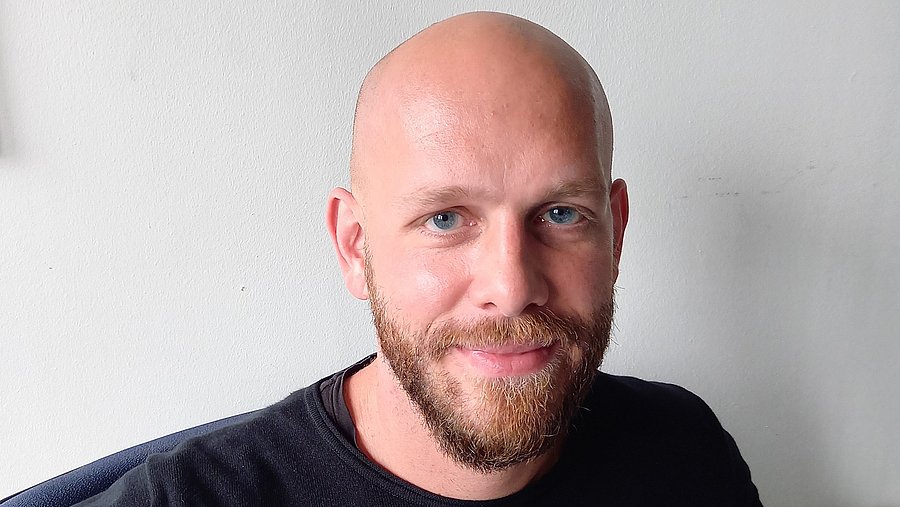
Dr Joris Steg / Sociology
Photo: school of human and social sciences
Can loneliness threaten democracy?
The sociologist Joris Steg on a collective social and political phenomenon that no longer affects only older people
According to data from the World Health Organisation (WHO), one in six people worldwide is affected by loneliness. In Germany, as many as just under one in five people feel lonely, according to a study commissioned by the left-liberal think tank ‘Das Progressive Zentrum’. What exactly is loneliness?
Joris Steg: First of all, loneliness is not the same as being alone or social isolation, even though these terms are often used interchangeably. Social isolation refers to an objective lack of social contact. And being alone is fundamentally a neutral, sometimes even deliberate state. Loneliness, on the other hand, always implies something negative and distressing, involving psychological distress and a sense of deprivation. Loneliness can be defined as a subjective feeling that arises when social relationships are perceived as inadequate – that is, when there is a gap and a discrepancy between the quantity and, above all, the quality of the social relationships one desires or needs, and the social relationships one actually has. Loneliness is not simply an objective lack of social contacts, but a subjectively felt lack of social belonging. One can be alone without feeling lonely. And one can feel lonely even though one is not alone. Loneliness always involves a distressing feeling and a painful sensation, because social relationships are perceived as inadequate.
If loneliness refers to a subjective feeling, why is it that not only psychology, but now also sociology – as the science of society – is concerned with loneliness?
Joris Steg: First of all, sociology also deals with loneliness because this phenomenon has now become so widespread in society. People even speak of the ‘epidemic of loneliness’, or researchers describe loneliness as a ‘social issue’. Loneliness is therefore not merely an individual and psychological problem, but also a collective phenomenon and thus a social and political issue. Furthermore, loneliness also has a social dimension in terms of its causes and consequences: loneliness does not arise in a vacuum, but is at least partly shaped by society. Societal crises such as the COVID-19 pandemic, social structures and societal trends such as individualisation, social infrastructure, digitalisation and structural changes in the media, as well as patterns of inequality, all influence how many and which people feel lonely. The consequences also reveal that, alongside its individual effects, loneliness has societal and political implications. High levels of loneliness therefore not only indicate individual problems, but also – and indeed, in particular – point to the fact that something is amiss in society and is not functioning properly.

More and more young people are feeling lonely, Photo: UniService Third Mission
Before we turn to the consequences: loneliness has been observed increasingly among young people, particularly during and after the coronavirus pandemic. According to studies, over 50 per cent of 16- to 23-year-olds in Germany say they sometimes or always miss having company. Have they forgotten how to socialise during the crisis, or why are young people in particular affected by loneliness?
Joris Steg: We are indeed currently witnessing a structural shift. Loneliness was traditionally regarded as a phenomenon affecting older people, particularly those over 80. For some years now, however, we have observed that young people are the group with the highest levels of loneliness. Particularly since the coronavirus pandemic, the number of lonely young people has risen rapidly. I wouldn’t necessarily say, however, that young people have forgotten how to form social connections during the crisis. Of course, the COVID-19 pandemic, with its containment measures – lockdowns, school closures, social distancing restrictions, etc. – has had a major impact on people’s social behaviour and their sense of loneliness. And young people in particular have been affected by these measures during a particularly sensitive phase of their development, socialisation and lives, in which the formation of social relationships, a sense of belonging and one’s own identity plays a major role. However, one cannot explain everything solely by the pandemic. We are currently witnessing a paradox: young people are, precisely because of social media, more interconnected and connected than ever before. And yet – or perhaps precisely because of this – so many young people feel lonelier than ever before. When it comes to the high levels of loneliness among young people, in addition to the longer-term consequences of the pandemic – which certainly play a central role – other structural societal developments and, in particular, the influence of social media must also be taken into account. These seem to have an ambivalent effect: On the one hand, social media can counteract feelings of loneliness because it is easy to make contacts; on the other hand, it seems to foster feelings of loneliness because these contacts are often rather superficial and fleeting – and do not create long-term closeness or close bonds.
It’s not as though lonely people don’t want any contact at all, but it often doesn’t work out. Why is that?
Joris Steg: That is a crucial point. Whilst some people do enjoy being alone, nobody wants to be lonely or chooses to be lonely for long periods of time. Loneliness does not mean that someone does not want contact with other people, but rather that there is a deficit – that social relationships are perceived as inadequate. There is often a strong need for connection, closeness and a sense of belonging, but at the same time there is a lack of opportunities to build stable social relationships. This can have individual causes. Unfortunately, loneliness often leads to behaviours that further exacerbate the problem. People who feel lonely, isolated, excluded or out of place often withdraw even further, making it harder to make contact and build social relationships. A veritable vicious circle can develop. However, structural factors also play a role. What is the social infrastructure like? In which region do you live? Are there low-threshold opportunities and social spaces to meet other people? How much money and free time do you have at your disposal? Do you have a lot of contact with other people at work? Added to this is the individualisation of loneliness and a sense of shame and failure: loneliness is often perceived as a flaw, a personal failure and an individual fault – and is therefore often kept hidden, which can exacerbate the problem. However, loneliness is not just an individual problem, but a collective one. Combating loneliness is therefore not just an individual task, but also a task for civil society and the political sphere.
What are the consequences and effects of loneliness?
Joris Steg: Here, too, it is true that whilst loneliness is first and foremost an individual phenomenon, it also has a social and political dimension in terms of its consequences. Loneliness in itself means, first and foremost, personal suffering. But loneliness and social isolation also give rise to other physical and psychological strains. Loneliness makes people ill, as the WHO also points out. Loneliness, particularly chronic loneliness, increases the risk of cardiovascular disease, a weakened immune system, diabetes and mental health conditions such as depression, anxiety disorders and suicidal tendencies. However, the consequences and effects of loneliness extend beyond individual people and their personal circumstances; they are also of a social and political nature. For instance, lonely people are less satisfied with democracy and have less trust in institutions and their fellow human beings. Loneliness can also foster resentment and anti-democratic attitudes.

The Monk by the Sea (1808–1810) by Caspar David Friedrich
Photo: public domain
Generally speaking, the painting is interpreted as a dialogue between a solitary figure and nature within a religious or political context.
Social science analyses are increasingly focusing on precisely these social and political consequences. Loneliness is thus described as an ‘undemocratic emotion’, to borrow a phrase from the sociologist Eva Illouz. A team of authors led by the sociologist Claudia Neu writes in the book *Loneliness and Resentment* that loneliness is “the feeling of a lack of social relationships, which can give rise not only to personal suffering but also to potential threats to democracy”. Scientific studies have demonstrably confirmed that chronic loneliness and a sense of social isolation increase susceptibility to right-wing populist and authoritarian views. Can loneliness threaten democracy?
Joris Steg: Of course, not every lonely person is automatically anti-democratic, nor do democracies necessarily collapse simply because there are many lonely people. But loneliness is definitely a problem of relevance both in democratic theory and in practical politics. On average, lonely people have less trust in democracy, institutions and their fellow human beings. When loneliness becomes chronic, one’s perception of the world and view of society change. And, as already indicated, there is very strong empirical evidence that loneliness is linked to a susceptibility to resentment, prejudice, conspiracy theories, as well as to far-right, authoritarian and anti-democratic attitudes. Loneliness can therefore also lead to radicalisation, which is dangerous both socially and politically. It is also important to note here that democracy is more than just a form of state, government or constitution. Democracy is always a way of life as well. Democracy thrives on people’s participation and involvement; it also – and indeed above all – thrives on people seeing themselves as part of a community. When people are lonely and feel excluded, that sense of belonging is lost and social cohesion can erode. Loneliness can therefore undermine the social basis, the very foundation of democracies. Loneliness is therefore a serious challenge for democratic societies.
Lonely young people, for instance, do not believe it is worthwhile to get involved in society; trust in democratic structures is significantly weakened among those who feel very lonely: 63 per cent say they are dissatisfied with democracy in Germany, compared with 41 per cent of those who do not feel lonely, according to a Schell youth study. There is now even a government strategy on loneliness, launched in December 2023. So has the state recognised the problem, or is the phenomenon of loneliness still being underestimated socially and politically?
Joris Steg: I believe that something is currently changing, both socially and politically. For a long time, loneliness was tended to be viewed as an individual issue and thus regarded as a private problem. Consequently, the responsibility for solving the problem lay with the individual. Perceptions have now changed. On the one hand, because so many people are now affected by it, loneliness is receiving much greater attention, both in Germany and internationally. This is demonstrated by analyses and figures from the WHO, the large number of academic studies on the subject of loneliness, and the German Government’s loneliness strategy, which includes the Loneliness Barometer, now in its third edition, published in 2026. Secondly, the social dimension of loneliness – that is, the fact that loneliness also has social and political causes and consequences – is now being taken into account much more seriously. Both of these developments represent significant progress, as loneliness was long neglected and not recognised as a social problem. However, just because the problem has now been recognised does not mean that it has been solved.
What specific measures are already in place to tackle loneliness? And what do you think can be done to tackle loneliness in the short and medium term?
Joris Steg: There is already a wide range of strategies and measures to tackle loneliness. The German government’s strategy against loneliness alone comprises well over 100 measures – these range from research and monitoring, through assistance, counselling and support services, the expansion of low-threshold social opportunities, raising awareness and breaking down taboos, right through to the annual ‘Together Against Loneliness’ action week, which has been running since 2023. Fundamentally, I believe that loneliness cannot be eliminated by a single measure or a single strategy. It is good and necessary that the state has recognised the problem and is taking action against loneliness, but it cannot be eradicated by decree. Lonely people must not be left on their own; they must be helped. Specifically, this means providing mental health support services, but also offering opportunities to connect with others. As loneliness is also linked to structural factors such as the region and housing situation, age, poverty, lack of mobility and the use of social media, structural policy responses are also required. In my view, it is crucial that there is a functioning social infrastructure that enables participation, a sense of belonging and social contact. We need institutions, opportunities and social spaces that facilitate low-threshold encounters, such as clubs, libraries, farm shops, neighbourhood support schemes, youth centres or cultural centres. Loneliness and the fight against it are not merely an individual issue, but a social and political problem – and therefore also a social and political task.
Uwe Blass
Dr Joris Steg is a research fellow at the Institute of Sociology within the school of human and social sciences at the University of Wuppertal.