The Origins of the Vatican Apostolic Library in Rome
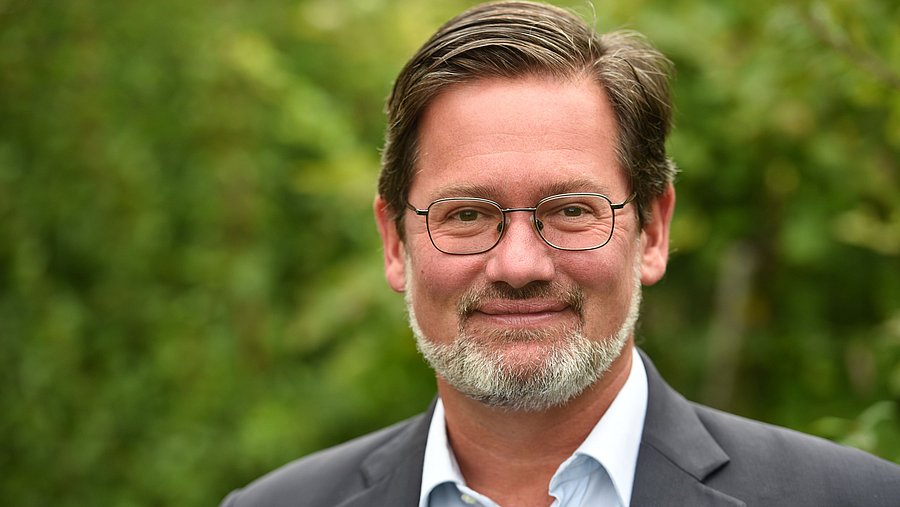
PD Dr Arne Karsten / History
Photo: Sebastian Jarych
A book lover’s paradise and a dream workplace
Historian Arne Karsten on the origins of the Vatican Apostolic Library in Rome
It is known as the Sala Sistina, the magnificent, columned main hall of the Vatican Apostolic Library in the Vatican, some 70 metres long. Built in 1587 under Pope Sixtus V, the walls of this Renaissance palace are impressively decorated. An imposing workspace where the historian Arne Karsten spent years conducting his research, and of which he speaks with great enthusiasm: “I can say from personal experience that it is a book lover’s paradise and a dream workplace – the most beautiful library I know.”

Rome, Vatican Museums, Great Hall of the Library, Salone Sistino
Photo: Dnalor_01, Wikimedia Commons, CC-BY-SA 3.0
The Beginnings
The Vatican Apostolic Library is one of the oldest and most valuable libraries in the world, yet even it had humble beginnings. Although texts were already being collected in libraries in pre-Christian antiquity, the Vatican as a centre for collecting them has only existed since the Renaissance in the 15th century, explains the expert. “Before that, the popes resided in various places in Rome – for a long time in the Lateran Palace, and at times outside Rome as well. In 1309, the Great Avignon Exile began, during which the popes moved to Avignon, in southern France, for more than half a century. This was followed by the Great Western Schism (the ‘Great Western Schism’ refers to the split in the Church from 1378 to 1417, during which two rival popes existed simultaneously— in Rome and Avignon, Editor’s note), and it was only afterwards, in 1417, that Pope Martin V returned to Rome permanently. And that marked the beginning of the Vatican’s golden age as the popes’ principal residence.”
The book collection in the Middle Ages was modest
Reports indicate that an early collection of books was lost in the 8th century for reasons that remain unclear to this day. However, the historian explains that it is also important to realise that collections in the Middle Ages were rather modest and decentralised. “There were incredibly few books to begin with; that’s something we need to bear in mind today. Books are now a mass-produced commodity; we are inundated with information. By contrast, the pre-modern era – particularly the Middle Ages – was a time of extreme scarcity of information, a time of a quantitatively modest book culture, because books were written by hand on parchment – that is, on tanned animal hide – and this was an incredibly valuable, durable, yet also expensive and rare material. A book collection in the Middle Ages comprising a few dozen books was considered large; one with a few hundred books was truly impressive. We therefore need to rethink our concept of a library.” Nowadays, many people have a book collection that scarcely even a large monastery in the Middle Ages could have boasted.

Sixtus IV appoints Platina as Prefect of the Vatican Library
Fresco by Melozzo da Forlì, painted between 1471 and 1481
Photo: public domain
Pope Nicholas V laid the foundations
The foundations of today’s library were laid by Pope Nicholas V (1447–1455). By the end of his reign, the collection already numbered around 1,500 works. “He was one of the humanists to have sat on the papal throne; before his election, he was a renowned scholar and, as such, keen to foster a culture of reading and to preserve the library’s holdings. These 1,500 books – which we might shrug off today – were of the highest quality, and Nicholas V was a Pope who also recognised the value of the written word in political debate,” says Karsten. In this regard, he was in agreement with his successor, Pius II, who, as an equally renowned humanist, continuously expanded the book collection until 1464. Under Sixtus IV, the Vatican Apostolic Library was finally founded on 15 June 1475 by the papal bull *Ad decorem militantis Ecclesiae*, “and he entrusted its management to another humanist, Bartolomeo Platina. The painter Melozzo da Forlì immortalised Platina’s appointment as librarian in a famous fresco. Here, then, a centre of learning was deliberately created to express the popes’ cultural self-image as the head of Catholic Christendom.”
In 1587, the famous Salone Sistino was built
In 1587, under Sixtus V, the library’s main reading room was built, where scholars can still conduct research today. The library grew ever larger and at an ever-faster rate. Karsten comments: “The books that then arrived in rapid succession and led to the expansion of the collection were initially due to the invention of the printing press in the mid-15th century and the availability of paper – a material that was much lighter, cheaper and easier to produce in large quantities than parchment. The printing press thus led to an increase in book production. Added to this in the 16th century was the Reformation, which was a struggle for the true faith, and this struggle was, of course, also waged in the form of scholarly discourse, debates and scholarly works,” explains the historian.
Mysterious secret archives alongside the Vatican Library
Countless stories surround the Vatican’s Secret Archives, each more intriguing than the last. But in Latin, ‘secretum’ means not only ‘secret’ but, above all, ‘separate, private’ – not ‘mysterious’. The ‘Archivium Secretum’ was simply the Pope’s private archive. However, because the word ‘secret’ has sparked so much imagination, Pope Francis renamed the collection of documents the Apostolic Archives in 2019. ‘But even that didn’t help,’ laughs Karsten, clearly finding the whole thing rather amusing. ‘I’ve carried out research both in the Bibliotheca Vaticana and in the Secret Archives, which, although separate, are adjacent to one another.’ Things are completely different there than, say, in novels such as Dan Brown’s *The Da Vinci Code*. There, there’s talk of armoured doors and airlocks and everything else needed to keep documents secret. “It’s all complete nonsense. If you want to get into the Papal Secret Archives, you go there, explain why you want to get in – because there are a limited number of workstations – and then say what you’re researching or what you’re working on. Then the custodians there consider how they can help you find, within the vast collections, whatever might be useful for the work you’re currently doing.” Anyone with a scholarly interest can gain access, but that’s when the hard work begins, as you have to search intensively. At this point, the vast collections prove to be both a curse and a blessing. “It builds up your tolerance for frustration,” says Karsten. “You have to be patient and prepare yourself for spending a long time reading, reading and reading in search of something, without finding what you’re looking for.”
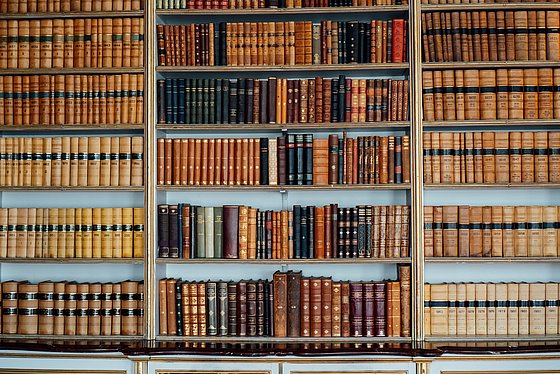
The Vatican Apostolic Library has a collection of books spanning around 85 kilometres of shelving
Photo: Colourbox
85 kilometres of shelving of archive material
The archive comprises a total of 85 kilometres of shelving of material. Much of this, says Karsten, consists of what the Papacy collected during its long history as a secular power, for the popes were, after all, heads of the Papal States until 1870 and, as such, princes amongst the other princes of Europe. ‘They ruled the Papal States; they maintained nunciatures and legations at the major European Catholic courts, and the reports from there were sent to the Secret Archives. In addition, there were the popes’ activities as heads of Catholic Christendom, which involved correspondence that was, in fact, global in scope. These included, for example, reports from missionaries in China and South America, which were sent to headquarters in Rome. This is a vast treasure trove of inexhaustible wealth for history – not only for Rome and Europe, but indeed for the entire history of the world.”
Napoleon strikes
The holdings of the Vatican Apostolic Library grew inexorably, but parts of it were also plundered. “The most significant plundering of books from the Vatican Apostolic Library took place in the wake of the French Revolution,” explains Karsten, recounting: “Vast quantities of books, including huge archive collections, were carted off to Paris. As part of his plan to rule Europe from Paris, Napoleon also wanted to create a European repository of memory there. He plundered all manner of archives across Europe, but particularly the very rich collections of the Vaticana and the Papal Secret Archives. A large part, though not all, returned to Rome after the end of the Napoleonic era in 1815.”
Rules of conduct and restricted access periods
A ban on mobile phones and appropriate dress are rules of conduct at the Vatican Apostolic Library, just as they apply in other libraries. “The retention periods are the same as those applied by every national archive in the world,” says Karsten, “which is approximately 70 years – in other words, for as long as living individuals might still be affected by the research. However, there is always the possibility of obtaining special permission.” Scholars from all over the world were therefore eagerly awaiting new information regarding the role of Pope Pius XII during the Second World War, which can be found in a number of recently declassified documents. “As far as I can see, there is no longer any debate on this today,” emphasises Karsten. “I attended a conference in Rome last autumn. There was a presentation on the role of Pius XII, in which it became clear that he repeatedly supported efforts to rescue persecuted Jews. The Vatican quietly mobilised its networks to help people in dire need. In 2000, the Inquisition archives were made publicly accessible, and there were high expectations then too. I remember a *Der Spiegel* article speculating about the many possible dark secrets. But there were no sensational revelations.”
Digitisation is progressing
The digitisation of the Vatican Apostolic Library comprises around 82,000 historical manuscripts and incunabula, totalling some 41 million pages. The aim is to make this valuable collection freely accessible to the global public and to researchers. “A lot is being done. Many archive inventories have already been digitised and are accessible online,” Karsten concludes. “I actually managed to view all the important originals I wanted to see. However, you’re only allowed to order three volumes a day. There are practical reasons for this, as you’re not alone, and the custodians have to attend to many other researchers as well. Once you’re inside, you can access everything.”
Uwe Blass
PD Dr Arne Karsten (born 1969) studied art history, history and philosophy in Göttingen, Rome and Berlin. From 2001 to 2009, he was a research fellow at the Institute for Art and Visual History at Humboldt University in Berlin. He has been teaching as a junior professor since the winter semester of 2009 and, following his habilitation in 2016, as a private lecturer in modern history at the University of Wuppertal.