Discover a wide range of perspectives
The ‘Zukunftsmesse West’ exhibition at the university of Wuppertal showcased educational and career pathways in the French-speaking world
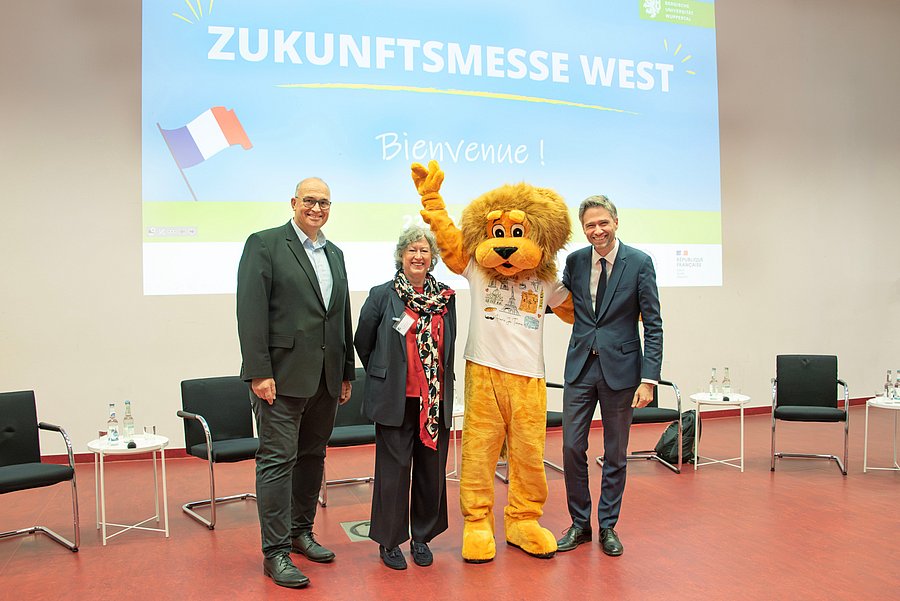
At the opening of the ‘Zukunftsmesse West’ at the BUW (from left to right): Prof. Dr.-Ing. Peter Gust, Prof. Dr. Andrea von Hülsen-Esch, the university mascot Berti and Xavier Fournier. // Photos: Friederike von Heyden
French – a springboard to the future?!
The focus of the fair, which took place in Wuppertal this year, was on some very specific questions: Which degree programmes lead to international careers? What opportunities does studying in France or another French-speaking country offer? How can you fund work placements, a gap year or a period abroad? And in which professional fields is knowledge of French particularly in demand?
The fair was complemented by talks, presentations, personal accounts and short training sessions. On the first day of the fair, experts took part in a round-table discussion entitled ‘French – a springboard to the future?!’ to discuss the importance of the French language for educational and career paths.
“French is the official language in 29 countries around the world and is spoken by around 320 million people globally. France is also one of Germany’s most important economic partners. It is the second-largest market for German goods worldwide and the most important market within the EU,” emphasised Prof. Dr.-Ing. Peter Gust, vice-rector for Third Mission and International Affairs at the university of Wuppertal, at the opening of the fair. “At the same time, there is extensive mutual direct investment and a strong presence of German and French companies in both markets. Furthermore, the EU and Canada – where French is the first official language for more than 20 per cent of the population – are currently discussing closer cooperation,” Mr Gust continued. This close link between Germany and France offers a wide range of opportunities: universities, institutions, exchange programmes and funding opportunities facilitate international educational pathways. This was also emphasised at the opening by Prof. Dr Andrea von Hülsen-Esch, Vice-President of the Franco-German University (DFH), and Xavier Fournier, Consul-General of France in North Rhine-Westphalia in Düsseldorf.
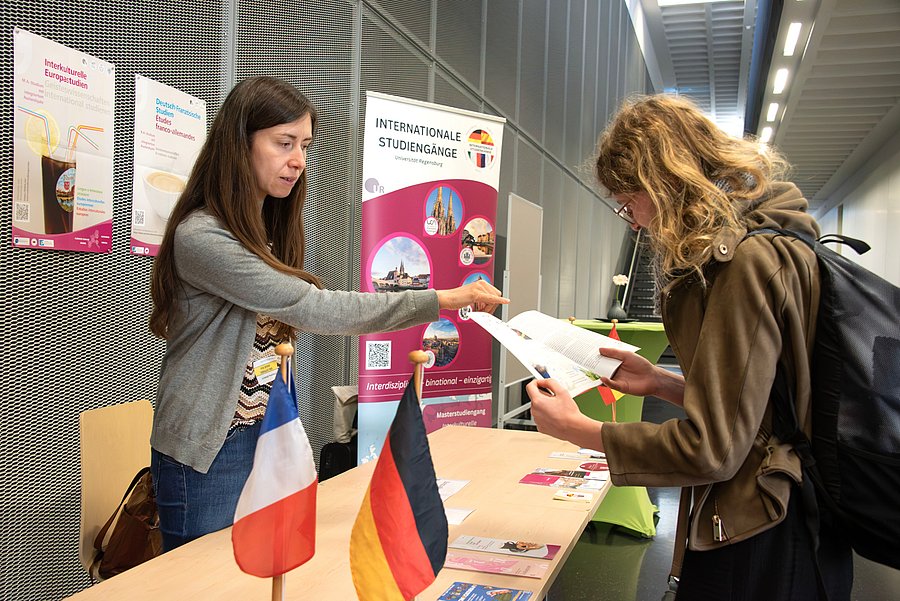
At more than 50 exhibition stands, universities, institutions, organisations and companies presented opportunities for study, training and careers.
The ‘Zukunftsmesse West’ deliberately broadened its focus beyond France to encompass the entire Francophone world. This includes, amongst others, Belgium, Luxembourg, Switzerland, Canada and French-speaking countries in Africa. Depending on one’s field of study or career, French may be a necessary prerequisite or an important language of communication. The depth and diversity of the Franco-German partnership are, however, exceptional.
“Hardly any two countries are linked by so many shared universities, institutions, exchange programmes and funding opportunities,” emphasises Andrea Bieck, Head of the International Office at the university of Wuppertal. “For students in particular, this means that spending time in the other country is now much more accessible than many people think – financially, organisationally and also in terms of language. Anyone discovering France as a place to study or work will find a comprehensive support network in place. A period abroad therefore need not be a privilege reserved for the few, but can become a realistic and affordable experience for many students,” says Bieck.
International prospects right here at BUW
For the University of Wuppertal, as the host institution, the ‘Zukunftsmesse West’ fair was also a reflection of its long-standing international – and, in particular, Franco-German – activities. Among other things, the BUW offers the binational Bachelor’s programme in Applied Cultural and Economic Studies: German-French, as well as the Master’s programme in Applied German-French Studies: Culture, Economy, Sustainability, in cooperation with the Université de Franche-Comté in Besançon. Students earn both a German and a French degree; a scholarship from the Franco-German University is available for the study period abroad.
In addition, BUW facilitates study-related stays abroad in France through an extensive network of partner institutions. These include, amongst others, universities in Paris, Lille, Poitiers, Grenoble, Toulouse and Nice, as well as in Wuppertal’s twin town, Saint-Étienne.
Further information on French-language study opportunities at BUW:
Information on the Bachelor’s degree programme in Applied Cultural and Economic Studies: German-French
Information on the Master’s programme in Applied German-French Studies: Culture, Business, Sustainability
Background: Zukunftsmesse West
The Future Fair is organised by the Association of French Teachers (VdF), the Franco-German University (DFH), the Institut français Deutschland / the French Embassy in Berlin and the Association of Franco-German Societies for Europe (VDFG). The ‘Zukunftsmesse West’ is supported by the ‘Europa-Schecks’ state initiative of the Minister for Federal and European Affairs, International Affairs and Media, and Head of the State Chancellery of North Rhine-Westphalia.
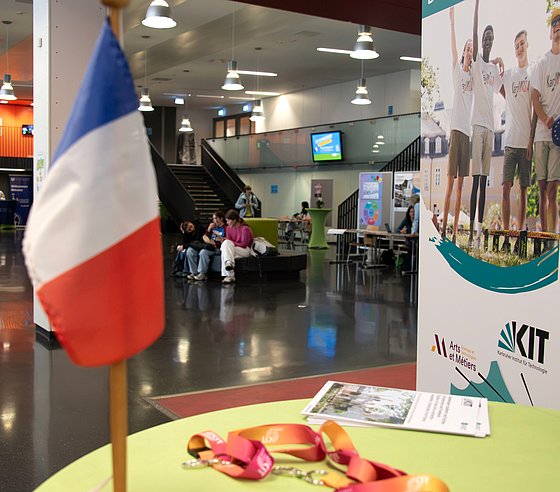
In September, more than 800 pupils from Year 9 onwards, university students and other interested parties attended the Zukunftsmesse West to find out about educational and career paths in the French-speaking world.
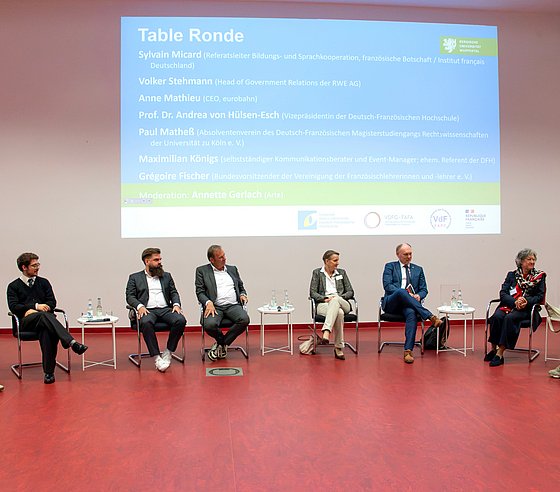
On the first day of the fair, experts took part in a round-table discussion entitled ‘French – a springboard for the future?!’ to discuss the importance of the French language for educational and career paths.
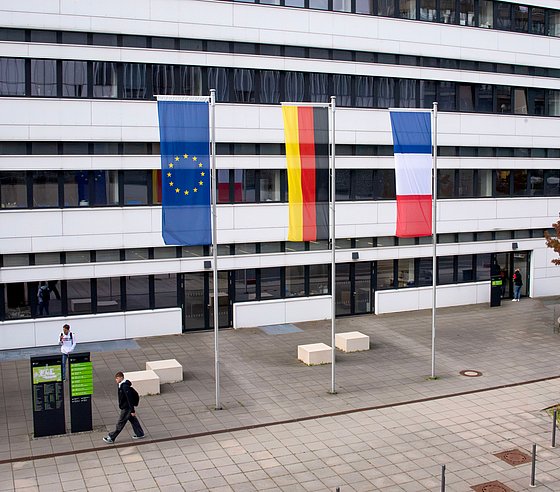
For the University of Wuppertal, as the host institution, the Zukunftsmesse West was a reflection of its long-standing international activities, particularly those involving Germany and France.