Distinction
How companies advertise correctly: Wuppertal marketing researchers win science prize
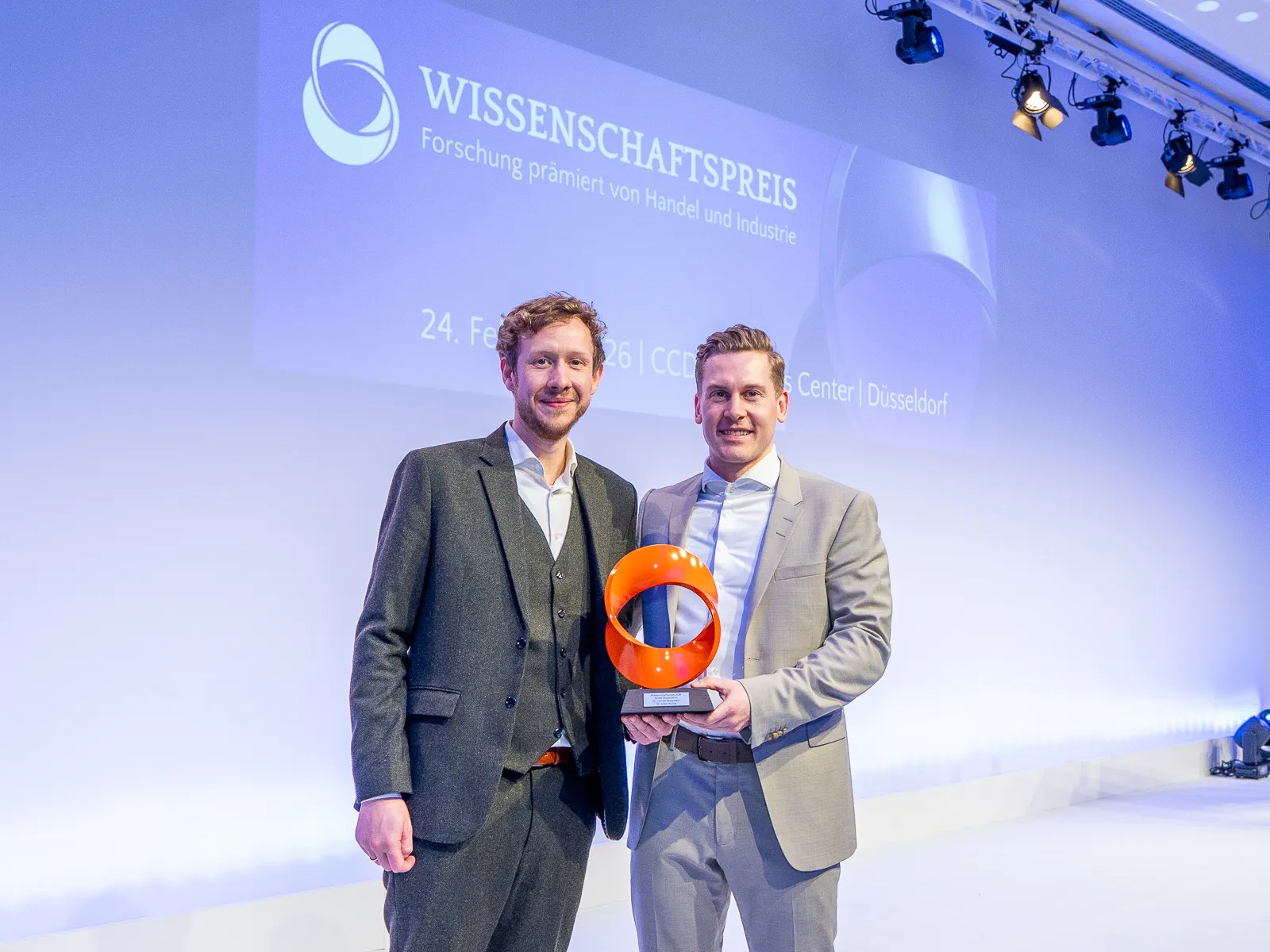
Felix Kopka (left) and Lennart Borgmann from the University of Wuppertal won over the jury with their dissertation on advertising and attention // Photo: EHI/GS1
The work was assessed by a jury of leading representatives from retail and industry, including decision-makers from Kaufland e-commerce, TEDi, Otto, OBI, flaconi and Alnatura. The prize was awarded at the EuroShop trade fair in Düsseldorf and is endowed with 10,000 euros.
"Attention is one of the scarcest resources for brands today. Our research shows very clearly that the psychological mechanisms behind classic advertising techniques are still effective today. In other words, how we become aware of something can also be transferred to the digital world. We should therefore be aware of these mechanisms and take them into account when designing communication," explains Dr Julian Felix Kopka. "However, the time advertisers have to get their message across is extremely short. The average viewing time for adverts is around 1.7 seconds. Advertising can still be effective under these conditions," adds Dr Lennart Borgmann.
The research project investigates how brands can attract and retain attention in a fragmented, fast-moving digital media environment. Key findings:
- The smartphone is the dominant medium - communication should be consistently based on the "smartphone first" principle.
- The size of an advert is the strongest predictor of whether it will be seen.
- Particularly relevant and native advertising elements (e.g. influencers) significantly increase attention.
- Advertising tactics that interrupt the user experience or appear "too promotional" are counterproductive.
Professor Tobias Langner, who supervised the winning work, emphasises the importance of the award for the location: "The science prize is one of the highest awards for application-oriented marketing research in Germany. It is awarded by leading figures from trade and industry. The fact that our project from Wuppertal has been honoured here shows that we conduct research at the Chair that is scientifically sound and at the same time has a high practical benefit for companies."
The science prize was awarded for the 19th time in 2026. Around 300 representatives from the retail and consumer goods industry attended the award ceremony at EuroShop in Düsseldorf.
Further information on the prize and the award ceremony can be found here: https://www.ehi.org/wissenschaftspreis/herausragende-forschungsleistungen/