Participants wanted
When memories intrude: New study on trauma therapy launched
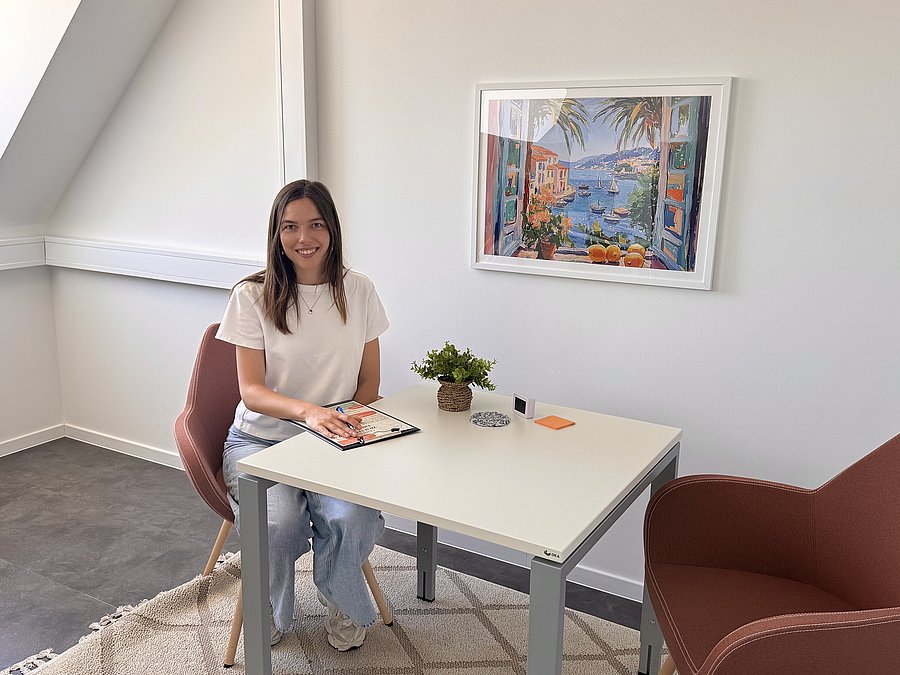
Lynn Lottes, psychologist and research associate at the Chair of Clinical Psychological Intervention, and her colleagues want to better understand why and how exactly imagery rescripting works. // Photo Ben Spomer
An accident, an assault, a threatening situation - traumatic experiences can leave deep scars. Many of those affected experience the event again and again: the memories come suddenly, are intense and difficult to control. Such reactions are considered a normal psychological response to exceptionally stressful events. Psychotherapeutic procedures can help to process the experience.
This is precisely where the research project at the University of Wuppertal comes in. It centres on the method of imagery rescripting. This involves guiding those affected to use their own imagination to change a stressful memory so that it has a more bearable outcome. "Vivid memories have a great influence on our thoughts and feelings - and it is precisely this power of inner images that we can harness in treatment," explains Professor Franziska Lechner-Meichsner, head of the study and head of the Chair of Clinical Psychological Intervention at the University of Wuppertal.
The method has already been investigated for various mental illnesses and has shown very good results, particularly for trauma-related complaints. Despite good treatment successes, however, it has not yet been sufficiently clarified why and how exactly Imagery Rescripting works. "A deep understanding of this mode of action is important in order to further improve psychotherapies and adapt treatments more specifically," explains Lynn Lottes, psychologist and research associate at the chair. For this reason, the project is systematically investigating for the first time what leads to sufferers developing the feeling that they can better control stressful memories instead of being helplessly at their mercy.
Who can take part and how does the study work?
People aged 18 and over who suffer from stressful, intrusive memories of a traumatic experience can take part. You will need your own smartphone, as short daily interviews will take place via app between appointments.
Interested parties will first receive information about the course of the study and the requirements for participation in a preliminary telephone interview. This is followed by an initial interview with psychological diagnostics. This is followed by two 100-minute sessions in which the traumatic memory is processed using imagery rescripting. "This approach allows us to scrutinise the changes that occur as a result of working with the memories and how they change the way we feel in everyday life," says Lynn Lottes.
The appointments will take place at the Rathausgalerie in Wuppertal-Elberfeld. The total period of participation in the study is around three weeks. All participants receive an expense allowance of 50 euros for their full participation.