Conference and closing event
Spanish labour migration: between history and memory
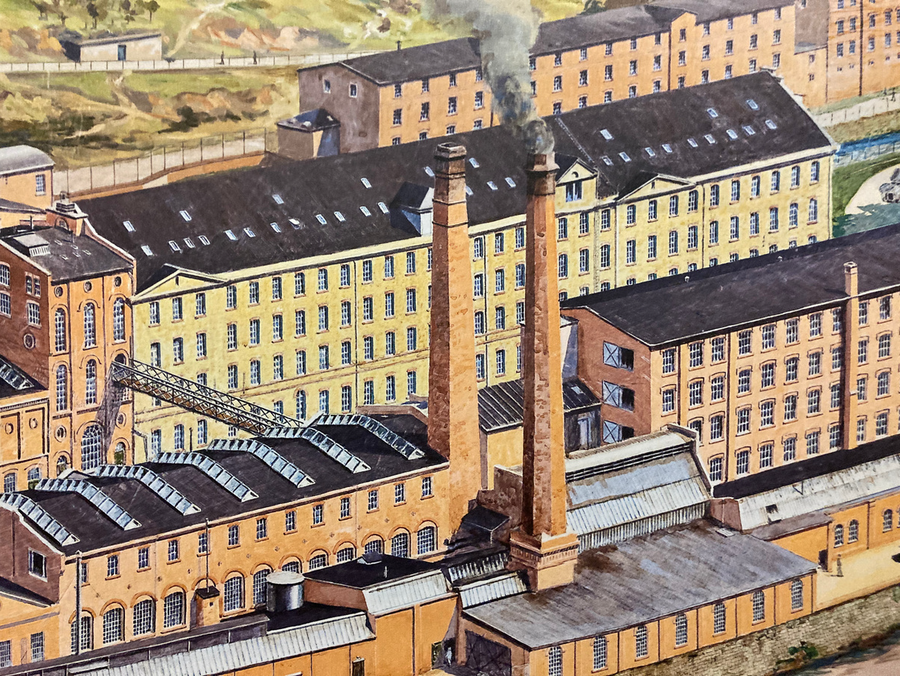
Photo: Faculty of Humanities and Cultural Studies
The conference marks the conclusion of the exhibition of the same name, ‘El hilo de la memoria: Obreras españolas y cultura del trabajo en la industria textil de Renania del Norte-Westfalia’, which is on display at the University Library until 13 October. The exhibition sheds light on the migration of Spanish women into the textile industry of the Bergisches Land, thereby bringing to the fore a hitherto little-researched chapter of post-war European history. It was curated by students from the Faculty of Humanities and Cultural Studies under the supervision of Dr Carmen Pérez González.
Historical sources and personal memories
The conference programme covers a wide range of topics, from the history of migration to the culture of remembrance. Prof. Dr Matei Chihaia from the University of Wuppertal will open the proceedings. He will be followed by Prof. Carlos Sanz Díaz from the Universidad Complutense de Madrid, who will speak about Spanish migrants in the Federal Republic of Germany between 1955 and 1973.
Mercedes Riba from the Centro de Estudios Bejaranos will provide a particularly detailed insight into the world of work. She will present internal documents from the German textile company Johann Wülfing & Sohn, which bear witness to the recruitment of workers from the province of Salamanca in the 1960s. These historical documents thus provide direct insight into the history of migration in the Bergisches Land.
Experiences of loss and grief
Prof. Dr Joseba Achotegi from the Ulysses Syndrome Institute at the University of Barcelona will then address the personal aspects of migration. He examines the ‘7 duelos de la migración’ – the seven experiences of loss and grief that can be associated with migration – as well as the so-called Ulysses Syndrome among Spanish emigrants between 1955 and 1973.
Prof. Dr Jenny Augustin from the University of Osnabrück turns her attention to memory in the present day. Her contribution, ‘Memorias entretejidas’, explores graphic novels set in both Germany and Spain.
Memory across generations
Following the talks, the exhibition will conclude at 4.30 pm with a closing reception and drinks. From 5.30 pm to 6.30 pm, there will be a moderated discussion with the speakers, as well as Rosario Fernández Bravo and Carmen Houben, who, as members of the second generation, will contribute their own perspectives on migration history. The discussion will be moderated by Dr Carmen Pérez González from the University of Bergisch.
In this way, the conference brings together various strands: historical documents, academic research, artistic forms of remembrance and personal experiences. Together, they paint a picture of how Spanish migration has shaped the world of work and daily life in the Bergisches Land – and how this history is passed down through the generations.