Research funding
Using mechanical power to develop new materials and therapies
The researchers want to understand how mechanical forces can specifically control chemical processes in polymers. // Photo artegorov3@gmail - stock.adobe.com
The focus is on a field of research that has become increasingly important in recent years: mechanochemistry. Here, chemical reactions are not triggered by heat, light or electrical energy, but by mechanical forces - such as pressure, tension or ultrasound. While such mechanisms are already well understood in classical chemistry, fundamental general rules for polymer mechanochemistry are still lacking. This is precisely where the CRC comes in.
The focus is on mechanophores
The researchers want to understand how mechanical forces can specifically control chemical processes in polymers - from individual molecules to complex material systems. The aim is to develop new mechanosensitive materials that can change in a targeted manner under load or perform specific functions. Among other things, the group is investigating so-called mechanophores - molecular structures that react to mechanical stimuli. Using modern analysis methods, simulations and machine learning, new mechanophores are to be identified and their reaction mechanisms deciphered. High-resolution microscopy, spectroscopy, microfluidics and computer-aided modelling are used for this.
A particular focus is on biomedical applications. For example, several sub-projects are working on intelligent drug release systems that are activated by ultrasound or flow forces. In future, this could enable drugs to be released only where they are needed - for example in tumour tissue or constricted blood vessels. This should reduce side effects and make therapies more precise.
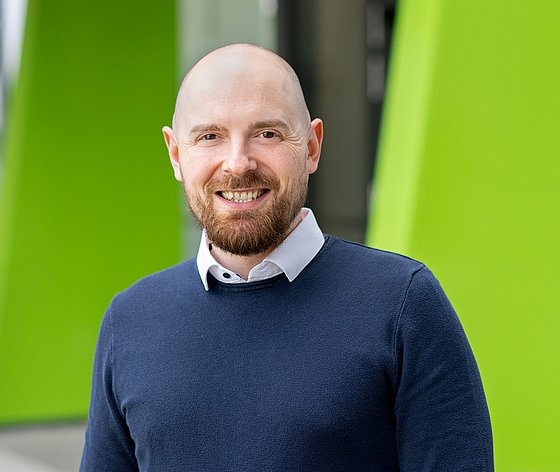
Professor Dr Robert Göstl // Photo Friederike von Heyden
Expertise of the University of Wuppertal in sub-areas
As part of the research network, the Wuppertal scientists are working on the development of in situ methods for the observation of mechanochemical reactions in polymers, among other things. Professor Robert Göstl, head of the Sustainable Macromolecular Chemistry working group at the university of Wuppertal and deputy spokesperson for this CRC, is responsible for the project. "Robert Göstl's significant involvement in this forward-looking Collaborative Research Centre is symbolic of the great networking and modernity of Wuppertal's synthetic chemistry," says Professor Stefan Kirsch, Vice-Rector for Research and Digital Affairs.
The Collaborative Research Centre is designed to run for up to twelve years. In addition to the scientific objectives, it also includes an integrated graduate programme to promote young scientists and a joint digital infrastructure for research data.
With the CRC, the participating institutions aim to further develop polymer mechanochemistry as a forward-looking field of research - with prospects for new materials, more precise diagnostics and innovative therapeutic approaches.