School of Education
Preparing tomorrow’s teachers: a conference at the University of Wuppertal focuses on education for sustainable development
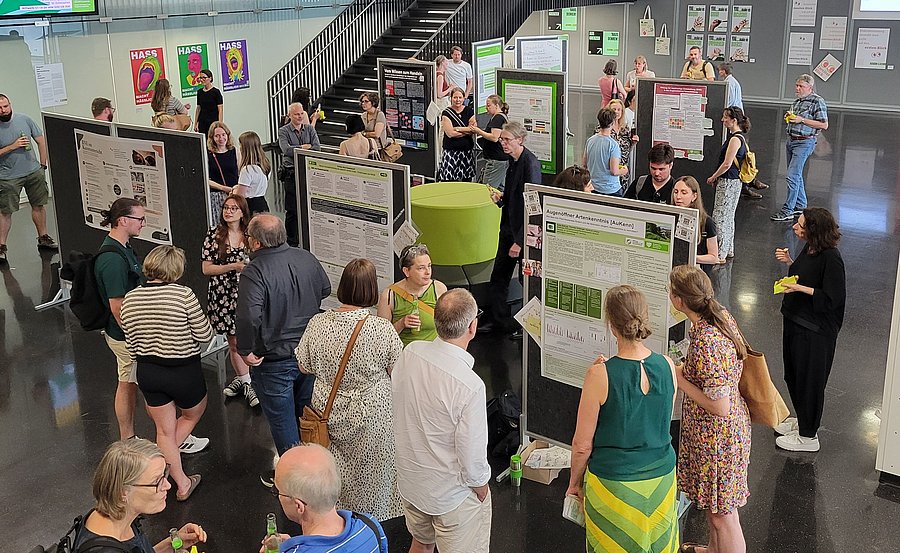
Teacher training at the University of Wuppertal: A lively and constructive exchange at the GSA conference on current projects in the field of education for sustainable development. // photo Monika Quabeck-Gleser
Around 60 participants from the fields of subject-specific didactics, subject-specific sciences and educational sciences accepted the invitation. Prof. Dr Rita Casale, vice-rector for Sustainable Organisational Development and Diversity, gave the welcome address and introduced the event’s theme. The subsequent keynote presentation, ‘ESD in Teacher Education’, was delivered by Dr Andreas Keil, professor of Geography and its Didactics/Social Geography and Coordinator of the ESD University Network in North Rhine-Westphalia. He emphasised the relevance of ESD in the education sector, discussed the relevant structures in the various phases of teacher training and provided insights into practical examples. In doing so, he also provided a smooth transition to the subsequent gallery walk in the foyer of Building K.
At 13 poster stations, lecturers from the University of Wuppertal, together with their teams, presented projects demonstrating just how widely the topic of Education for Sustainable Development is already integrated into teacher training at the University of Wuppertal: ranging from the question of how to increase motivation to the development of a specialisation in ‘Sexual Education in Schools and the Teaching Profession’, which contributes to achieving gender equality and self-determination, right through to plans to establish a sustainability teaching workshop that institutionalises networking on the topic of ESD at the University of Wuppertal.
An overview of all the projects is available on the website for the GSA Convention 2026.
Education for Sustainable Development, or ESD for short, refers to education that empowers people to think and act in a sustainable manner. It enables each individual to understand the impact of their own actions on the world. Development is sustainable when people worldwide, both now and in the future, can live with dignity and fulfil their needs and talents whilst respecting planetary boundaries. Such a societal transformation requires strong institutions, participatory decision-making and conflict resolution, knowledge, technologies and new patterns of behaviour.
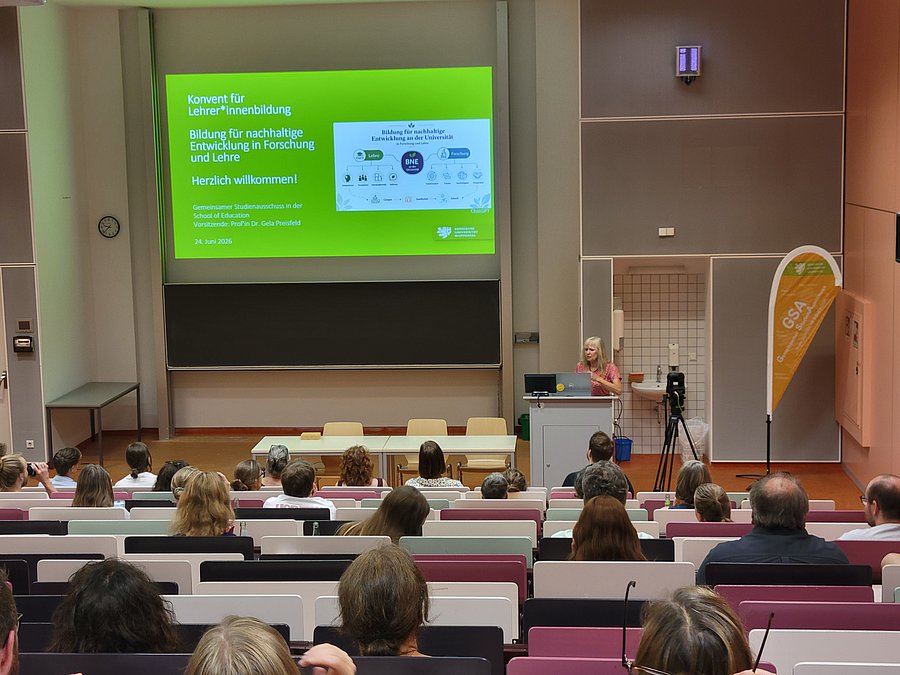
Prof. Gela Preisfeld // photo Monika Quabeck-Gleser
In addition, GSA Chair Prof. Dr Gela Preisfeld reported to the convention on the ongoing activities and projects contributing to the further development of teacher training at the BUW. These include, for example, the implementation of the joint primary school teacher training programme in cooperation with RWTH Aachen University, the internationalisation strategy for teacher training, the evaluation and further development of the practical placement semester, and preparations for the re-accreditation of the Master of Education and the restructuring of the combined degree programmes in special educational needs.
For Prof. Preisfeld, this was her final council meeting in her role as chair; she is due to retire next semester. On behalf of all her colleagues, vice-rector Prof. Dr Susanne Buch and the Managing Director of the School of Education’s Service Division, Dr Michaela Heer, thanked her for her eight-year term of office and, in particular, for her work within the GSA.
Further background
The Joint Study Committee (GSA) at the School of Education coordinates the involvement of all schools in teacher training at the University of Wuppertal. It coordinates the overarching aspects of teacher training in the Bachelor’s and Master’s degree programmes and takes cross-faculty decisions. The chair of the GSA convenes a meeting at least once a year to advise the GSA on matters relating to teacher training. All those involved in teacher training at the University of Wuppertal are invited to attend.