special collections
Successfully restored and digitised: historical treasures return to the University Library
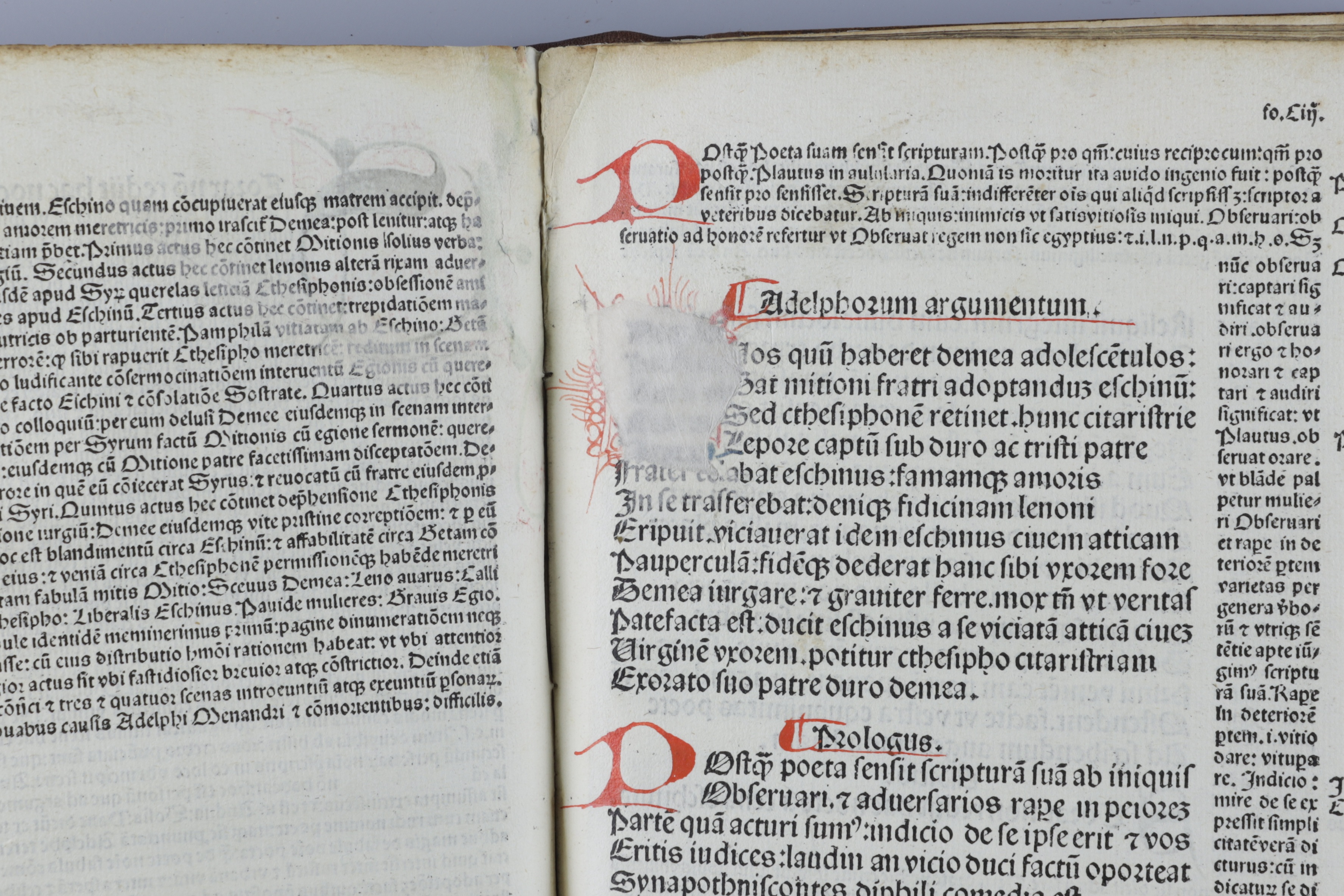
Damage to the paper of the incunabulum from 1490. Fortunately, this copy has very few large areas of loss. // Photo: LVR-AFZ, paper restoration
This incunabulum, which is over 500 years old – that is, an early printed work from the early days of book printing – contains the comedies of the ancient Roman author Terence, together with accompanying commentaries. As the only surviving copy of this edition, it is a unique specimen and comes from the estate of the Cologne-based classical philologist Günther Jachmann (1887–1979), which was acquired by the University of Wuppertal in the mid-1980s.
“Before Jachmann was presented with the incunabulum as a gift for his fiftieth birthday, it was rebound. This is stated in a dedication note written in Latin on the inside back cover,” reports Dietmar Kallwellis, specialist librarian at the university library. It was precisely this leather binding – which is therefore considerably younger than the book itself, but stylistically modelled on the earlier period – that was the main reason for the current restoration. “The binding had become brittle over the decades and therefore urgently needed professional repair,” explains Kallwellis. Restoration work was also carried out on the original 15th-century book block during this process, including, for example, the filling of gaps and the reinforcement of the folds.
Browsing through old pages digitally
Terence incunabulum from 1490: https://noah.nrw/ubwretro/content/titleinfo/6010418
Mercator’s atlas from 1578: https://noah.nrw/ubwretro/content/titleinfo/6500274
Overview of the University Library’s digitised historical collections: https://noah.nrw/ubwretro
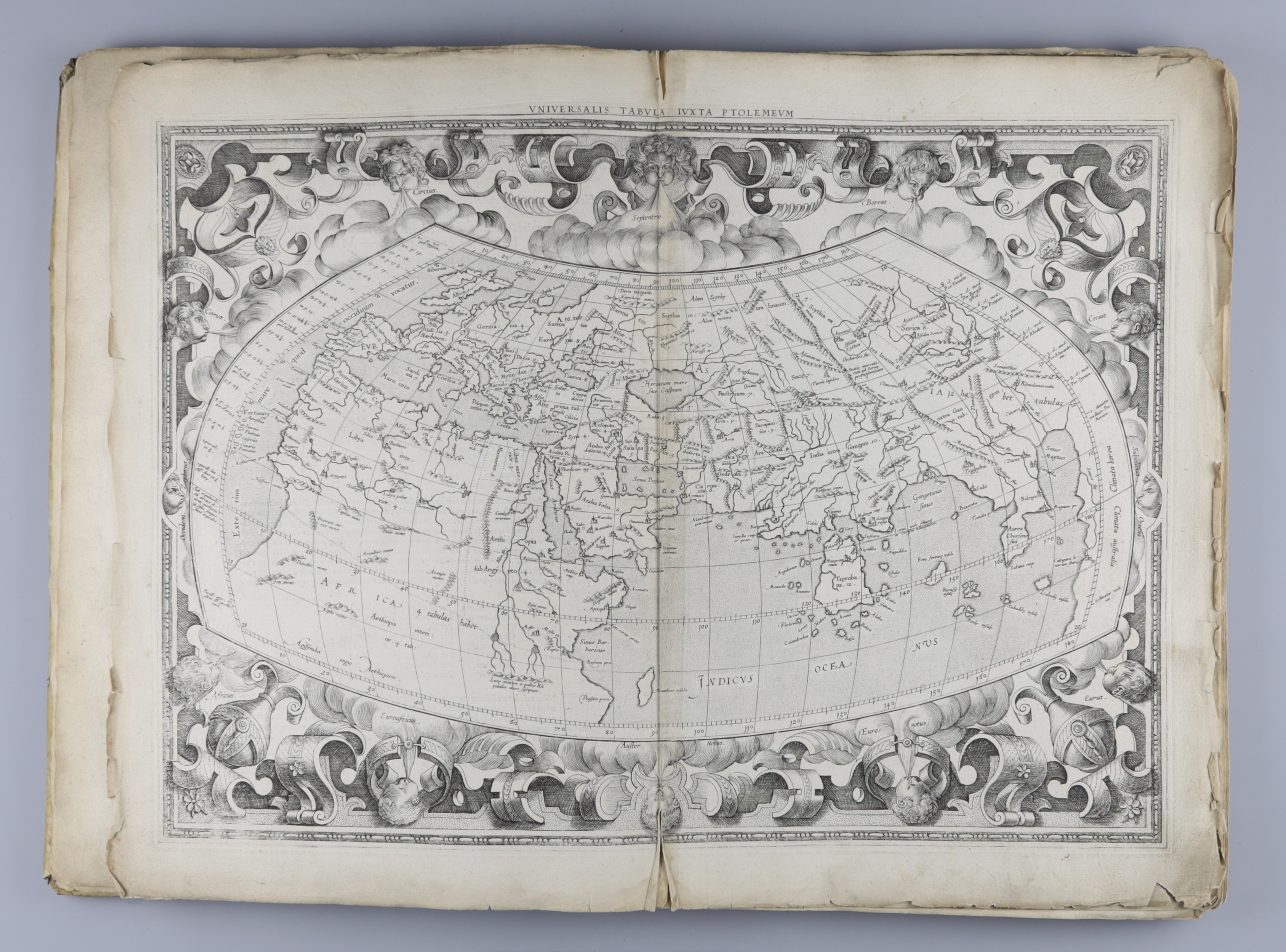
As can be seen here from the example of the Ptolemaic world map, the copy of the Mercator atlas from 1578 exhibited various types of paper damage, such as soiling and tears – particularly along the edges – as well as water damage and layers that were coming loose or had shifted. // LVR-AFZ, paper restoration
Mercator’s atlas from 1578 is a special item from the historical school library of the Wilhelm-Dörpfeld-Gymnasium in Wuppertal, parts of which were transferred to the University Library on permanent loan in 2017. The volume has already been on display twice in exhibitions at the University Library.
As impressive as the contents are – with their nearly thirty detailed copperplate engravings of three continents – it was, once again, the binding that had suffered greatly over the centuries due to frequent use and storage conditions that were not always gentle. The parchment used as the cover lining on this copy had, over the years, become wavy and shrivelled – as is typical of the material – and had also become stained and cracked. Furthermore, some of the double-page maps had come loose from the binding and showed signs of age-related damage. Thorough paper restoration, along with the cleaning and stabilisation of the binding, proved to be an effective remedy in this case.
The restoration workshop of the Rhineland Regional Council in Pulheim-Brauweiler undertook the restoration of these two valuable volumes, together with four further examples from the 16th and 17th centuries in the library’s historical collection.