International exchange
The next generation: ModConFlex project paves the way for new technologies and careers
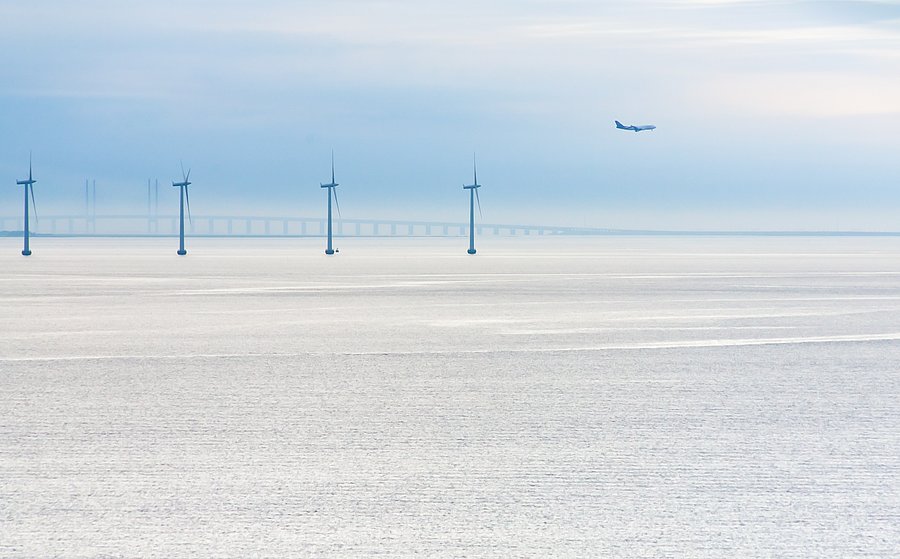
The ModConFlex project is about modelling and controlling flexible structures that interact with water and air - such as wind turbines and aircraft wings. // Photo Colourbox
By improving the modelling of floating wind turbines or longer, narrower wings, for example, the next generation of wind turbines and aircraft could become significantly more powerful: They adapt better to changing wind and flow conditions or turbulence, or reduce air resistance and thus lead to lower fuel consumption. Before they can be manufactured, development requires a thorough understanding of how such flexible structures behave in interaction with water and air. For example, what influence do waves have on a floating wind turbine and its rotor blades? And thinking even further: what structures are needed to intelligently connect the wind turbines and thus optimise their operation?
The ModConFlex project, which is funded by the European Union, aims to provide answers to these questions. Doctoral students in four EU countries, the UK and Israel are working on various aspects of flexible structures - from modelling the processes to controlling them.
"An absolute gain"
ModConFlex connects eight universities that have jointly set themselves the goal of training the next generation of researchers to tackle the challenges in this specialised field of research. One of them is the University of Wuppertal: project coordinator Professor Birgit Jacob heads the Functional Analysis working group in the Department of Mathematics and supervises two ModConFlex doctoral students from Croatia and Morocco.
She explains the central idea: "With ModConFlex, the EU enables doctoral students to gain international experience. Over the course of their doctorate, they conduct research at three different universities and work for one of our industrial partners. This network is an absolute benefit on many levels. We are not only paving the way for sustainable and efficient technologies. For the young scientists, it is a great starting point for their further personal and professional development - whether in research or industry. They benefit from the exchange with excellent experts in their field of research, the numerous contacts they make and the valuable cultural exchange."
Change of perspective included
Together with her colleague Dr Katrin Heinrichs, the Wuppertal mathematics professor is currently preparing a three-day conference to which all doctoral students researching in the programme will come to Wuppertal with their supervisors. They will present their research results to date and have the opportunity to exchange ideas with international guest speakers from the network and beyond. They will also look beyond the boundaries of their own specialisations. "Among others, we have a speaker in the programme who uses related modelling techniques in medical technology. This once again underlines the general applicability of the research questions that our doctoral students are currently addressing from a mathematical or engineering perspective," emphasises Katrin Heinrichs.
The ModConFlex conference will take place from 10 to 12 June at the Waldhotel Eskeshof. In addition to lectures and discussions, the programme also includes a city tour that will take the international guests from the conference hotel through Briller Viertel and past the Nordbahntrasse to Luisenviertel.
An interview with BUW PhD student Kaja Krhac, Croatia
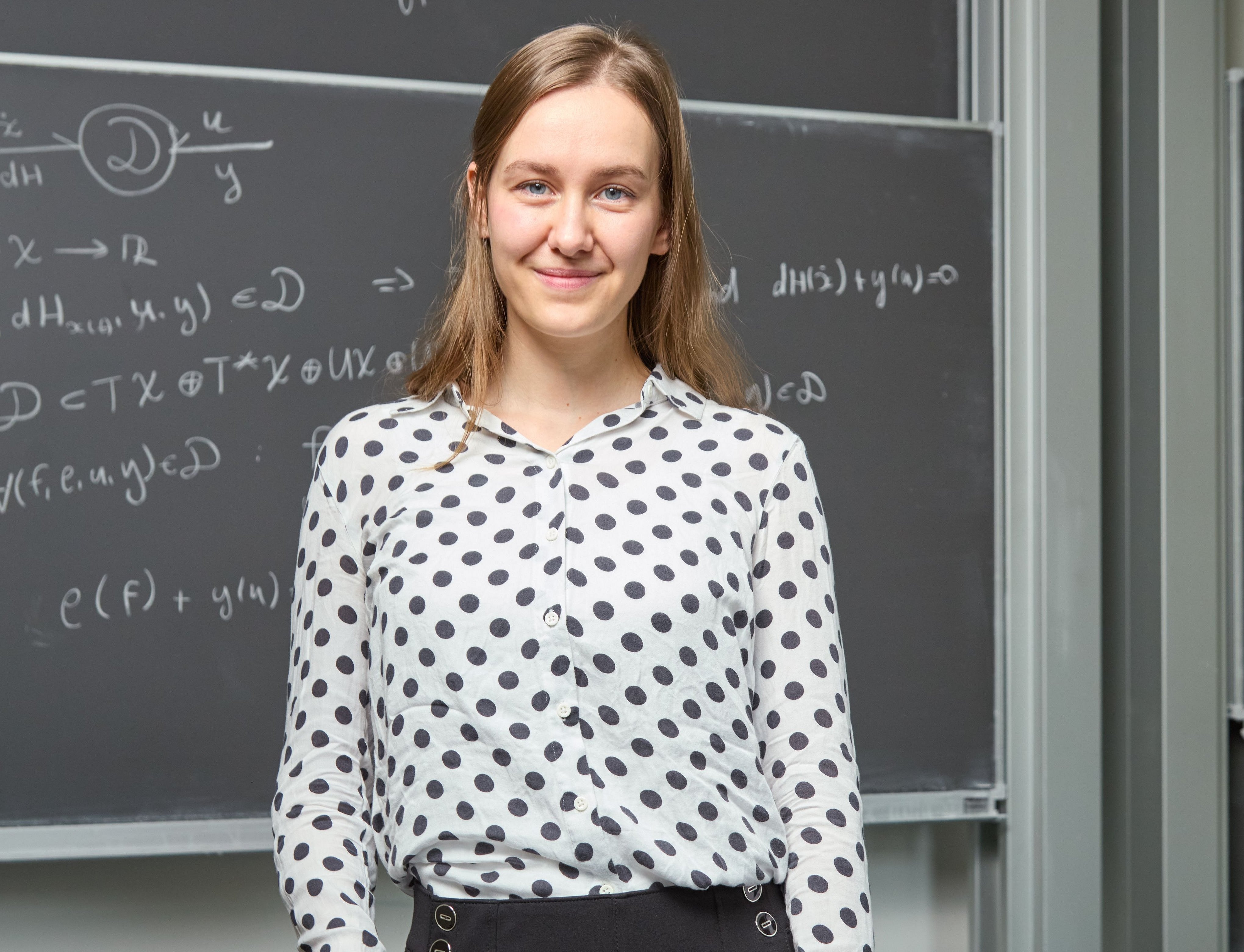
BUW doctoral student Kaja Krhac // Photo Sigurd Steinprinz
In your opinion what is the most special about ModConFlex?
For me, the programme’s greatest strength is its diverse network of experts. ModConFlex doesn’t just sit at the intersection of various fields and research topics, it exposes you to a multitude of methodologies and academic styles. This environment has allowed me to adopt strategies that work best for me and shape my own identity as a researcher.
So far, which are you most memorable experiences within the programme?
The highlight of the programme has been the active integration of theoretical research and industrial application – a transition I was initially nervous about. Successfully translating abstract mathematics into practical solutions has showed me that rigorous theory is a powerful tool in industry, making models both more accurate and reliable.
What are your plans after finishing your doctorate?
While I haven’t finalised my exact path yet, my time with ModConFlex has solidified my passion for research. I’ve found that the persistence required to reach a result is exactly what makes the process so rewarding. Moving forward, I plan to continue in a research-oriented direction where I can apply the interdisciplinary skills I’ve built through the programme.
An interview with BUW PhD student Bouchra Elghazi, Morocco
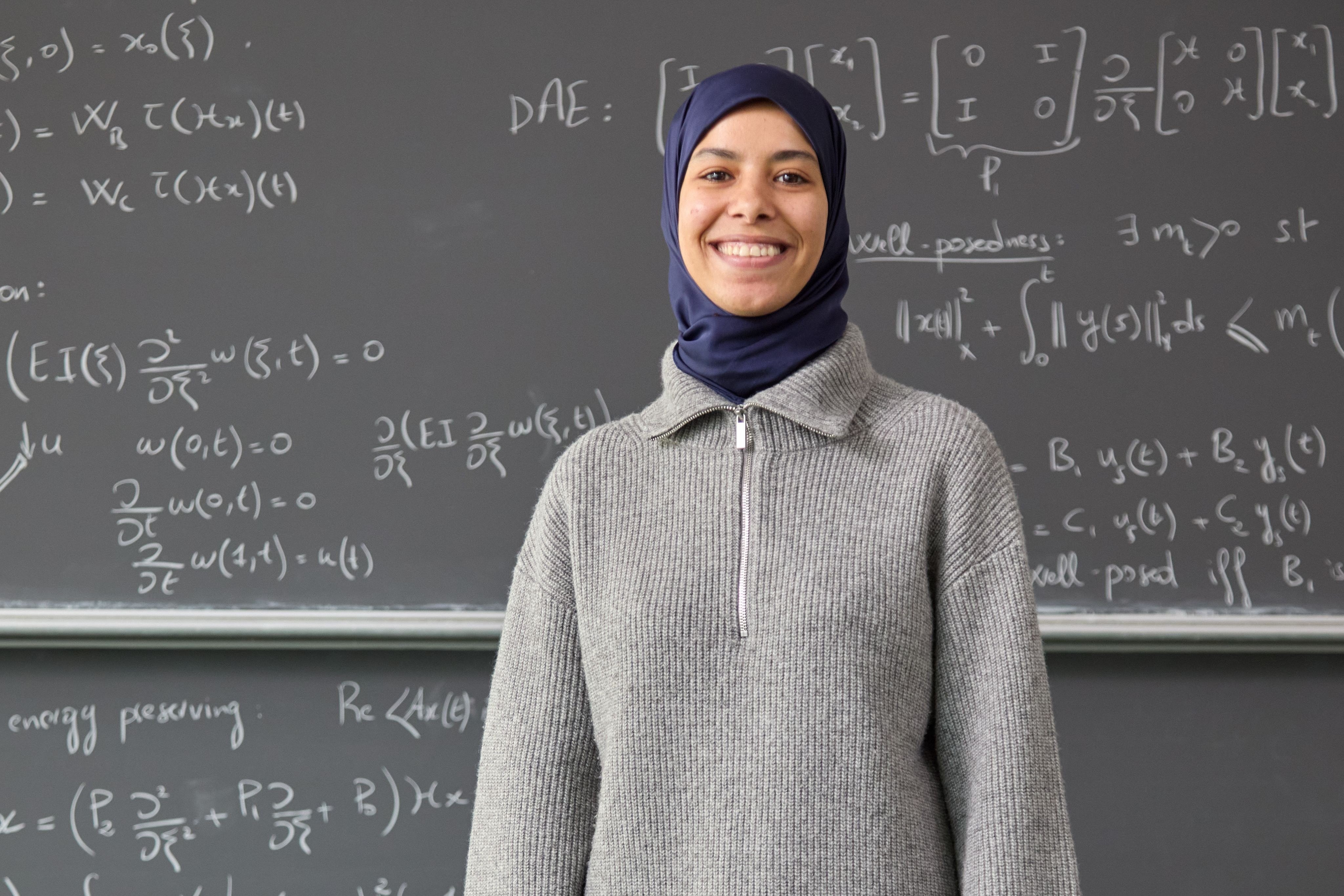
BUW doctoral student Bouchra Elghazi // Photo Sigurd Steinprinz
In your opinion what is the most special about ModConFlex?
It's an international PhD program where people from different fields work together, and students gain experience both at universities and in industry, not just in one place.
So far, which are you most memorable experiences within the programme?
The most memorable experience was presenting at my first major international conference (CPDE in China), where I also won the IFAC Young Author Award.
What are your plans after finishing your doctorate?
Continue in academia and pursue a postdoc after my PhD.
More background
In ModConFlex, the University of Wuppertal cooperates with the universities in Tel Aviv, Twente, Besançon, Bordeaux and Erlangen-Nuremberg as well as the non-EU-funded universities of Warwick and Imperial College London. In addition, 16 other academic and industrial partners from Germany, France, the UK, Italy, the USA and Spain are contributing their expertise to the network.
The doctoral students researching in the project are each employed at a university where they are also enrolled for their doctorate. They may only have spent a maximum of one year in the country of the supervising university three years prior to the start of the contract. During the course of their doctorate, they will spend time at two other universities and with an industrial partner.
The project is funded by the EU via the Marie Skłodowska-Curie Actions research programme (MSC actions) with a total of around 2.7 million euros. The MSC actions aim to promote the mobility and career development of researchers across countries and sectors, create a strong pool of European researchers and make Europe a more attractive research location for scientists. The University of Wuppertal will receive around 521,000 euros for the ModConFlex project.