New on the portal
Two more of Arthur Schnitzler’s works have been published digitally
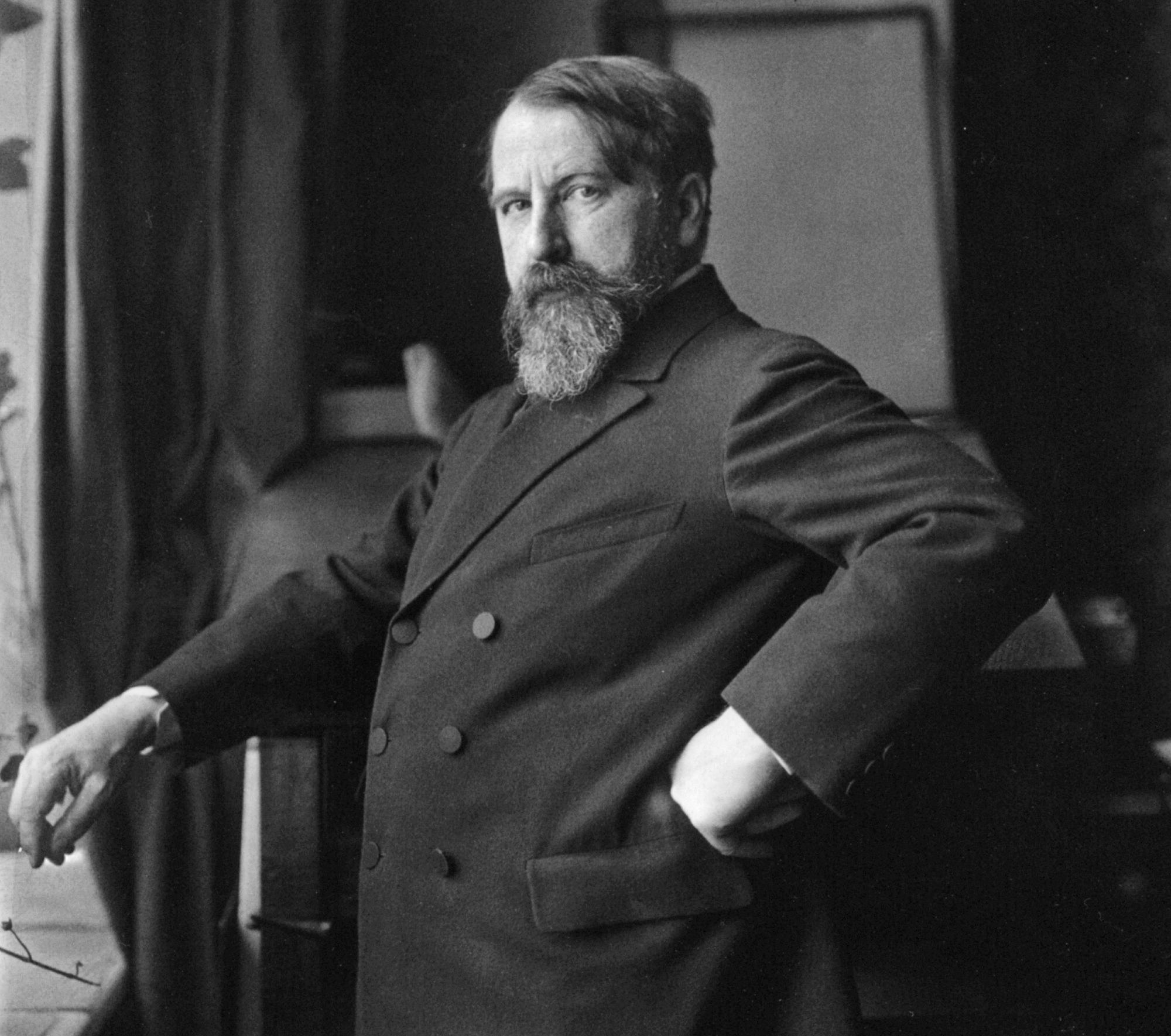
Arthur Schnitzler // Photo (public domain) Ferdinand Schmutzer, Public domain, via Wikimedia Commons
The Sisters or Casanova in Spa
This is particularly evident in the example of The Sisters or Casanova in Spa. The play is based on plot ideas that Schnitzler had already jotted down in the 1880s and 1890s, and developed over several decades from a one-act play originally planned under the title ‘Jealousy’. The work received decisive impetus from Schnitzler’s intensive study of Giacomo Casanova, whose memoirs inspired him to set his story in the world of the 18th century.
The result was a verse play that the author himself held in exceptionally high regard: ‘Rarely has anything of my own been so dear to me,’ Schnitzler wrote to Hugo von Hofmannsthal in 1919; years later, he described the play as ‘technically the most flawless’ of his dramas.
This makes it all the more remarkable that this work, which Schnitzler rated so unreservedly highly, was not granted lasting success on stage. Repeatedly postponed premieres, failed rehearsals and protracted conflicts with theatre directors prevented the hoped-for success. The edition now available digitally via the Arthur Schnitzler portal makes it possible, for the first time, to trace in detail the unusual history of the work, its publication and its staging, based on all surviving documents.
The Last Letter of an Artist
The edition of The Last Letter of an Artist reveals another aspect of Schnitzler’s literary work. Over a period of almost 25 years, the author wrestled here less with the subject matter than with the appropriate form: one after another, he drafted the story of a ‘man of letters’, who believes he must experience profound personal pain in order to create a great work, first as a diary, then as a tragic anecdote, as a novella, as a first-person narrative by a doctor, and finally as a (novelistic) letter from the writer himself.
Although Schnitzler continued to revise the text right up until the final years of his life, it was not published until after his death and thus without the author’s authorisation. The historical-critical edition now being published therefore does not follow the posthumous first edition, but instead, for the first time, presents a reading text based on the final manuscript revised by Schnitzler himself. The differences from the text in the previously circulating version of the first edition are highlighted here. At the same time, the edition documents in detail the numerous attempts and detours that led to the novella’s final form.
Further new features
Also now available online are the complete thematic commentaries on the previously edited works Comedy of Seduction and Professor Bernhardi, meaning that further key works by the author are now comprehensively explored within their historical, cultural and biographical contexts. The commentary on Professor Bernhardi was compiled by the Edition’s British partner team.
More background on the research project
The research project ‘Arthur Schnitzler Digital: A Digital Historical-Critical Edition (Works 1905 to 1931)’ is being carried out by researchers at the University of Wuppertal, the University of Cambridge and University College London, in cooperation with Cambridge University Library, the German Literature Archive in Marbach, the Arthur Schnitzler Archive in Freiburg and the Trier Centre for Digital Humanities. The German sub-project, founded in early 2012 and funded as a research project by the North Rhine-Westphalian Academy of Sciences and the Arts as part of the Academies Programme, is working on the works from 1914 onwards.