Weekend trip to Weimar
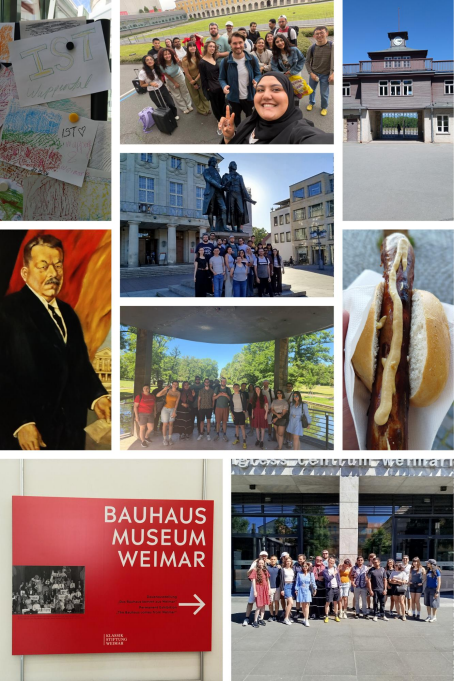
As part of an educational trip to Weimar, participants explored various aspects of German history, the culture of remembrance and democratic values through guided tours, museum visits and group discussions.
The programme began with the guided tour ‘Decolonise Weimar – Colonial Places in Weimar’. Participants learnt about Germany’s colonial past and examined how colonial structures and ideas continue to influence society and public memory today. The tour encouraged critical reflection on the visibility and legacy of colonialism in Germany.
A visit to the Weimar City Museum focused on the history of democracy and the Weimar Republic. Through a film screening and guided discussion, participants gained an insight into the development of democratic institutions in Germany, as well as the challenges faced by the country’s first democracy.
Another guided tour, “Celebrated and Misused: Weimar as an Instrument of Politics”, examined how political actors have used and interpreted Weimar’s cultural heritage for their own purposes. The programme highlighted the relationship between culture, politics and historical narratives.
A key part of the excursion was the visit to the Buchenwald Memorial. During a tour of the former concentration camp and the permanent exhibition, participants learnt about the persecution, suffering and murder of prisoners under the National Socialist regime. The visit provided an important opportunity to reflect on human rights, anti-Semitism, discrimination and the responsibility to preserve historical memory.
The final part of the programme was a visit to the Museum of Forced Labour under National Socialism. The exhibition focused on the millions of people who were forced to work under inhumane conditions during the Nazi era. Personal testimonies and historical documents illustrated the scale of exploitation and the lasting impact on those affected.
Throughout the excursion, reflection sessions encouraged participants to draw connections between the various topics covered during the programme. The combination of colonial history, democratic development and the culture of remembrance provided valuable insights into the importance of historical awareness and democratic responsibility in contemporary society.