Phenomena that influence each other
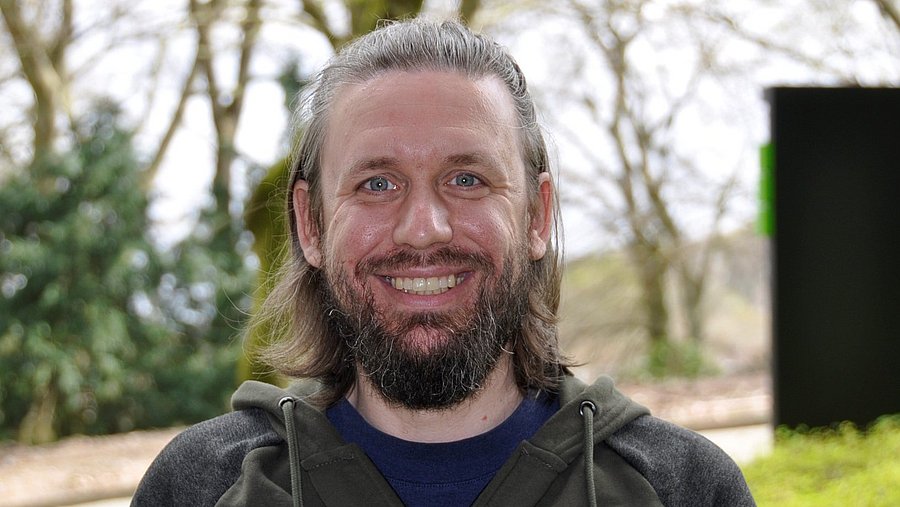
Dr Christoph Kalicinsky / Atmospheric research
Photo: UniService Third Mission
An interplay of many phenomena that influence each other
Physicist Christoph Kalicinsky on the interdisciplinary work of atmospheric research
Atmospheric research scientifically investigates physical and chemical properties and processes in the Earth’s atmosphere and their interactions with the Earth’s surface and oceans, so in principle, the entire Earth system. It deals with topics such as the composition of the air and its dynamics, radiation and air pollution, as well as weather and climate. Research is carried out on an interdisciplinary basis, including atmospheric chemistry, which deals with chemical processes in the air, for example, or atmospheric physics, which focuses on the radiation balance of the atmosphere, dynamics and cloud physics, among other things. These processes affect different, interrelated areas of the atmosphere. Dr Christoph Kalicinsky, research associate at the Institute for Atmospheric and Environmental Research at the University of Wuppertal, explains the structure of the atmosphere as follows: “The atmosphere can be distinguished into layers the easiest by temperature. Most people have heard of the layers before, so they are familiar with the troposphere and stratosphere, but the terms mesosphere and thermosphere are less familiar. In the troposphere, the higher up you go, the colder it gets,”. “Everyone knows this from their holidays: you’re sitting in the sun at the bottom of the mountain and there’s still snow on top of the mountain. The reason is that the pressure decreases with altitude and air that rises expands and then gets colder.” In the layer above, the temperature gradient reverses again and the temperature rises. These boundaries, or rather the transitions between individual atmospheric layers, are known as pauses. “The tropopause is therefore the transition between the troposphere and the stratosphere,” the researcher explains. “The fact that it then gets warmer again in the stratosphere is due to the ozone layer, because UV radiation is absorbed there. This layer protects us from the part of the solar UV radiation that is dangerous for us, which would otherwise reach the earth unhindered and have consequences like skin cancer. Breaks exists in the other atmospheric layers as well, i.e., layers with decreasing and increasing temperatures always alternate.”
Boundary between the troposphere and stratosphere has shifted
The boundary between the troposphere and stratosphere shifted due to global warming between 1980 and 2020. This also has an impact on humans. “The tropopause has indeed shifted upwards by around 200 metres during this period, i.e., 50 metres per decade.” This is also confirmed by a study known to the researcher. “A change in atmospheric conditions can have a variety of influences on humans,” Kalicinsky says, “especially on the phenomena in the troposphere, because such altered conditions can have effects on circulation. Such a change, like a shift in air pressure systems, can have an impact on large-scale weather patterns, for example, or on the altitude ranges in which turbulence occurs more frequently.” This in turn could have an impact on air traffic, which is partly orientated to the position of the tropopause, meaning that aircraft would have to fly at different altitudes. The major challenge in this type of research, however, is the fact that individual phenomena cannot be considered in isolation from one another. Warmer air in the troposphere, one of the main reasons for the shift in the tropopause, also contains more water vapour, for example, and this in turn has an influence on the weather and the radiation balance.
Individual pieces of the puzzle form an overall picture
Atmospheric research is part of basic research and essential for our understanding of the weather, climate, and air quality as well as for tackling global challenges like climate change. The scope of research is correspondingly large. “It is an interplay of many phenomena that influence each other,” Kalicinsky says, “and because it is so diverse, atmospheric research can be divided into a relatively large number of sub-disciplines. Here at our institute in Wuppertal, we conduct atmospheric physics, where we currently focus on trace gas transport and dynamics, the radiative properties of clouds and particles and temperature measurements in the upper atmosphere, as well as atmospheric chemistry, which deals with air pollutants on a large scale. Although many scientists are very specialised and deal purely with dynamics or cloud physics, for example, it is very interdisciplinary research. You can only see the overall picture afterwards if you look at all the individual pieces of the puzzle, because it is difficult to decouple the individual processes.” Another special feature of research is that you basically live in your experiment and, as a researcher, you cannot intervene directly in this experiment as you would in a laboratory, you can only observe it.
Weather forecasts are becoming increasingly accurate
Atmospheric research also helps to improve weather modelling and thus forecasts, which are now fairly accurate. “It always depends on what, where and for what period the forecast is made. It's easier to give a forecast for the highest daily temperature or the lowest daily temperature than for the amount of precipitation, for example.” The forecasts of the Deutscher Wetterdienst (DWD, the German Meteorological Service) are quite accurate and the DWD also provides values on the quality of the forecast. “When it comes to temperature forecasts for the following day, the forecast quality is over 90%. Generally speaking, the shorter the period, the more accurate the forecast. Such a high forecast quality is very pleasing, as weather events have an impact on a wide variety of life situations. The weather is also decisive for our temperature measurements at an altitude of 85 kilometres. These measurements are only possible when there are no clouds obscuring the view.” Atmospheric research not only helps to improve weather models, it also helps to optimise climate models and long-term forecasts.
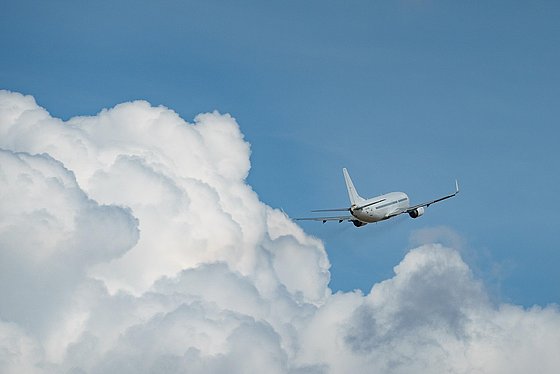
Aeroplane above cloud cover
Photo: Pixabay
Our ozone layer is on the road to recovery
A few years ago, the protection of the ozone layer was a constant topic in the news. The great media interest in this issue has subsided. The Montreal Agreement on the phasing out of chlorofluorocarbons (CFCs) in particular has banned their production worldwide since 2010. But what is the situation with our ozone layer today? Kalicinsky: “Not as good as it was in 1980, before the ozone hole was discovered, but it is on the road to recovery. It has to be said that the hole in the ozone layer is not continuous; it forms and closes anew every year. It only occurs at the end of winter and in spring and is therefore a seasonal phenomenon. Due to air currents in the stratosphere, a vortex forms and the air masses in the polar region are then trapped in this vortex. There is hardly any air exchange with mid-latitudes. In principle, this is like a huge reaction vessel in which the ozone is broken down. As this is a limited area in the Antarctic and Arctic, it is also referred to as a “hole”, whereby the ozone loss in the Antarctic is significantly greater than in the Arctic and the phenomenon of the ozone hole is usually only referred to there.” Thanks to the ban on CFCs and other ozone-depleting substances, the ozone layer is on the right track. Forecasts suggest that the ozone layer will recover to its 1980 level in the next two decades, with the process taking around two decades longer in the Antarctic. “The global result of the ban on CFCs shows that you can achieve something if you work together. For once, the whole world really did work together on this issue. Something that would also be necessary and desirable in the fight against climate change. We have to be aware of the fact that we all only have this one atmosphere.”
However, current research findings also show that emissions of banned ozone-depleting chemicals are on the rise again, even though their production has been banned worldwide since 2010. “There is a well-known study that has investigated this. Three of these substances can arise during the production process of the substitute substances.” In addition, the illegal use of harmful substances must always be taken into account, as there are no centralised emission measurements worldwide that are carried out uniformly and everywhere, explains the physicist. “Even measuring with aerial survey planes is not permitted everywhere. This requires measurement authorisations from the individual countries. That’s why there are gaps. In addition, these substances often have a lifespan of over a hundred years and they were used in refrigerators, for example, of which there are still remnants.”
Gases influence the temperature of our planet
Similar to the CFCs produced by humans, which cause ozone depletion, the concentrations of other gases that influence the temperature of the Earth’s system are also altered by human activities. “ This influence is most evident in the case of CO₂. Then we talk about fossil fuels. Methane is another important gas, e.g., due to natural gas. However, agriculture and livestock farming also play a decisive role. Humans have a major impact here. However, we are also talking about substitutes for CFCs, some of which have a high warming potential in certain regions of the atmosphere. Although they no longer attack the ozone layer, they contribute to increasing the temperature of the earth system because they are very active in the corresponding radiation areas and in some cases even have a greater heating potential than CO₂. Although these substances are beneficial, they also cause damage. For that reason, the Kigali Amendment (the “Kigali Amendment” is an amendment to the Montreal Protocol, which was adopted in the Rwandan capital Kigali in 2016, and is intended to gradually reduce the global production and use of hydrofluorocarbons (HFCs), editor’s note) had to be introduced to regulate the substitute substances again. However, this time not because of their ozone-depleting effect, but because of their harmfulness to the climate.”
Unfortunately, when a new product or substance is introduced, not all side and long-term effects can always be predicted due to the interplay of various phenomena in the atmosphere, Kalicinsky concludes. “This is where the importance of atmospheric research in its interdisciplinary nature comes to the fore again, as it can help to identify effects and evaluate measures.”
Uwe Blass
Priv.-Doz. Dr Christoph Kalicinsky conducts research at the Institute of Atmospheric and Environmental Research under the direction of Prof Dr Emma Järvinen at the School of Mathematics and Natural Sciences.