Significant cultural venue with citizen participation
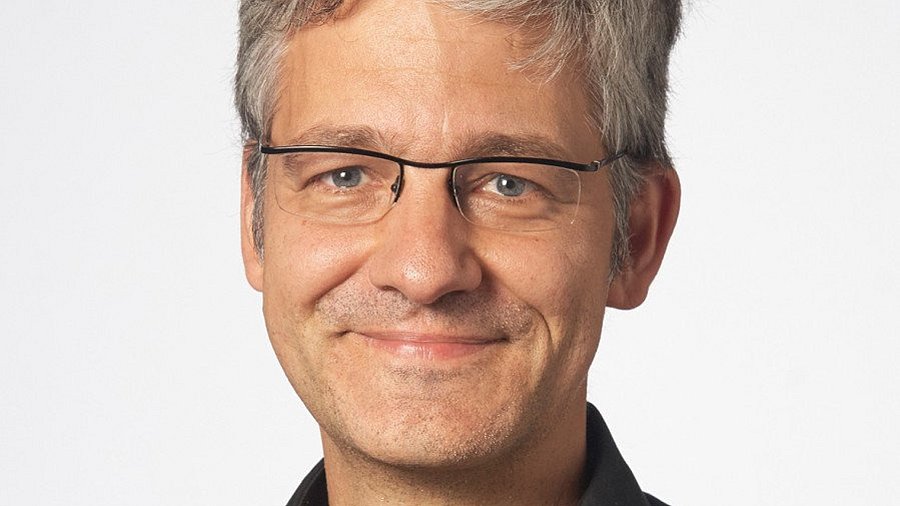
Professor Dr Christoph Rodatz / Public Interst Design
Photo: Sigurd Steinprinz
Cultural venue of the future with a community centre
Christoph Rodatz on an ambitious collective project in the planned Pina Bausch Centre
The planned Pina Bausch Centre is to become a house for everyone, writes the city of Wuppertal on its website and explains: "The Pina Bausch Centre is to become an internationally significant cultural venue. It will be home to the Pina Bausch Dance Theatre and the Pina Bausch Foundation, an international production centre will be established and space for civic participation and the independent scene will be created in the Forum Wupperbogen." Christoph Rodatz, professor of media aesthetics in the Public Interest Design Master's programme at the University of Wuppertal, has been working with students on the topic of civic participation and, in the collective 'Living in Politics', a collaboration between the Public Interest Design Master's programme, the speaker and actor Olaf Reitz and the communication centre die börse, on the possible creation of a citizens' forum in the planned Pina Bausch Centre.
A citizens' forum, but how?
What exactly a citizens' forum should look like in the planned Pina Bausch Centre has not yet been finally clarified. Initial operating concepts suggested a personal, institutional connection, but later there was also talk of a cross-sectional task. In 2020, Rodatz, together with his colleague Pierre Smolarski and student Iris Ebert, initiated the 'Living in Politics' collective, which emerged from the Public Interest Design degree programme. (The Public Interest Design course pursues a creative approach that uses design as a tool for social change and responsibility towards the community, editor's note) "At the time, we had installed an exhibition in the old Schauspielhaus, where a four-week programme was planned. We wanted to introduce the topic to citizens with a focus on local politics." However, the coronavirus crisis brought the project to an abrupt end after ten days. The collective resumed its work in 2022. This time, students Mohammadreza Shirinzadeh and Jonathan Renze and Olaf Reitz were involved. In 2025, the makers - joined by Sina Dotzert from the die börse cultural centre - presented five events on the valley axis between Vohwinkel and Oberbarmen. Interested visitors were invited to a workshop at the old theatre three weeks later to develop further ideas.
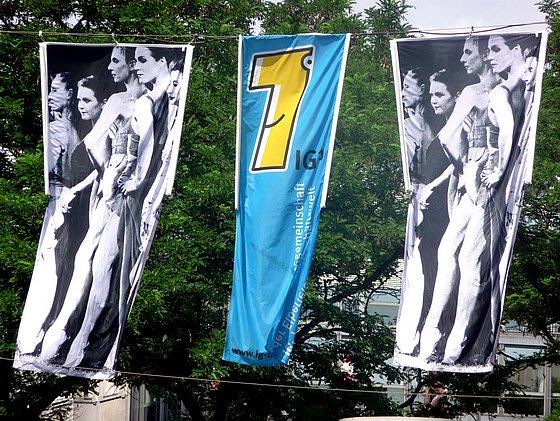
Is the Pina Bausch Centre coming? Scene from the Wuppertal dance theatre Pina Bausch on flags in Wuppertal-Elberfeld
Photo: CC BY-SA 3.0 de
Dance theatre programmes support the idea of the Citizens' Forum
"The basic idea behind the five performances in the Talachse was to trace the development of the Pina Bausch Centre over the last twelve years for an interested audience and ultimately to highlight the importance of the Citizens' Forum," explains Rodatz. The preliminary phase of planning a Pina Bausch Centre was financed by the federal government, the city and the state. In 2022, the former Head of Department for Theatre, Dance and Music at the Ministry of Culture of the State of North Rhine-Westphalia, Bettina Milz, took over the coordination of the content. "She has also put together a variety of programmes in recent years, together with the dance company, but also curated them on her own initiative and has repeatedly provided impetus where this citizens' forum has played a role." In this context, the collective 'Wohnen in der Politik' is a building block in the overall structure, so to speak, and Rodatz emphasises: "There is a great potential of people who already have points of contact with it and realise that they can help shape it responsibly." The core group of former workshop participants now consists of around 25 people who meet monthly to develop further ideas for the citizens' forum. The students have stepped back as the creative force, explains the theatre studies graduate, "because the idea is that such a citizens' forum should also live from within itself and ultimately become its own collective. As a representative of public interest design, I am of course still present and support the citizens' forum that is now being created."
Cultural centre of the future with citizen participation
The planned Pina Bausch Centre could become a cultural venue of the future with citizen participation, whereby Rodatz emphasises that institutional involvement is an important aspect, as people are needed to continuously support the work of the centre in the long term. "It needs people employed there to initiate things and keep things alive. At the same time, we are currently trying to create a body that is as representative of the city as possible." To this end, the collective is working with Professor Detlev Sack from the Institute for Democracy and Participation Research and the City of Wuppertal's Office for Citizen Participation. "This committee should then also have decision-making powers, i.e. have access to funds and spaces and be able to initiate projects."
New campaigns in uncertain times
Actions are also planned for the current year. The collective meets regularly on the 15th of each month and welcomes active participation from citizens, so interested parties are always welcome. "We are currently running an art project called 'A Thousand Voices', which is being realised by an artist and was developed by part of this group," explains Rodatz. "You can take part and an installation performance is planned in the city centre." There will also be another workshop meeting with the active group to take a retrospective look at what has happened over the past year and where things are heading.
However, as we all know, planning always describes the human ability to mentally anticipate steps that are necessary to achieve a goal. In doing so, one is often dependent on other players. In the case of the Pina Bausch Centre, there are currently two major factors of uncertainty. Rodatz explains: "It is currently unclear how things will continue at all, on two levels. A decision will be made at the end of the year as to whether the Pina Bausch Centre will go ahead at all, which is not yet clear, as we do not know the current position of the new council majority. The second point is that this advance funding from the federal, city and state governments expires at the end of this year and it is then not certain whether there will be any further funding. After all, the completed Pina Bausch Centre will not open until the 2030s and until then the citizens' forum is supposed to develop and test future approaches."
Uwe Blass
Christoph Rodatz is a junior-professor of media aesthetics in the school of art and design at the University of Wuppertal. His teaching and research focus is on the Master's programme "Public Interest Design".