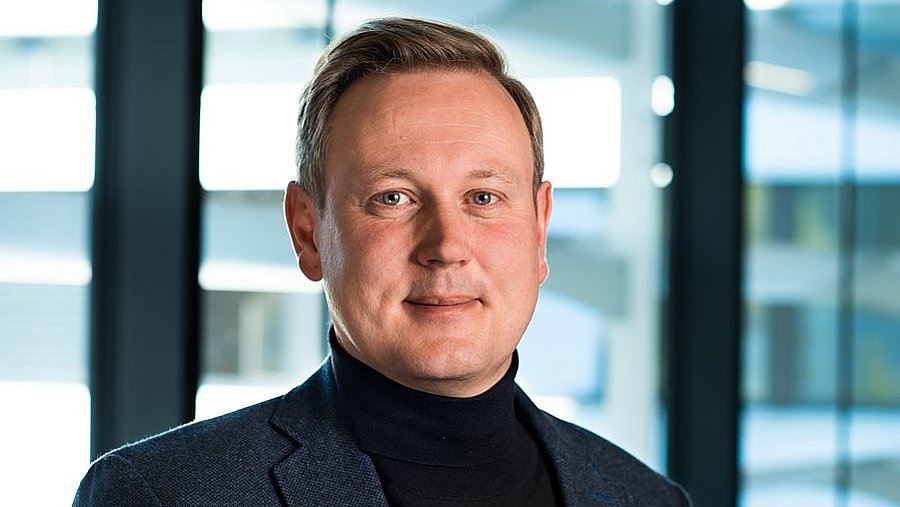
Addicted people in our society
Dr Tim Lukas / Spatial contexts of risk and safety
Photo: Bo Tackenberg
Creating retreats for the scene
Sociologist Tim Lukas is campaigning on a voluntary basis for a change of perspective in dealing with addicted people in our society
“Drug use in public spaces and the changes associated with crack are a major social problem in all cities. The whole debate about the cityscape should really be understood against this backdrop,” sociologist Tim Lukas says. He wants to draw attention to the situation of addicts in public spaces with a photo exhibition about the open drug scene on Cologne’s Neumarkt, which has already been shown in Wuppertal.
Exhibition concept in collaboration with the Ohm Nuremberg
Projects often evolve because scientists know each other or have heard of each other and then network. Addiction researcher Daniel Deimel, professor of health promotion and prevention at the Faculty of Social Sciences at Nuremberg Institute of Technology, had heard about a car photography project (the aim of car photography is for residents of a neighbourhood/social space to select certain places on their own and photograph them, editor’s note) by Lukas about homeless people in Düsseldorf and approached the researcher from Wuppertal with the idea of carrying out this project with addicts in Cologne’s Neumarkt. Deimel himself lives in Cologne and had already researched the changing patterns of drug use in the scene there. “I liked the idea straight away,” Lukas says, “because there were also overlaps with the drug scene in Düsseldorf, and the use of crack cocaine is becoming more and more of a problem in many places, not only on Cologne’s Neumarkt. That’s why we wanted to investigate the situation using car photography and distributed disposable cameras to local addicts.”
Insights into the lives of addicts
Using photography is a way of reaching a lot of people and it is easy to talk about photos. “So, we had the photos and talked to the respective photographers, five people from the drug scene on Neumarkt, about their chosen photo motifs.” The exhibition aims to raise awareness and, above all, change people’s perspectives. “With these photos, you can now gain an insight into the lives of addicts and people who live on the streets,” Lukas explains. For addicts, the drug scene is a risky environment in which they are exposed to numerous dangers. “They have to be there because the dealers are there, because they can buy drugs there, because there may be no other places where they can be in the public space at all. On the street, they experience violence, marginalisation and police checks. It is a highly deprived life on the street, but one that parts of mainstream society would prefer to push out of the city centres altogether.” The fact that the acceptance of drug addicts in the city centre is always very fragile was recently demonstrated in Cologne. Citizens protested loudly at an event against a new addiction support centre planned by the city. “Nobody wants that in their neighbourhood. That’s part of the problem” Lukas comments. “However, it is important that supporting infrastructures, i.e., addiction support centres and drug consumption rooms, are not built somewhere on a greenfield site. These spaces must be in places that are easily accessible, where the scene is already present and where it is also possible to participate in society.”
The continent is flooded with cocaine
Drugs have always been consumed in city centres, but crack cocaine brings a new quality into play. “Crack is smokable cocaine, it is boiled with baking soda and then the so-called crack rocks are formed,” the sociologist explains. “These stones are then smoked in a pipe. For some years now, we’ve had a veritable glut of cocaine, not only in Germany but throughout Europe.” The quality is good, the price is low and the markets are full. "“At the same time, we are seeing that the Taliban have stopped the cultivation of opium poppies, which means that the basic substance for heroin is becoming increasingly scarce on the markets and you can already see admixtures of synthetic opioids such as fentanyl, which are fifty times stronger than pure heroin. At the same time, there is this shift towards crack cocaine.” Like other narcotics, it produces an immediate effect. The difference, however, is that heroin depresses users and crack has the exact opposite effect. "It’s described as an ICE that rushes through the brain. However, this drugged state also wears off very quickly. The consumption process is repeated at short intervals until the drug consumers are completely exhausted. All basic needs are neglected. They no longer drink or eat, they no longer pay attention to personal hygiene, their only concern is to consume for many hours. The consumption of crack cocaine has serious health consequences for the user. However, it has consequences for outsiders either. Stress increases for all people in the environment of open drug scenes. This is the case everywhere, including here in Wuppertal,” Lukas says, describing the current situation.
Crack is changing drug consumption rooms
Crack has been around since the end of the 1990s, but back then it was only sold and consumed in the area around the railway station of Frankfurt, Hamburg and Hanover. “All other cities in this country hardly had a serious problem with it,” the scientist explains. “This situation has changed with the massive availability of cocaine in recent years. Initially, the cocaine was still cooked up in the scene itself, then at some point the crack cocaine was traded in the scene.” The process itself now takes less than a minute; all you have to do is fill the pipe, light it and inhale. For this process, you no longer necessarily go to the drug consumption room, where drugs can be consumed in a hygienic and controlled atmosphere. Although drug consumption rooms are increasingly offering more places for inhaled consumption, a short puff from a crack pipe can be taken anywhere.
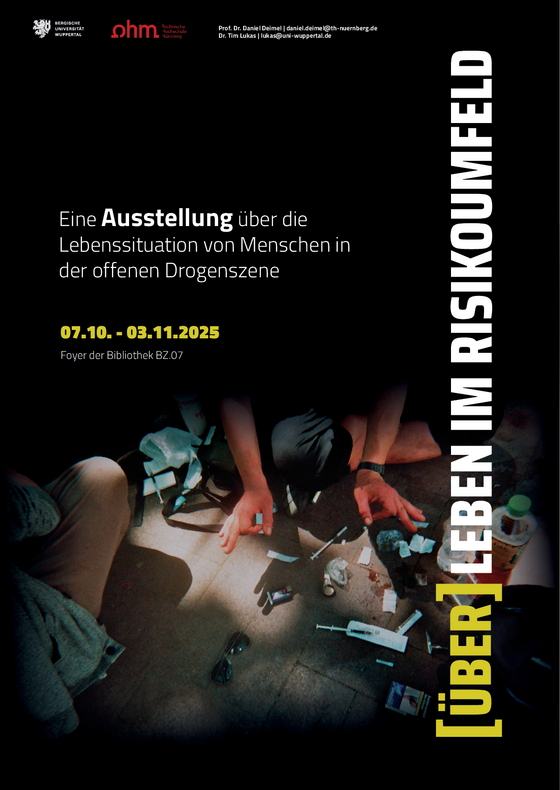
Exhibition poster in the university library
Poster: University of Wuppertal
Retreats are necessary - the Zurich model as a role model
“We have this problem in many big cities,” Lukas explains, “and the scene needs places to retreat to. Protected places where consumers can also find peace and quiet. In many places, people are currently talking about the so-called Zurich model. There, places have been created where the scene can stay and consume and where addicts can even trade and purchase drugs to a certain extent.” Germany is still a long way from this, but the expert says: “If we don't want all these phenomena, i.e., drug consumption and drug dealing, to take place in public spaces, then we have to create places where this is tolerated. That’s the approach in Zurich. They have created three such places in the city centre and it works. At the same time, they also say ‘zero tolerance for drug use and drug dealing in public spaces’. All cities are looking for solutions. The Chief of Police of Düsseldorf and the Chief of Police of Cologne have just been to Zurich to look at the situation there.”
However, implementation in Germany is not without its problems. “The police in Switzerland, who have a law enforcement mandate just like in Germany and have to prosecute a criminal offence, do not do this in the so-called contact points and turn a blind eye, so to speak. The police know that drugs are being traded there, but tolerate it as long as it remains in these areas,” Lukas explains. It was a long way for the Zurich law enforcement officers to publicly support this model. However, it is crucial that it has proven to be effective and that it is handled pragmatically. He would also like to see this pragmatism here in Switzerland, Lukas says.
“It’s not about us as a majority society no longer confronting the drug problem, it’s not just about relieving the burden on public spaces, it’s also about creating centralised places where addicts can live and consume in dignified conditions under hygienic conditions and without the pressure of persecution. It’s a disease. That’s the point where we would like to go with the exhibition. We show pictures and interview passages from the lives of people suffering from addiction to the visitors- Perhaps this experience will lead to people becoming a little more sensitive to the living situation of addicts,” the scientist hopes, because for him it is a socially relevant topic that urgently needs a change of perspective.
A place for everyone is not a place for the scene
When the Döppersberg was remodelled, Wupperpark Ost was created for the drug scene in order to give people a place of their own. Café Cosa was opened at a place away from the crowds. “That was a sensible idea,” Lukas says and continues, ”but if the current debate about the Wupperpark is about creating a space for everyone, then you have to realise that it means taking the space away from the drug scene.”
When the Döppersberg was rebuilt and Café Cosa moved to Kirchplatz, the scene moved on to the city centre, Karlsplatz, and Kirchplatz, resulting in numerous complaints from businesses, retailers, and restaurants because there were no alternative places to hang out in public spaces. “That was a difficult situation. However, if I drive out the scene from this place again, then I need to have a plan for where people in the scene can spend time in alternative places in the future,” he demands. “Hardly anyone wants to have the open drug scene on their doorstep. These are typical NIMBY conflicts (NIMBY stands for “Not in my backyard”, editor’s note), which is a major social problem in the cities. The fact is that we have problems with growing homelessness and open drug scenes.” We actually need more tolerance for these social problems and all the other changes that we will face in cities in the future. Research has long recognised that tolerance arises from contact and encounters and that the majority society must therefore also confront itself with the perspectives of other people.
Travelling exhibition coming soon to the State Criminal Police Office in Düsseldorf
“What we also have in mind with the exhibition are security and law enforcement agencies. We have already taken the exhibition to various locations, such as the University of Applied Sciences for Police and Public Administration in in North Rhine-Westphalia in Cologne and Duisburg. For us, this is a target group that is confronted with the scene in their daily work. We want to sensitise them to dealing with addicts in a humane way. We get a direct response wherever the exhibition is located,” Lukas concludes, “for example in Cologne. When we set up the exhibition, a lecturer came with her course and it was great to see how prospective police officers engaged with the exhibition.” The organisers also received positive feedback from visitors via a guest book. In collaboration with Deutsche Aidshilfe, a poster exhibition was organised as well, which was presented in 60 cities. A project which could serve as a model. In March, the exhibition will be on display at a conference at the NRW State Bureau of Criminal Investigation in Düsseldorf. The theme of the event: “Foresight”. Tim Lukas would also like to see this for society.
Uwe Blass
Dr Tim Lukas is Head of the Spatial Contexts of Risk and Security research group in the Department of Civil Protection, Disaster Relief and Property Security in the School of Mechanical Engineering and Safety Engineering at the University of Wuppertal.