When the saw came to the tree
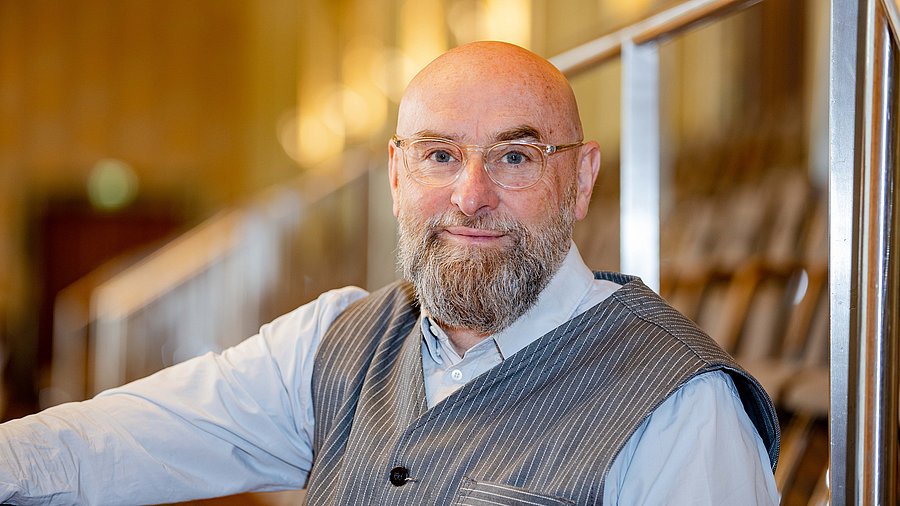
Prof. Martin Topel / Industrial Design
Photo: Sebastian Jarych
When the saw met the tree
Industrial designer Martin Topel on one of the first portable chainsaws
A hundred years ago, a one-man business from Stuttgart revolutionised forestry and agriculture with a single piece of kit. Which company was it?
Martin Topel: It was ANDREAS STIHL AG & Co. KG, founded in Stuttgart in 1926 by Andreas Stihl.
Stihl’s advertising slogan is: ‘At home in nature. Since 1926’. What was it that they produced back then that was so revolutionary?
Martin Topel: In 1926, Andreas Stihl developed one of the first portable chainsaws. In 1929, the company launched the first petrol-powered chainsaw ready for series production. It made felling and cutting up trees significantly faster and more efficient than manual labour with an axe and saw.
However, the first petrol-powered chainsaw was almost not shown at the Leipzig Spring Fair in 1930. Why not?
Martin Topel: Shortly before the fair, there were technical problems with the prototype. It was only at the last minute that they managed to get the saw up and running and demonstrate it at the fair.
Although this chainsaw still weighed 46 kg and had to be operated by two men, demand across Europe was nevertheless huge, wasn’t it?
Martin Topel: Yes. Despite its heavy weight, it made work much easier and saved a great deal of time. That’s why it quickly attracted a great deal of interest, particularly from forestry operations in many European countries.
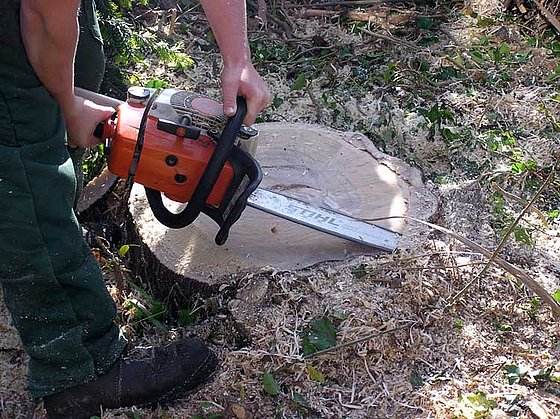
A modern Stihl chainsaw in action
Photo: public domain
During the Great Depression, Stihl also developed one of the first washing machines. Why did its success wane again in the late 1930s?
Martin Topel: With the increasing focus on the core business and the German economy’s shift towards arms production in the run-up to the Second World War, the manufacture of domestic appliances was gradually phased out. Stihl refocused on power tools.
Stihl has been the world’s best-selling chainsaw brand since 1971. That’s partly down to a very personal approach to marketing, isn’t it?
Martin Topel: Yes. For decades, Stihl has relied on personal advice from authorised specialist dealers. They not only sell the equipment but also provide training, maintenance and repairs. This strengthens customer trust. In addition, Stihl developed a global competition that enjoys great popularity – the Stihl Timbersports World Championship.
From 1973 onwards, the company also began targeting DIY enthusiasts with its products. Which particular advertising character did it use?
Martin Topel: Stihl introduced the likeable **Stihl Woodworm** as its advertising character. He made the products particularly well-known among hobbyists and ensured a high level of brand recognition. Stihl also developed the successful mascot Buzz the Beaver as a brand for merchandising and fan merchandise.
Is Stihl on the right track with its cordless products?
Martin Topel: Yes. Demand for high-performance cordless tools is growing rapidly worldwide. Modern batteries are quieter, emission-free in operation and require less maintenance. That is why Stihl is investing heavily in the development of new battery technologies and is continuously expanding its range. Other professional brands such as Bosch Blue and Hilti are also successfully following this path.
Why is the colour orange so important in the company logo?
Martin Topel: Orange ensures high visibility in the forest and on building sites, whilst also symbolising power, energy and brand recognition. The colour has been a key hallmark of Stihl for decades. Particularly when it comes to design language, Stihl committed to a high degree of consistency and sensitive refinement from very early on – with great success!
What makes the STIHL MS 500i so special?
Martin Topel: The STIHL MS 500i was the world’s first series-produced petrol chainsaw with electronically controlled fuel injection. This makes it easier to start, ensures very rapid throttle response, automatically adjusts the fuel supply to different operating conditions and offers an excellent power-to-weight ratio. It is therefore regarded as particularly powerful and efficient for professional forestry work. I myself use a Stihl petrol-powered brushcutter in my garden, which has consistently impressed me over the years with its reliability and exceptional performance. It’s just that my neighbours would like me to switch to battery power soon.
Uwe Blass
Professor Martin Topel is an industrial designer and has been teaching as a professor on the Industrial Design course at the University of Wuppertal since 1999. His chair focuses on the product development of capital goods and product systems.