
The scandalous play ‘Sex’ and the fictional character Mae West
Dr Peter Lodermeyer / Art History
Photo: Private collection
The double standards of the upper classes
Art historian Dr Peter Lodermeyer on the premiere of the scandalous play ‘Sex’ and the fictional character Mae West
On 26 April 1926, the comedy ‘Sex’, written by and starring Mae West, premiered on Broadway. Although the reviews were universally poor, the play went on to become a success. Why?
Peter Lodermeyer: Its success was due precisely to the poor reviews. Negative criticism can be the very best form of publicity, and in the case of ‘Sex’, that was certainly true. Critics had indeed lamented the play’s lack of artistic quality, but this had little deterrent effect, for what brought this theatre production to prominence was primarily its content: the story of the prostitute Margy LaMont, played by Mae West herself. The fact that the play – whose first act is set in the red-light district – was described in reviews as immoral, obscene and harmful to young people only served to heighten curiosity about it. In psychology, this is known as reactance: when an action is forbidden or considered taboo, this very fact arouses the desire to carry it out. One should also not forget that in 1926, the USA was in the midst of the Prohibition era. At that time, the production, sale and transport of alcoholic beverages were prohibited. As is well known, this had by no means deterred Americans from their desire for whisky or champagne. Illegal pubs, known as speakeasies, sprang up by the thousands like mushrooms. It was much the same with ‘sex’: the more scandalous the play appeared, the greater the interest in seeing it. From the perspective of today’s theatre scene – one need only think of the excessive physicality in the performances of the choreographer Florentina Holzinger, whose contribution to the Venice Biennale I recently saw – it is hard to understand the fuss surrounding ‘Sex’ any longer. Contrary to what the sensational title might suggest, the play isn’t particularly racy. There have been plays on the subject of prostitution before, but in Mae West’s play – which, incidentally, she wrote under the pseudonym Jane Mast – the protagonist is not a fallen sinner, but a positive heroine who confidently goes her own way, thereby exposing the hypocrisy and double standards of the upper classes. That was presumably the real scandal.
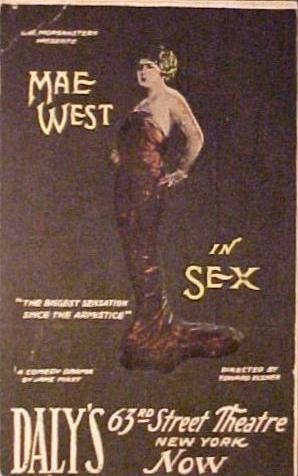
Opening night poster for the 1926 play ‘Sex’
Photo: public domain
The author and leading lady Mae West was a living provocation throughout her life. How could one tell?
Peter Lodermeyer: ‘Sex sells’ – that well-known saying certainly applies to Mae West’s career. She made her breakthrough, including financially, with the 1926 play ‘Sex’; just one year later, in her play ‘The Drag’, she tackled taboo subjects: male homosexuality, cross-dressing, and a critique of ‘conversion therapy’ aimed at curing supposedly pathological homoerotic inclinations. Bringing queerness (as it came to be known) to the stage was already a very daring move at the time and soon drew the attention of the censors. Throughout her life, Mae West was fearless when it came to the subject of sexuality; that was the essence of her provocative public persona. With her wit and quick repartee, she repeatedly played to expectations of erotic innuendo and suggestive humour. Her outfits – her figure-hugging clothes, her platinum-blonde dyed hair or wigs, body language tailored entirely to exude erotic allure – combined with her sharp tongue, rounded off her persona and turned her into a fictional character, a brand, of which she herself sometimes spoke in the third person.
After 375 performances, the New York Police Department shut down the show – which had by then been seen by 325,000 spectators – and Mae West even had to go to prison, though that did nothing to dent her popularity, did it?
Peter Lodermeyer: That really is real-life satire: from April 1926 to February 1927, ‘Sex’ ran for a total of 375 performances, averaging almost 900 attendees per show. That was a resounding success; the play had long since achieved cult status, with many people going to see it several times over. We also know that high-ranking figures from the police and the judiciary were sitting in the audience with their wives. And then, all of a sudden, they claimed to have realised that the play was immoral and a danger to young people? Mae West was ordered to pay a fine of 500 dollars and serve 10 days in prison. She could easily have avoided the latter by posting bail, but as the brilliant self-promoter that she was, she knew how to use her imprisonment to the advantage of her own publicity. She had herself driven to the prison in a limousine and later recounted that, whilst in custody, she had dined with the prison governor and his wife. Of course, she didn’t miss the opportunity to mention that she hadn’t had to wear prison uniform and had instead worn silk underwear. Incidentally, her sentence was reduced by two days for good behaviour. If the vice squad’s intention had been to silence Mae West, they had failed miserably. Her time in prison considerably boosted her popularity as a Broadway star. But it was through the medium of film that she first became world-famous. Her first Hollywood productions, *Night after Night* in 1932 and *She Done Him Wrong* a year later, were huge successes. Mae West, who was already 40 years old at the time, became the highest-paid actress of all time – and also a sex symbol, even though she only partially conformed to Hollywood’s ideal of beauty, which was then epitomised by Jean Harlow and later by Marilyn Monroe.
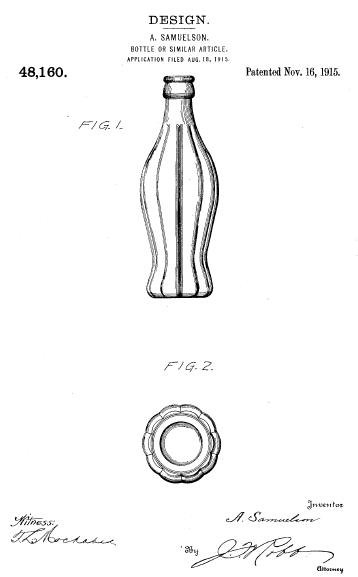
Patented design of the Coca-Cola bottle, 1915
Photo: public domain
In any case, her sex appeal had an impact on the cultural world. One of the earliest references to Mae West was the Coca-Cola bottle. What’s the story behind that?
Peter Lodermeyer: The curved Coca-Cola bottle, also known as the contour bottle, is a true design classic with high recognition value. In 1950, it made it onto the cover of *Time* magazine. It has also gone down in art history, certainly since Andy Warhol made it the subject of numerous large-format paintings in 1961–62. In fact, the contoured bottle was sometimes referred to as the ‘Mae West bottle’ in the 1920s and 1930s, but its design was by no means inspired by the actress. Coca-Cola has, after all, been on the market since the last decade of the 19th century. The bottles were initially quite conventionally designed, so in 1915 the Coca-Cola Company decided to launch a competition to create a distinctive bottle shape. The winner was a small team led by Earn Dean from the Root Glass Company, based in Indiana. Funnily enough, the bulbous shape of the contoured bottle was the result of a productive misunderstanding. Dean was under the mistaken impression that cocoa was also used in the production of Coca-Cola and based his design on the shape of cocoa pods. The bottle, which went into production in 1916, was ultimately considerably slimmer than the prototype of his design, but still curvaceous enough that, if one really wanted to, one could see the curves of a woman’s body in it. And yet Mae West, who had established herself as a curvy icon through her figure-hugging style of dress, was the obvious comparison – at least for a while. Had the Coca-Cola bottle been invented 40 years later, it would surely have been called the Marilyn Monroe Bottle.
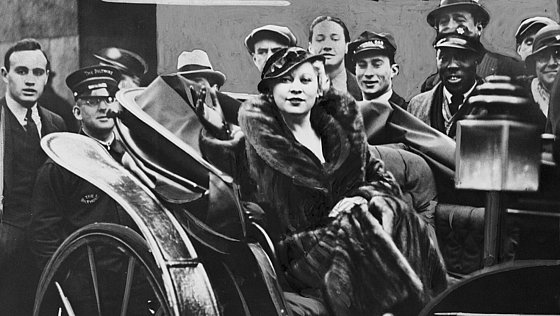
Mae West
Photo: public domain
In 1934, Salvador Dalí created the painting “The Face of Mae West That Can Be Used as a Flat”. What is so special about this surrealist masterpiece?
Peter Lodermeyer: When you ask yourself how motifs from the Hollywood film industry found their way into art, the first person who surely springs to mind is Andy Warhol and his depictions of Marilyn Monroe, Liz Taylor and Elvis Presley. Yet Salvador Dalí had been exploring this theme much earlier. In 1939, he painted the child star Shirley Temple, and in 1955, the British actor Laurence Olivier as Richard III. In 1945, he collaborated with Alfred Hitchcock on the film *Spellbound* and with Walt Disney on the animated short film *Destino*. And in 1934–35, he painted over a magazine photograph of Mae West using gouache and graphite, transforming her face into an interior scene rendered in perspective. The small painting, barely 27 centimetres high, is housed at the Art Institute of Chicago. Is it a surrealist masterpiece? Certainly not in the eyes of André Breton, the mastermind of Surrealism. For him, Dalí’s involvement with Hollywood was merely crass commercialisation, the intellectual sell-out of Surrealism – hence his malicious anagram, in which he rearranged the letters of the name Salvador Dalí to form ‘ávida dollars’ – greedy for dollars. In any case, Dalí’s *Mae West’s Face as an Apartment* is a good example of his ‘paranoiac-critical method’, which consists of imagining something else within images, introducing a double or triple layer of meaning. The painting works through the conflict between surface and space. On the surface, we see enough fragments of Mae West’s overpainted face to recognise her. In the illusionistic space, however – designed using the classical technique of central perspective – the individual facial features recede into the depth and are arranged to form an interior. The hairstyle becomes a curtain opening up a view into the flat, the lips a sofa standing in the middle of the room, the nose a bizarre sort of fireplace, and the eyes gold-framed pictures on the wall. It is as though one were hallucinating a room into Mae West’s face, or, conversely, the actress’s obsessively recurring face into a flat. It is well known that Dalí, who was downright obsessed with psychoanalysis, had read Sigmund Freud’s *The Interpretation of Dreams*. It may have been there that he came across the symbolism of the room as a representation of woman: ‘In the dreams of the French and other Romans, the room serves as a symbolic representation of woman, although these peoples know of nothing analogous to the German “Frauenzimmer”.’ To return once more to Andy Warhol: he, too, produced an unconventional portrait of Mae West. This took place in 1956, when he was not yet working as an artist but as a commercial artist. At that time, he produced his ‘Golden Slippers’ – imaginative shoe designs in ink and ‘gold leaf’ (in reality, merely gold foil) – which were dedicated to celebrities such as Julie Andrews, Truman Capote and James Dean – and, indeed, Mae West as well. Her portrait, in an unusual portrait format, depicts a shapely, stocking-clad lower leg encased in a high-heeled ankle boot with silver-coloured trim. Next to it is a silver rose made of die-cut foil – all very elegant, glamorous and deliberately kitsch. It suits Mae West perfectly.
Her image appeared on the cover of the Beatles’ album *Sgt. Pepper’s Lonely Hearts Club Band*, and her lips inspired Salvador Dalí once again to create a famous piece of furniture in 1972. What is it?
Peter Lodermeyer: The cover for the Beatles’ album “Sgt. Pepper’s Lonely Hearts Club Band”, designed in 1967 by the British Pop Art artist Peter Blake and his then-wife Jann Haworth, is arguably the most famous record cover in the history of pop music. Its iconography is so complex that the art historian Walter Grasskamp devoted an entire book to it in 2004. In fact, a black-and-white photograph of the young Mae West can be spotted in the top left-hand corner. It is reported that the Beatles asked her for permission to use the image, and that she is said to have declined with her characteristic humour: “What would I be doing in a Lonely Hearts Club?” But the Beatles didn’t give up and wrote a very flattering letter to their idol from their youth, who was by then 74 years old, whereupon she finally gave her consent, and so her likeness appears on the record sleeve alongside Karl Marx and Albert Einstein, Edgar Allan Poe, various Indian gurus, Marilyn Monroe and many others on the album cover.
As for Salvador Dalí’s sofa in the shape of Mae West’s lips, this naturally stems from the aforementioned painting ‘Mae West’s Face which May be Used as a Surrealist Apartment’. The Scottish multimillionaire Edward James, who was an enthusiastic supporter of Surrealism and a personal friend of Dalí’s, had the idea of having the sofa from the painting built as a real piece of furniture. In 1938, five examples were produced, two of them for James’s country estate, Monkton House. These were made from red felt wool in the shape of Mae West’s pouting lips, trimmed with black woollen fringes at the bottom and adorned at the top with green felt appliqués in the shape of larvae. This, of course, cries out for a psychoanalytical interpretation. In 1972, Dalí commissioned the architect and designer Óscar Tusquets to create the Mae West Room as an installation for his museum in Figueres. In 2004, Tusquets, through his company BD Barcelona Design, began mass-producing the sofa. It is still available today, made from polyethylene and suitable for outdoor use, but nowhere near as beautifully shaped and elegant as Edward James’s design.
During the Second World War, the life jackets used by the Allied air forces were called ‘Mae Wests’ – that’s another allusion, isn’t it?
Peter Lodermeyer: The website wordhistory.net, which traces the origins of linguistic expressions, states that ‘Mae West’ can first be traced as the name for the Royal Air Force’s inflatable life jackets in January 1940. It was not uncommon for airmen to give more or less humorous nicknames to parts of their extensive kit. ‘Mae West’ instead of ‘life vest’ is, at first glance, just a silly pun – not much wittier than ‘Elvis compressed air’ – but psychologically very interesting nonetheless. The life jackets used to be filled with cork and were rather bulky; the new inflatable versions, which were soft and hugged the torso, apparently reminded the soldiers of female breasts. The fact that they thought specifically of Mae West shows just how prominent she really was in 1940, and how her physicality fuelled the male imagination. The term subsequently became established and found its way into dictionaries. Merriam-Webster defines ‘Mae West’ as: ‘aninflatable life jacket in the form of a collar extending down the chest that was worn by pilots in the Second World War.’ (“an inflatable life jacket in the form of a collar extending down to the chest, worn by aircrew during the Second World War”)
Online, one can find several photographs showing Mae West alongside soldiers wearing inflatable life jackets, whilst she is pictured in her usual tight-fitting dresses that emphasise her curves – curious, yet somewhat disconcerting images.
In Germany, too, there has been a work of art by the artist Rita McBride entitled ‘Mae West’ on Effnerplatz in Munich since 2011. What is this work of art?
Peter Lodermeyer: It is a huge, 52-metre-high sculpture consisting of 32 diagonally positioned, carbon-fibre-reinforced plastic tubes, arranged in a circle to form a waisted silhouette. The American artist Rita McBride, a professor at the Düsseldorf Art Academy since 2003, originally gave the structure the straightforward title ‘Tower’, but changed it to ‘Mae West’ during the planning phase. As she herself later admitted, this decision was merely a diversionary tactic to steer the controversial discussions about technical details and the project’s costs in a different direction. To be honest, the new title does not convince me at all. The sculpture has a thoroughly technoid character; it is particularly striking for its strictly geometric form and contemporary material. It is a so-called single-shell rotational hyperboloid, a shape also used, for example, in cooling towers for power stations. Among the public, the work had also been given nicknames such as ‘knitting dolly’ or ‘egg cup’. I do not know how or why such a gigantic structure is supposed to evoke associations with a female body, nor what meaningful connection there could be to Mae West. It is certainly not defamatory – quite the opposite – for such a monumental sculpture to be reminiscent of industrial architecture or functional design. When the *Süddeutsche Zeitung* ran the headline “A sex goddess for Munich” to mark the sculpture’s unveiling in March 2011, that was rather off the mark.
She is the one who said: ‘Sex is emotion translated into movement.’ Her humorous and direct manner was a deliberate reaction against the prudishness of the time. In 2023, a teacher in Florida had to give up her job because she had shown pupils Michelangelo’s nude David. It seems little has changed in the US since Mae West’s scandalous play ‘Sex’ 100 years ago, hasn’t it?
Peter Lodermeyer: There was a great deal of coverage at the time – though often somewhat one-sided – of the case involving headteacher Hope Carrasquilla, who lost her job at the Tallahassee Classical School . The problem was probably less the fact that she had shown 11- to 12-year-old pupils images of Renaissance works such as Michelangelo’s ‘David’ and ‘The Creation of Adam’ as well as Botticelli’s ‘The Birth of Venus’ to 11- to 12-year-old pupils, but rather that parents had not been informed in advance that their children would be confronted with depictions of nudity. In Florida, the ‘Parental Rights in Education Act’ has been in force since June 2022, a law that grants parents significant say over the content of the curriculum. This law is part of the ‘culture wars’ that repeatedly flare up in the USA, the origins of which surely lie in the fact that the cultural DNA of this country contains two principles that are difficult to reconcile: on the one hand, the Puritan heritage with its religious-conservative value system; on the other, the strong emphasis on individual freedoms. The clash between the two sometimes has consequences that are difficult to understand from a European perspective. The Prohibition Act mentioned above is just one example. Mae West experienced this problem first-hand: her plays and films were scandalised and censored, yet at the same time she was immensely popular and became a true pop-culture icon. With her dry humour, she summed up this contradiction perfectly: “I believe in censorship. I made a fortune out of it.” (“I believe in censorship. I made a fortune out of it.”)
Uwe Blass
The art historian, author, critic and curator Dr Peter Lodermeyer teaches art history in the school of art and design at the University of Wuppertal.