Mobility
How pedalling increases safety in cities
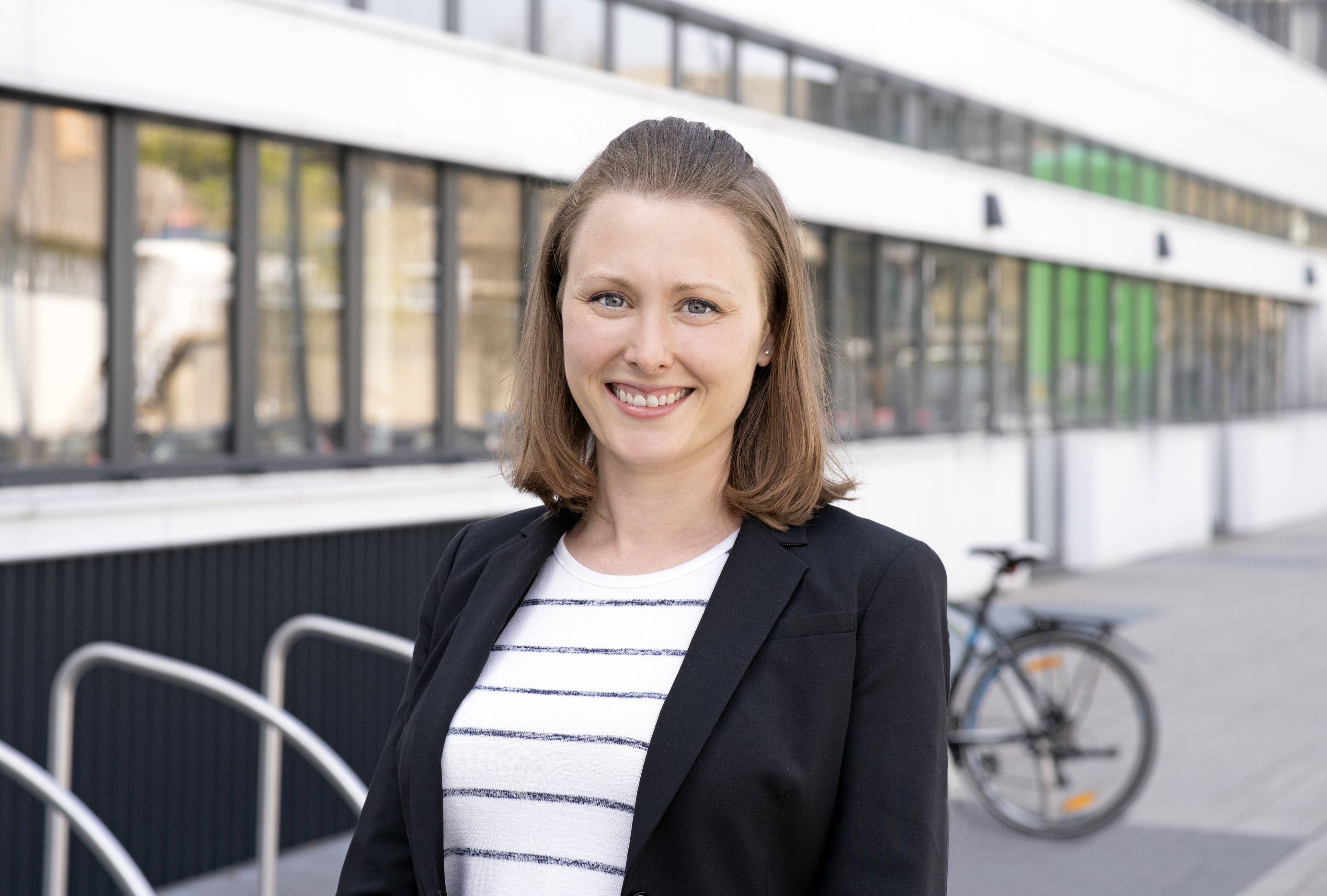
Solutions are needed that promote the best mode of transport for the route in question, says cycling professor Heather Kaths. // Photo Colourbox
"When there are more bikes and fewer cars on the road, it brings a lot of benefits, including for health, quality of life and environmental impact," says Professor Heather Kaths, who has held the Chair of Cycling at the University of Wuppertal since 2021. "You perceive the environment differently and have a good feeling when you get to work."
But in many places, the road to becoming a cycling city is still a long way off. Time and again, the expert has to fight the "car drivers versus cyclists" battle in interviews. "It's annoying," she says firmly. "It's a story that's stuck, but it's rubbish! I'm both a car driver and a cyclist. Many people also travel on foot or by bus, it's a mixture." As a society, we need to find solutions that promote the best mode of transport for each journey. "For me, this is not a question of political opinion. It's logical and efficient for safety, beneficial for the environment and socially beneficial. You have to work on that. All players in the same direction and not against each other."
Tasks of the chair
Heather Kath's first task in teaching is to introduce students to the various possibilities of cycling as a mode of transport. Situations are simulated and trialled in real-world laboratories and existing problems are modified or even discarded. "The scientific findings come almost exclusively from regions that are flat, such as Münster or the Netherlands," explains the researcher. Cycling runs like clockwork there. "But there is so little knowledge about the difficulties with a mountain, or with a road that is really steep or narrow and winding."
In her basic research, she asks questions about the function of cycling, the behaviour of cyclists and their decision-making processes. "Compared to motorised traffic, we know far too little. We know everything about car traffic: how to avoid a traffic jam by following speed recommendations on the motorway, what is comfortable and safe in a car, how you want to sit, and so on. We know very little about cycling, and that has to change. That's my job in the basic research area."
A year without road deaths - Helsinki as a role model
Last summer, a wonderful report from Helsinki made the rounds: Finland's capital had had zero road deaths for a year. This was achieved through consistent 30 km/h zones, more cycle paths and increased police checks. With a population of 665,000, the city is home to more people than Remscheid, Solingen and Wuppertal combined, for example. And yet the statistics look different here. "Theoretically, it would work here too. You just need the will to do it. The measures that can improve safety are well known. The fact is, eight people die on the roads in Germany every day."
The main problem here is the unspoken acceptance in Germany of the risk of driving fast. At this point, Kaths says clearly as an expert: "We need to change the rules, the behaviour or the options, at least in cities, but actually everywhere, so that the focus is really on safety. This is also a really strong argument because people want safety. They want to see that their children can go to school safely and don't feel like they have to be constantly on their guard. Incidentally, that was also the lever in the Netherlands 50 years ago."
Even back then, the dangers of cars in urban traffic were recognised in the Netherlands and measures were taken. "There, the speed limit for cars in city centres was gradually lowered, fewer parking spaces were made available and more space was created for pedestrians and cyclists. Today they have city centres that are simply different. And if you look at Helsinki, they've gone even further."
30 km/h zones are only implemented hesitantly
Since a decision by the traffic light government in late summer 2024, it has been easier for authorities in cities and municipalities to impose 30 km/h zones. "There will not be a comprehensive 30 km/h speed limit," emphasised a spokesperson for the Federal Ministry of Transport at the time. However, many town halls are reluctant to implement the new options. "It's always a political question," says the researcher. "Many don't want to tackle it because it makes people angry at first, as they are then no longer allowed to drive fast. They also have to get used to new regulations first. This willingness to change things is not so great here."
She had different experiences in Munich, where the city administration was more open-minded, but the framework conditions were also different. It is therefore difficult to compare cities. For example, the financial situation is different, as is the number of people travelling by bike. "There are many people in the city councils who, in turn, have framework conditions that are also very difficult or not supportive of changing things. I think people are a bit more conservative when it comes to transport. They like travelling by car. And if transport connections are not good and you have no alternative, you stick with the car."
The system itself needs to be rethought, Kaths suggests. Local public transport is the be-all and end-all and needs to be expanded. If users have options, they could switch to public transport for short journeys or use the bicycle as another alternative component.
Positive examples can make cycling attractive
Helsinki is promoting more cycling by expanding its cycling infrastructure, opening a cycle tunnel and aiming to increase the share of cycling to 20 per cent by 2030. There is a public city bike system called Helsinki City Bikes and other initiatives to make cycling attractive.
Originally, for example, Wuppertal also offered the use of e-bikes, but the bikes were hardly ever booked and were therefore cancelled after a short time. In Finland, there were certainly more financial possibilities and therefore more opportunities to try things out. In Germany, the deliberations took far too long, even though they knew exactly how to create a cycle path. "It's also about showing experiences and making it clear to people how nice it can be. We need positive examples so that I, as a citizen, can see where I can cycle or go for a walk. This is simply a benefit for my city and for my life."
Transfer stories
This article is also published by Bergische Universität's university communications department. The "Bergisch Transfer Stories" use many examples to show how researchers are actively shaping society, the economy, the region and everyday life with their results.
You can find the entire article on the website of the UniService Third Mission.