Further utilisation
How sustainability works: Living Lab NRW houses stay in the region
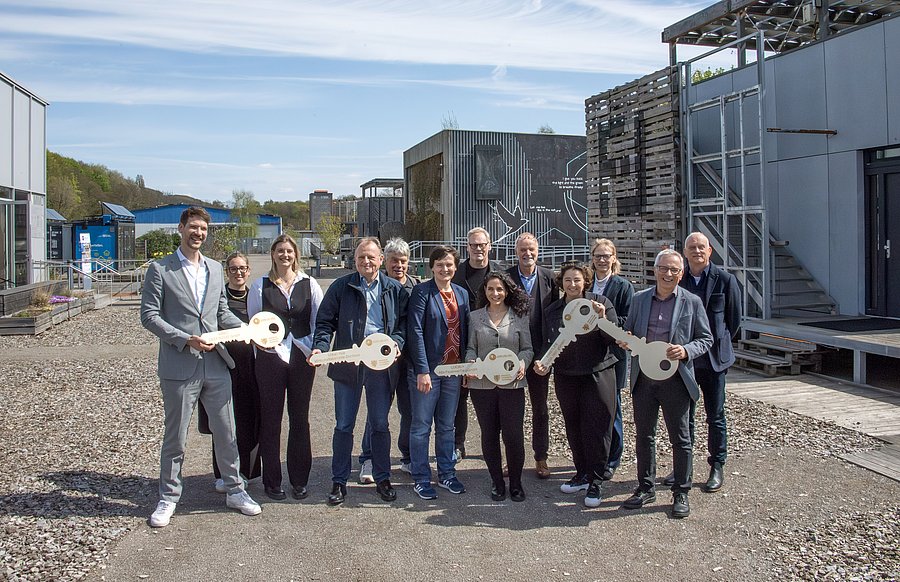
A symbolic handover of keys at the Living Lab: joining the delighted new homeowners in their celebrations were, among others, project leaders Dr Katharina Simon (6th from left), Prof Karsten Voss (5th from right) and University Rector Prof Birgitta Wolff (3rd from right). // Photo: Friederike von Heyden
For more than three years, the School of Architecture and Civil Engineering at the University of Wuppertal used the Living Lab NRW as a real-world laboratory for climate-neutral and sustainable building. Eight buildings designed and realised by students from all over the world served as research, demonstration and communication sites for innovative approaches in architecture, building research and urban development.
Diverse subsequent uses with concrete prospects
With the handover to the new owners, one thing is certain: five buildings will remain in the region. They can now be used to realise new tasks and offers.
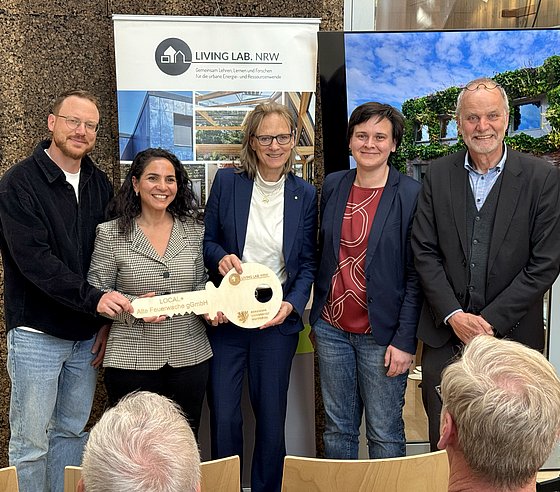
- Haus Local+ (built by students at Aachen University of Applied Sciences) will remain at its current location and will be used in future by Begegnungszentrum Alte Feuerwache Wuppertal gGmbH for community-oriented neighbourhood services. The focus will be on programmes for children and families, for example on nutrition, exercise and mental health. This makes the building an important centre for social infrastructure in Wuppertal's Nordstadt district.
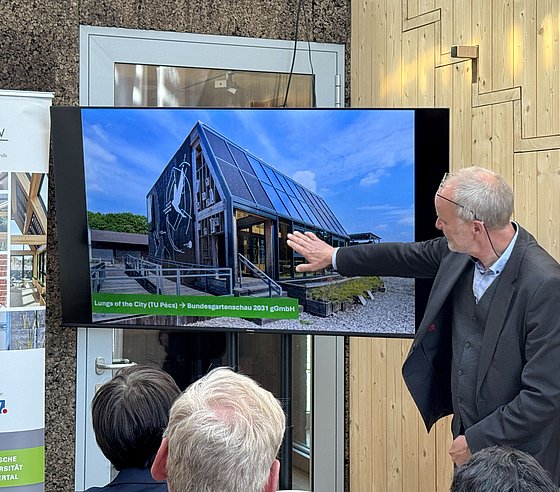
- The Lungs of the City (University of Pécs) and FIRSTLIFE (TU Prague) buildings will go to BUGA 2031 gGmbH Wuppertal and will be further developed as public centres as part of the Federal Horticultural Show 2031. "Lungs of the City" will remain on the Nordbahntrasse, while "FIRSTLIFE" will be relocated to a new location in Wuppertal-Vohwinkel.
- Haus MIMO (HSD Düsseldorf) will be taken over by Deepwood GmbH and, with its new Corten steel façade in Müngstener Brückenpark, will serve as an innovative centre for visitors and a tourist contact point for the Brückensteig and the Bergisch city-triangle. The building will also play a role in the context of the Federal Garden Show 2031.
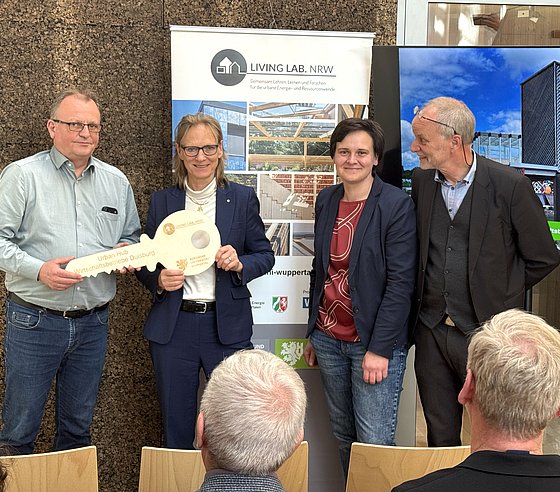
- The Urban Hub information pavilion will be taken over by Wirtschaftsbetriebe Duisburg and used as part of an environmental learning trail and for educational and mediation programmes as part of the International Garden Exhibition 2027.
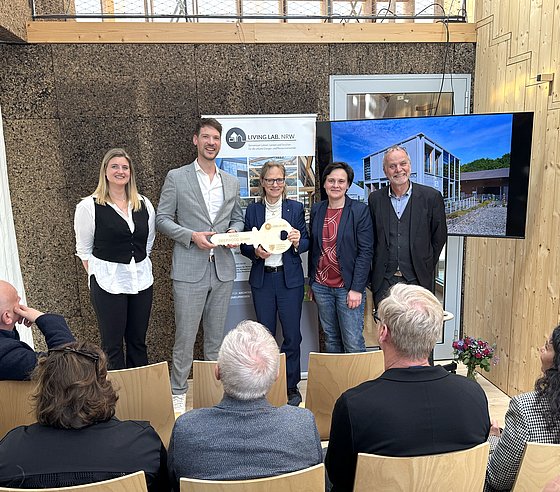
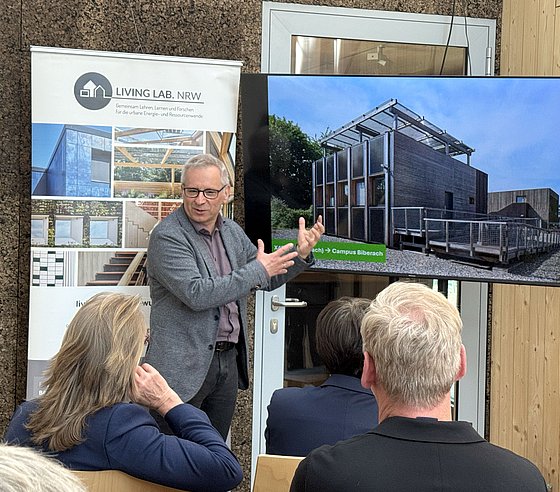
The X4S building (Biberach University of Applied Sciences) will return to Biberach University of Applied Sciences, where it will continue to be used for research and as part of the climate-neutral campus project.
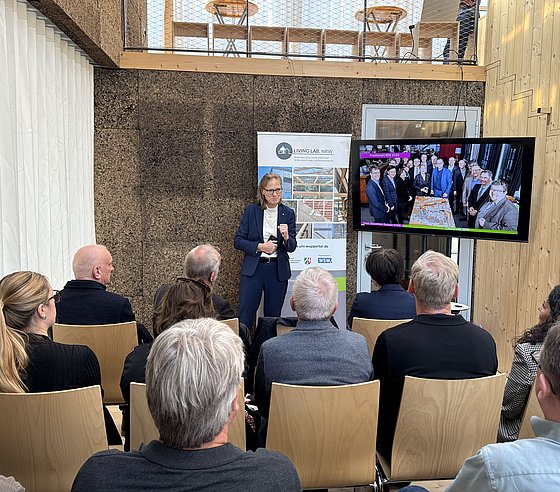
"The buildings stand for innovation, interdisciplinary collaboration and forward-looking, sustainable construction and living in the city. Above all, they have enabled numerous students to not only learn about climate-friendly construction in the lecture hall, but to try it out in practice and help shape it themselves," emphasised project manager Dr Katharina Simon at the handover of the keys on Wednesday afternoon.
Professor Dr Birgitta Wolff, rector of the University of Wuppertal, added: "The various subsequent uses show how a scientifically motivated project can lead to concrete applications in urban society, education, tourism and regional development. This is another way in which the Living Lab NRW has a lasting impact. The Living Lab offers an impressive showcase for the creative opportunities that science can offer to investigate issues that concern us all and to develop practical answers."
In the coming months, the new owners will continue to refine their concepts for the further use of the buildings. The Living Lab NRW project, which is funded by the Ministry of Economic Affairs, Industry, Climate Protection and Energy of the state of North Rhine-Westphalia, will be completed this year. Those responsible for the project are expected to report on the various findings at a closing event in the autumn. The publication of a book with the results is also being planned.


About the Living Lab NRW
With its eight buildings and an innovative local heating network, the Living Lab NRW formed a platform for three years on the topics of sustainable living and climate-neutral construction in cities, combining research, teaching, training and further education as well as dialogue with the public.
The Living Lab NRW emerged from the building energy competition "Solar Decathlon Europe 21/22": In the summer of 2022, international teams of students constructed a total of 16 demonstration buildings in Wuppertal. Eight of these buildings were selected by a jury of experts and remained as publicly accessible research and exhibition objects after the competition.
The project is funded by the Ministry of Economic Affairs, Industry, Climate Protection and Energy of the State of North Rhine-Westphalia (MWIKE). The project partners are Wuppertaler Stadtwerke (WSW), which set up the local heating network in the Living Lab NRW.