Mobility planning
Project launch: LiDiMoVer develops digital twin for traffic analysis
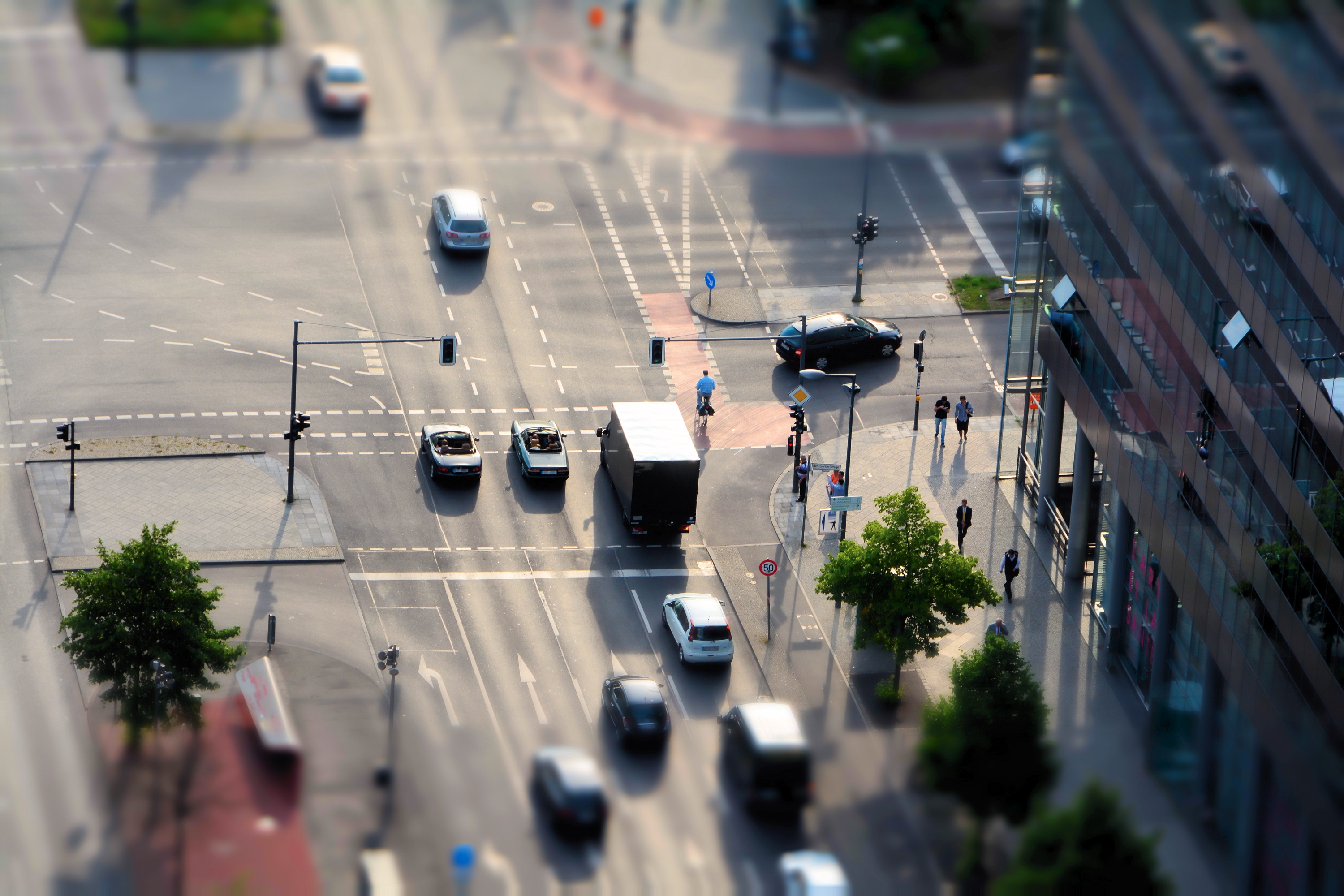
Better and more practical: the LiDiMoVer project is dedicated to AI-supported traffic analysis // Photo Colourbox
"Planning can only be as good as the data on which it is based," emphasises project coordinator Dr Erik Freier from the BUW. This is precisely where LiDiMoVer comes in. In the research project, scientists from the University of Wuppertal are working together with LASE PeCo Systemtechnik GmbH and Ruhr West University of Applied Sciences to optimise the analysis of mobility data from its collection to its preparation for decision-makers.
Developing new services in a targeted manner
What means of transport do people use to get around the city? Where and when is the volume of traffic particularly high? What potential is there for new routing that reduces congestion? In the LiDiMoVer project, data on mobility behaviour is collected using a sensor field, processed with the help of artificial intelligence and combined in a virtual image of real road traffic - a so-called digital twin. The result is intended to make work easier for transport planners and mobility providers, for example. The aim is to make it as intuitive and visual as possible for users. They can use the data to better identify current needs and develop new services in a much more targeted manner.
By recording the data primarily using lidar sensors, the project ensures that the high data protection requirements are met at a technical level. The light-based measuring principle records the surroundings in detail in a so-called point cloud. This is created when the sensor emits laser pulses into the environment, which are reflected by objects and then picked up again by the sensor. In contrast to cameras, this happens independently of lighting conditions and does not allow any conclusions to be drawn about individuals in the point cloud, as distance information is recorded instead of colour information.
AI supports the processing of the data
Even if the traffic cannot be recorded without gaps, for example because not all road sections are equipped with sensors or vehicles obscure each other, the overall picture can be complemented with the help of AI. "The system learns from large volumes of historical traffic data. On this basis, the AI can calculate plausible values for areas where no measurements are currently available," explains sub-project manager Prof Dr Matthias Rottmann. The result is a digital model of current traffic that is as complete as possible.
At the same time, the project is identifying further fields of application in order to create additional added value for mobility planning, mobility providers and smart city strategies. The new system is being trialled in the city of Wesel.
The BUW's Chair of Technologies and Management of Digital Transformation under Professor Tobias Meisen and the Applied and Computational Mathematics working group with Professor Matthias Rottmann are involved. The interdisciplinary centre Machine Learning and Data Analytics under the management of Dr Erik Freier is coordinating the project.
The LiDiMoVer project is funded by the The Ministry of Economic Affairs, Industry, Climate Action and Energy and the European Union as part of the ERDF innovation competition NeueWege.IN.NRW. It focuses on the development of sustainable and digital solutions for the challenges of networked mobility and logistics. The project partners will receive a total of 2.6 million euros. One million euros will go to the University of Wuppertal.