Research co-operation
Ecologically compatible and fully efficient: New materials wanted
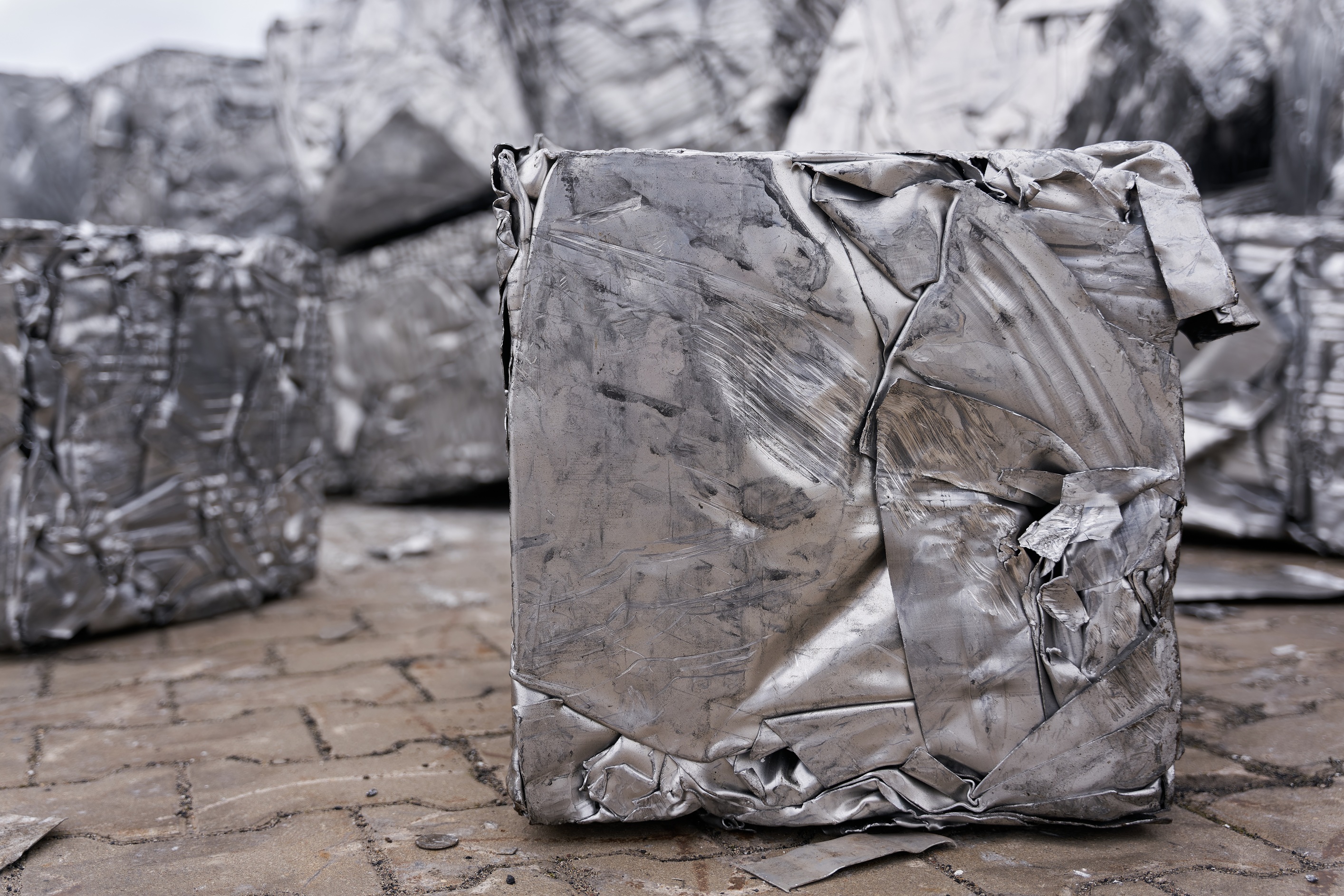
Symbolic image of scrap recycling // Photo Colourbox
Metallic materials such as steel are produced by melting and alloying and moulded using processes such as casting, forging or welding. Their production currently causes 40 per cent of all industrial greenhouse gas emissions. In addition, large quantities of harmful by-products are produced during their extraction. It is therefore imperative that the metallic materials of the future become more sustainable.
The DaMic priority programme funded by the German Research Foundation (DFG) aims to lay the scientific foundations for this. The programme focuses on digital and data-driven methods for material design. The aim is to use these methods to develop materials that are more environmentally friendly, easier to recycle and still perform well. Two basic approaches are being pursued: Materials that manage with fewer chemical additives (alloying elements) and alloys that are particularly tolerant of impurities from secondary raw materials, such as steel and iron scrap.
Prof. Dr Arne Röttger (Chair of New Manufacturing Technologies and Materials), Dr Silja Rittinghaus (Chair of Materials for Additive Manufacturing) and Prof. Dr Jaan-Willem Simon (Computational Applied Mechanics) from the University of Wuppertal are involved in DaMic.
More background on the BUW projects
Recyclability and sustainability of high-speed steels
The sub-project involving Professor Dr Arne Röttger is focusing on new forms of so-called lean high-speed steels (HSS for short). These are primarily used for metal-cutting tools such as drills, milling cutters and circular saw blades. Specifically, the project is about developing design methods based on computer simulations and machine learning in order to automatically optimise the complex relationship between the chemical composition, microstructure and properties of the steels and map them in a digital material model.
"Higher wear resistance or improved properties such as strength often extend the service life and a lean alloy design makes it easier to recycle these steels. In operation, the service life of HSS is short. This leads to many recycling cycles and quantities of material recycled each year. The potential benefits of new HSS are therefore considerable," emphasises Arne Röttger.
The tool steel identified in the research process is manufactured and tested to assess its actual performance and possible limits. Further optimisations are then carried out until the new alloy concept is convincing.
Environmentally friendly aluminium alloys for 3D printing
The next generation of lightweight, environmentally friendly aluminium alloys for 3D printing is being developed by the sub-project in which Dr Silja Rittinghaus is conducting research. Conventional high-performance alloys often use rare and expensive alloying elements such as scandium and lithium. This makes them expensive to produce and difficult to recycle. The approach in the project is different. Silja Rittinghaus: "We are focusing on aluminium alloys with readily available, non-critical alloying elements that can be easier to recycle, more sustainable and yet strong enough for mechanically demanding applications."
By combining modern 3D printing technologies with powerful computer models and artificial intelligence, the project is investigating how alloy recipes and microstructures can be optimised quickly and efficiently. The team's long-term goal is not only to provide more environmentally friendly metals, but also to create a roadmap for accelerated alloy development, paving the way to a circular, resource-efficient economy.
Crossover steels based on scrap recycling
Crossover steels are mixtures of different types of stainless steel that can be produced from one hundred per cent recycled material thanks to their high scrap content. However, these steels still need to be thoroughly analysed. Their chemical composition will differ greatly from the conventional, standardised grades and the proportion of accompanying elements such as phosphorus, sulphur and copper will inevitably be increased by the scrap content. They can lead to problematic impurities and thus to damage to the material.
The project, in which Professor Dr Jaan-Willem Simon is involved, is therefore investigating how steel can be made stronger and more durable and what role the smallest damage inside the material plays in this. "With the help of high-throughput tests, in which many variants are tested simultaneously instead of one after the other, and artificial intelligence, we are analysing many different scrap mixtures in order to understand how impurities affect the steel properties and how recycled steel can still be used specifically for high-performance applications," explains Professor Simon.
More background on DaMic
The aim of DaMic - Data-driven alloy and microstructure design of sustainable metallic construction materials (SPP 2489) is to research digital methods for so-called inverse material design and to use them to develop new, sustainable and recycling-adapted metallic construction materials. Inverse material design means that the researchers do not start with the material, but with the desired properties. They define target parameters such as strength and conductivity, then model the material with the aid of computers and thus pave the way for the production of a new material.
In view of the complexity and the interacting influences on the mechanical properties of the materials, the combination of experiment and digital methods in particular opens up the possibility of identifying suitable constellations in terms of alloy composition, microstructure and properties.
The eleven sub-projects aim to contribute to the establishment of a new field of research at the interface of digitalisation and sustainability.
Further information can be found on the website of the DaMic priority programme.