merry company
New exhibition at the Kunsthalle Barmen highlights different forms of community
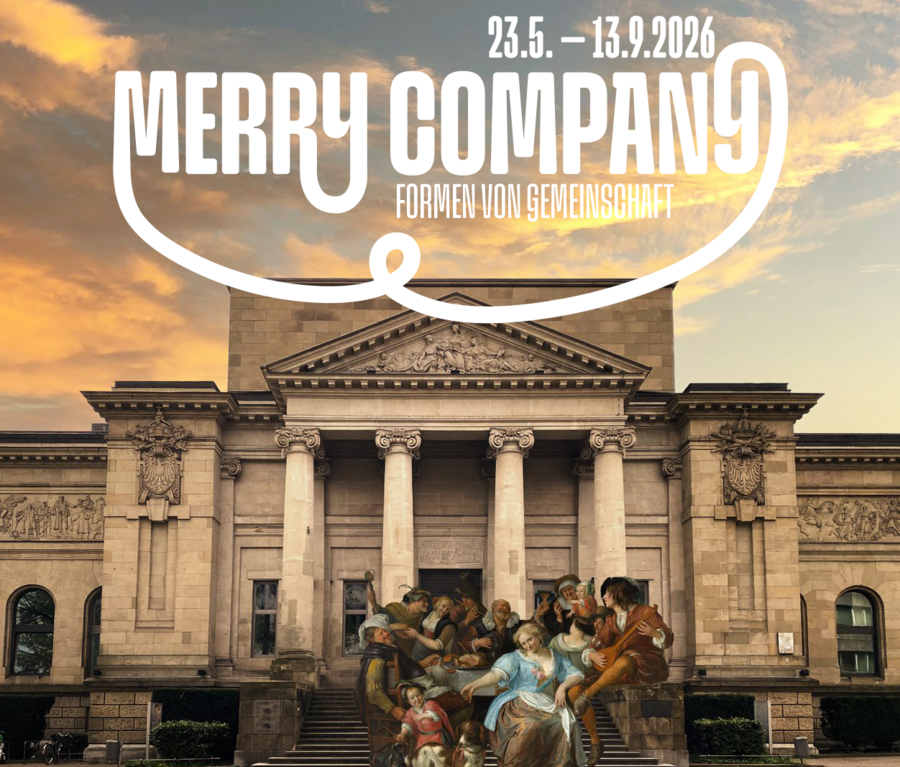
The new exhibition at the Kunsthalle Barmen will open on 23 May.
Whether families, communities, artistic collectives or research networks - people organise themselves in the most diverse forms of togetherness. Communities offer protection, resonance and a sense of belonging, they open up spaces for exchange and new ideas. At the same time, they are always characterised by negotiation processes, conflicts and power relations.
The exhibition "merry company" examines these tensions using historical and contemporary artistic positions and invites visitors not only to observe community, but also to experience it by playing, participating and trying things out together.
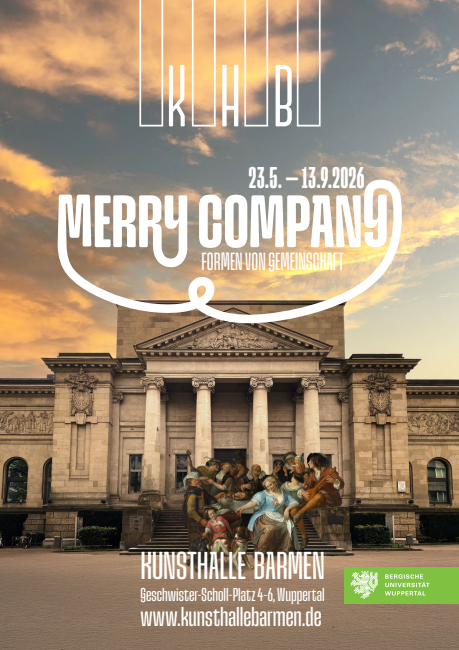
The title of the exhibition refers to a motif from 17th century Dutch painting, where the theme of the "merry company" was particularly popular. "The starting point is a painting by Jan Steen, which shows a merry company on a terrace. Behind the seemingly cheerful scene, a closer look reveals a chaotic excess with humorous allusions to the relationships of those depicted," says Professor Katja Pfeiffer, Director of the Kunsthalle Barmen, about the motif, which is also reflected on the current exhibition poster.
Collective processes and shared authorship
The exhibition spans a wide range from historical genre paintings to urban everyday cultures and questions of collective knowledge production. The exhibition includes artistic collectives: the student collective "Wir sollen eine Gruppe gründen" (We should form a group), whose members did not know each other beforehand and were brought together from three universities, developed an expansive painterly-sculptural work that changes during the duration of the exhibition and thus makes negotiation processes visible. Another student collective translates individual drawings into embroidery and invites visitors to participate and become part of the anonymous collective "mackerinnenanstalt" themselves.
Research networks and their interconnections - from the smallest exchange to global structures - will also be addressed, as will parlour games, to which the artist and game developer Josef Kirschner invites visitors on site. Other artistic positions examine which systemic influences promote or prevent communities.
In Cornelia Schleime's work, for example, it becomes clear how drastically political intervention by the Stasi in the GDR could influence collective and individual artistic work. Meltem Er's photo series "Türkler in Deutschland / Zwischen Blicken" shows how communities develop dynamically within a society, while Valerie Feldhaus interweaves the microcosm of the Café Bar Mazzino in Wuppertal with literary quotations from Else Lasker-Schüler in a video installation.
Institutionally, the project is also a collaborative process: the Kunsthalle Barmen is cooperating thematically with the Pina Bausch Centre for the exhibition, thus continuing its approach of linking art, science and urban society.
Regular events as part of the exhibition
Every Sunday at 3 pm: Guided tour through the exhibition
Every first Saturday of the month: FAMILY AND FRIENDS with creative stations for children, young people and anyone who wants to!
Every first Thursday of the month: SILENT MODE, same exhibition, fewer barriers
Guided tours and workshops for groups: trommer[at]uni-wuppertal.de
About the Kunsthalle Barmen
The Kunsthalle Barmen in the Haus der Jugend, which will reopen in 2024, is run by the university of Wuppertal and funded by the Landschaftsverband Rheinland and the city of Wuppertal. Since its reorientation, exhibitions have included "Shared Spaces", "Fertile Structures", "Do Worry Be Happy", "EX NIHILO" and, most recently, "effort + flow - Mathematics and Art in Exchange". In close collaboration with students, cultural institutions and regional partners, new formats of cultural education and mediation are created.
Collaborations exist with the Pina Bausch Centre, the Von der Heydt Museum, the Wuppertal Institute, Utopiastadt and universities such as the Düsseldorf Art Academy, the Düsseldorf University of Applied Sciences and the Folkwang University of the Arts. Schools from the region are also regularly involved through educational programmes.
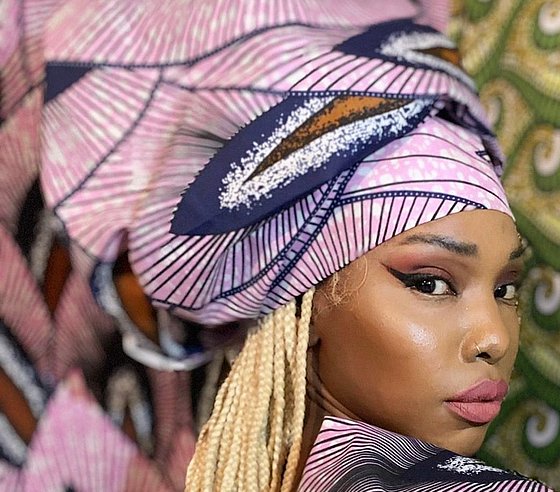
The Wuppertal artist Babu Noella is part of the new exhibition at the Kunsthalle Barmen.
Artist Bodo Berheide shows his "figura magica" as part of the exhibition.

Artist Kati Heck presents a wood sculpture entitled "Unshaven and far from home - marginalised group regulars' table".
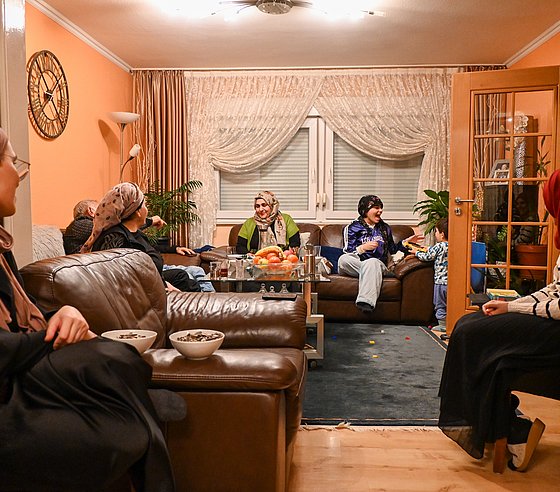
Insight into the photo series "Türkler in Deutschland / Zwischen Blicken" by Meltem Er.