New contact person
Mareen Dusi is further developing the Bergische University’s alumni network: “So many new ideas can emerge when people come together”
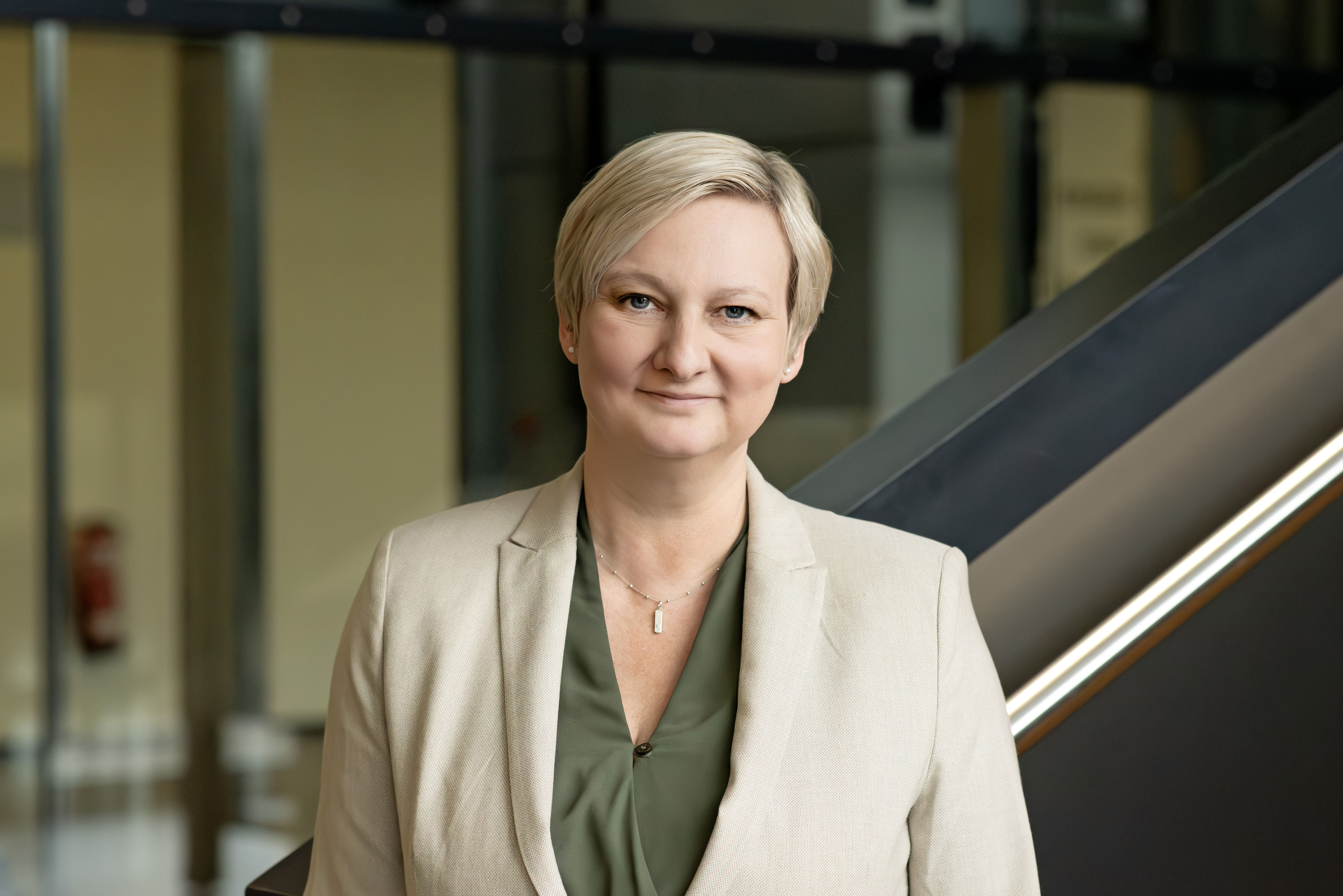
Mareen Dusi // Photo: Friederike von Heyden
Ms Dusi, there’s no doubt about it: you know the BUW well – as a student, alumna and member of staff. And yet – and that’s the beauty of it – there’s always something new to discover at the university. What are you most looking forward to in your new role?
Dusi: Basically , this is exactly what I’m looking forward to: discovering even more new things at the University of Wuppertal and sharing them with others. Even after several years in foundation and partnership management, during which I’ve been in regular contact with various university departments, I’m constantly amazed by the diversity of our university – an impression I didn’t have to the same extent during my studies or my previous role at the faculty.
My aim, therefore, is not only to inspire students, alumni and former staff to take an interest in their respective disciplines, but also to introduce them to the full breadth of the university and to connect different stakeholders with one another.
The great thing is: I’m not doing this on my own. Many faculties already have active alumni coordinators. I’m very much looking forward to exchanging ideas with them too, and I’m keen to work together to develop and implement innovative ideas.
Why is it worth staying in touch with the University of Wuppertal? What makes the university’s existing alumni network special?
Dusi: The university offers so many opportunities to look beyond your own horizons. Speaking from my own experience, I can say that it’s well worth it – even as a German studies student, for example – to take part in a guided tour of the high-voltage laboratory. After all, such interdisciplinary activities bring people together – as is evident, for example, during guided tours as part of our ‘Get-in-Touch Lounge’ or over a glass of mulled wine at the campus Christmas market. They foster a sense of connection to the university and broaden not only your personal horizons but also your professional network. And the value of such a network should not be underestimated. Whether it’s friendships, professional relationships or simply socialising – so much can emerge from these encounters. The university provides the setting for this.
That does indeed sound inviting. Let’s take a closer look: in future, you’ll also be overseeing the Friends and Alumni of the University of Wuppertal, FABU. Could you give us a glimpse into your plans? Which tried-and-tested formats do you intend to continue, and which new ideas do you plan to pursue?
Dusi: FABU is firmly anchored in the foundations of our alumni work: as a bridge between research and industry. It supports us – including financially – in organising university events and promotes research at the University of Wuppertal. A key focus here is on the targeted support of early-career academics.
We are continuing with tried-and-tested formats that reinforce precisely this focus: the awarding of young talent prizes for PhD students, Master’s and Bachelor’s graduates, as well as the open and accessible funding scheme for all university members, which allows applications for financial support – for example, for excursions, conferences and research projects – via a simple online form.
In addition, we are continuing to establish department-specific alumni sections under the umbrella of FABU to facilitate targeted networking and subject-specific support. We are strengthening the involvement of emeritus professors so that they can actively participate in FABU and alumni events and contribute their wealth of experience in research and the support of early-career researchers.
Alongside research-related activities, FABU also offers social events that strengthen the sense of community: the well-established summer party, as well as special premium events for members, such as this year’s planned suspension railway lecture in the imperial carriage or the cooking session with the Executive Board at Vorwerk. These events serve to facilitate informal exchanges between students, alumni, staff, businesses and the wider local community.
In this way, we are creating a vibrant network and, together, strengthening the innovative capacity and research culture of the University of Wuppertal.
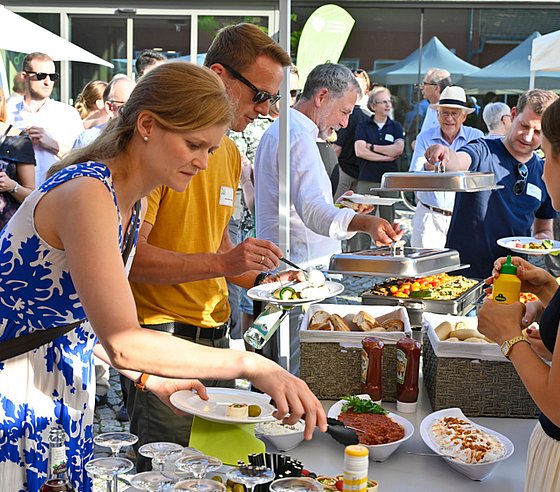
The alumni network of the university of Wuppertal regularly offers its members special opportunities to meet and exchange ideas. These include the FABU Summer Party... // Photo: Michael Mutzberg
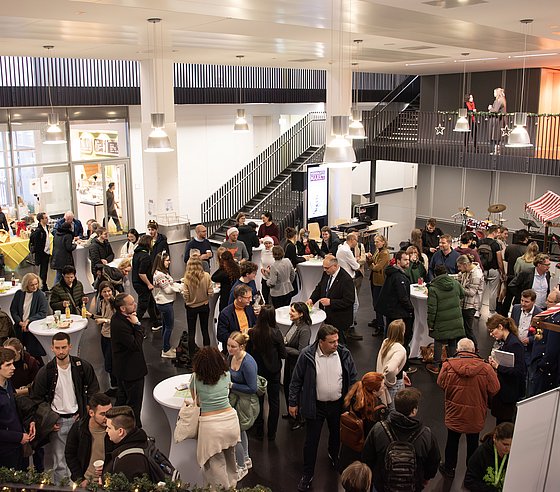
... the Campus Christmas Market ... // Photo: Friederike von Heyden

... and the graduates’ celebrations, including the university ball at the Historische Stadthalle. // Photo: Malte Reiter
Alumni work does not begin only when degrees are awarded. Tomorrow’s alumni are today’s students. What does that mean for BUW and its approach?
Dusi: Alumni work naturally begins whilst students are still studying, not just when they graduate. In recent years, the graduation culture at our university has changed significantly: whilst my degree certificate was simply handed to me at the Examinations Office back then, graduates today receive their certificates at formal graduation ceremonies in the Historische Stadthalle. These events leave a lasting impression and strengthen students’ ties to the University of Wuppertal in the long term.
To make this positive experience possible even earlier, I am focusing on several points of contact. The Alumni Relations section aims to be present at all relevant student events and to offer specific opportunities for involvement whilst students are still studying.
In addition, we are capitalising on synergies with the Career Service, the Foundation and Cooperation Management team – and, in particular, with the Deutschlandstipendium office, where I also work. Well-established programmes already exist in these areas, which specifically open doors for students to companies and other external and internal stakeholders, thereby helping them to build their networks.
Another crucial element is our collaboration with the faculties. This is where we can strengthen ties in a particularly targeted way, as students identify strongly with their own subject area. A positive image lays the foundation for graduates to return to the university later on – not just to attend events, but also, for example, to give lectures themselves, arrange work placements or job offers, or share their professional experiences with new generations of students.
Finally: for anyone who’s now keen to join this vibrant network – what’s the quickest way to become part of it?
Dusi: It’s very simple: former students, staff and professors are all warmly welcome to join our free alumni network. Anyone interested can find out how to join on our website under the ‘Alumni Network’ section. Anyone who’d also like to join FABU can sign up via the FABU website. Both memberships can also be combined. We look forward to welcoming lots of new members at our next event.
More information
All information relating to Alumni Relations can be found on the website: www.alumni.uni-wuppertal.de