Focus on the Circular Economy
Humboldtⁿ: Early-career researchers forge links with industry and research
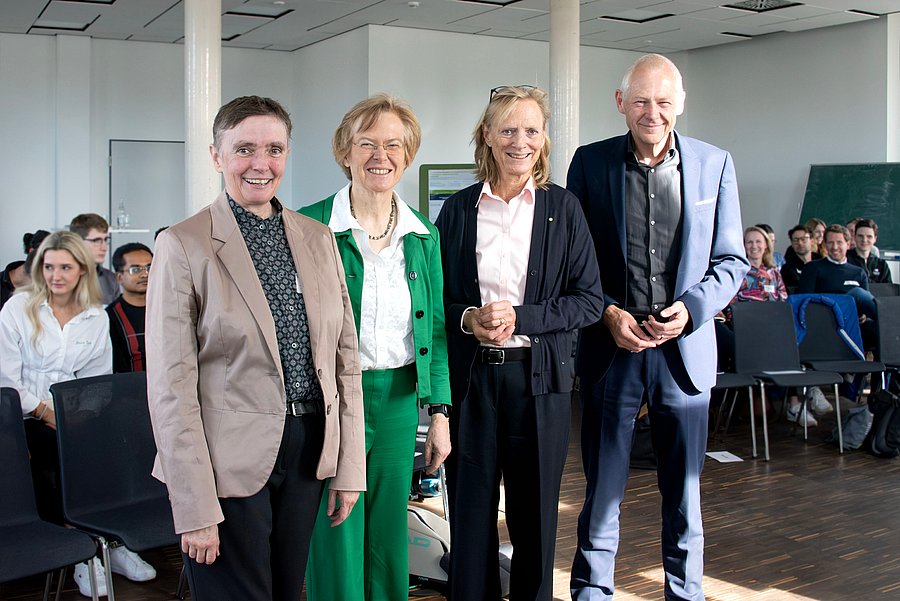
The Humboldtⁿ School was opened by (from left to right): Professor Dr Dr Friederike Welter, Professor Dr Stefanie Reese, Professor Dr Birgitta Wolff and Professor Dr-Ing Manfred Fischedick. // Photo: Friederike von Heyden
How can a successful circular economy be developed? How can this be achieved in the specific context of e-mobility? From 23 to 25 September, a total of 27 outstanding PhD students from seven North Rhine, in particular the RWTH Aachen ‘Circular E-Cars’ Research Training Group, the Wuppertal Institute and universities of applied sciences, with experts from the field. Under the motto ‘Focus on the Circular Economy – Research, Networking, Transformation’, circular value chains in the industrial and raw materials sectors were analysed and discussed. The focus was on the recycling potential of electric cars. Inspired by input from experienced researchers, participants from various disciplines also exchanged views on their own research projects through interactive sessions.
How the circular economy can contribute to transformation in North Rhine-Westphalia
In her opening address, Prof. Dr Dr Friederike Welter, a member of the German Federal Government’s Expert Commission on Research and Innovation (efi), President of the Institute for SME Research in Bonn and holder of a chair at the University of Siegen, emphasised the ever-increasing relevance of science-based advice in the economic transformation process. Drawing on her research as well as her practical experience at the interface between business, politics and academia, she highlighted the transformative achievements of small and medium-sized enterprises in particular. The subsequent project presentations by early-career researchers outlined approaches to circular value chains, using electric vehicles as an example.
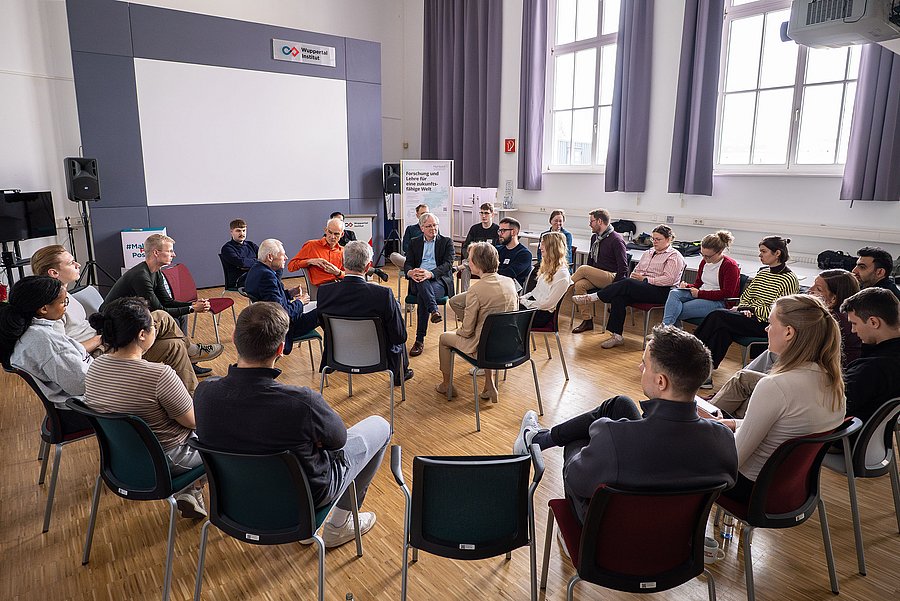
How can a successful circular economy be developed? How can this be achieved in the specific context of e-mobility? Outstanding PhD students from seven universities in North Rhine-Westphalia discussed these questions with experts in the field. // Photo: Wuppertal Institute/L. Schenk
“Excellent support for young researchers is essential for a successful transformation in North Rhine-Westphalia,” says Prof. Birgitta Wolff, spokesperson forHumboldtn and rector of the university of Wuppertal. “The potential here for interdisciplinary exchange within academia and with industry is enormous, particularly when it comes to the circular economy. This is especially true with regard to the recyclability of electric vehicles. The scientific expertise being developed and strengthened through ourHumboldtn initiative in North Rhine-Westphalia also contributes to the successful shaping of the transition in the Bergisches Land,” Wolff continued.
Interdisciplinary and transdisciplinary collaboration is also a cornerstone of sustainability research at the Wuppertal Institute, and so Prof. Dr.-Ing. Manfred Fischedick, President and Scientific Director of the Wuppertal Institute as well as co-spokesperson forHumboldtn, fully supports the School: “During the advisory sessions with early-career researchers, it became clear not only just how many challenges are associated with the design and implementation of a circular economy, but also what a valuable contribution scientific projects across all disciplines can make to this. Through creative forms of collaboration, North Rhine-Westphalia in particular can provide important impetus for this transformation.”
The field trips – to Aptiv in the Bergisches Land and to Speira in the Rhineland mining region – vividly illustrated the specific needs and key challenges facing regional industry, as well as the opportunities associated with structural changes and sustainable transformation. The visits provided food for thought and new inspiration for the participants’ own projects. To conclude, the participants reflected on the start-up potential of their research work during a workshop organised by the Start-up Centre at the University of Wuppertal.
Further information on Humboldtⁿ
The Humboldtⁿ initiative was founded in 2021 by the 16 universities in North Rhine-Westphalia, in collaboration with the Wuppertal Institute, to promote sustainability within the higher education sector. Since 2023, the University of Wuppertal has been represented by its rector, Prof. Birgitta Wolff. Humboldtⁿ serves as a platform for pooling research and knowledge transfer and supports interdisciplinary collaboration to tackle the major challenges of our time.
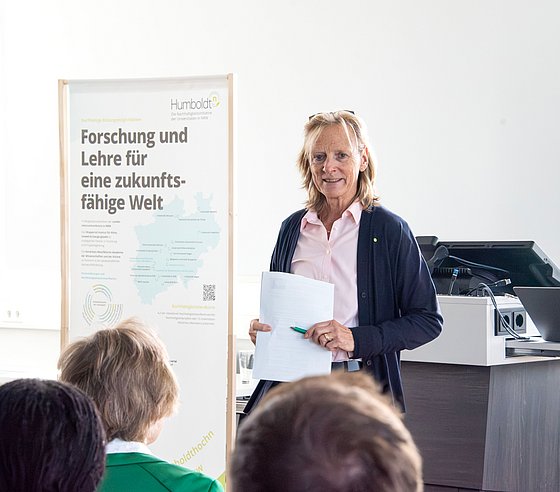
Prof. Dr Birgitta Wolff, spokesperson for Humboldtⁿ and rector of the university of Wuppertal, welcomed the participants at the Humboldtⁿ School 2026. // Photo: Friederike von Heyden
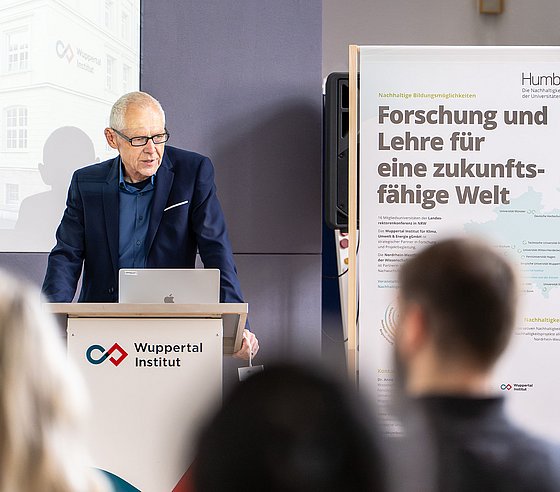
Prof. Dr.-Ing. Manfred Fischedick, President and Scientific Director of the Wuppertal Institute and Co-Spokesperson for Humboldtⁿ, gave a keynote address to welcome the attendees. // Photo: Wuppertal Institute/L. Schenk
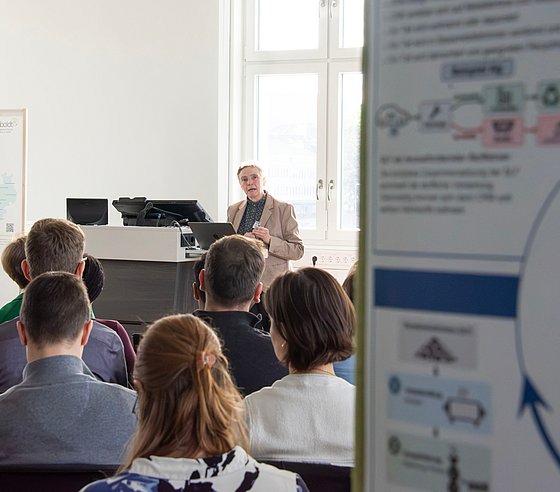
Prof. Dr Dr Friederike Welter, President of the Institute for SME Research in Bonn and holder of a chair at the University of Siegen, delivered a keynote speech at the opening. // Photo: Friederike von Heyden