Better supply
Digital helpers for psychotherapy - University of Wuppertal researches new services for children and young people
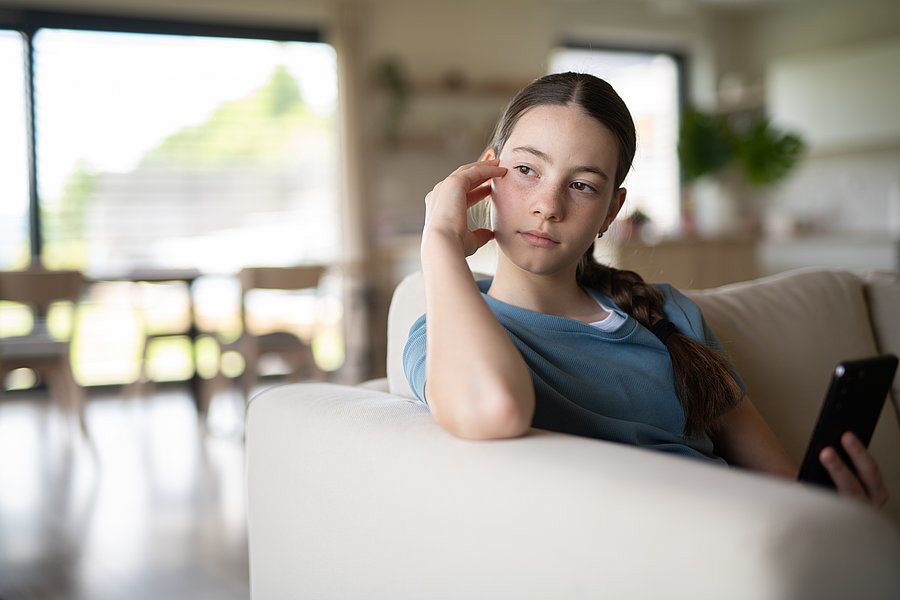
In everyday life, digital technologies such as smartphones or smartwatches can increasingly be used to collect information about behaviour, feelings or activities - for example by asking short questions via an app or using sensors that record movement or location data.
"Such information is becoming increasingly important for professionals in child and adolescent psychology and psychotherapy," explains Dr Bodo Przibilla, who is responsible for the study at the Chair of Clinical Psychology and Psychotherapy of Childhood and Adolescence at the University of Wuppertal together with Professor Aleksandra Kaurin.
Participants wanted
In the CARE-MAP study, the two researchers and their team want to find out how young people, parents and guardians evaluate the methods of digital data collection in everyday life. "We are interested in their opinions on whether such technologies are perceived as helpful or rather burdensome in therapeutic use, what concerns exist and what is particularly important when using such methods," reports Przibilla.
The study is aimed at young people between the ages of 14 and 18 as well as parents of children of all ages and other guardians. It consists of a one-off anonymous online survey that takes around 15 minutes to complete.
Take part in the study (link to the questionnaire)
Taking therapy to a new level
The data collected via the digital applications, such as movement, heart rate and ambient noise, as well as personal feelings, moods and experiences, are particularly valuable for basic and therapeutic research. For example, they help in diagnostics and in better planning treatments, aligning them with the reality of children and adolescents' lives and quickly recognising and assessing patients' risk states. The data can also provide practical support in the therapy sessions themselves.
Bodo Przibilla: "Thanks to digital methods, the work is not just limited to the practice rooms. As therapists, we can support our patients much more closely. For example, if young people use an app in which they immediately enter their feelings about a certain situation, or we see in the therapy session that their heart rate was elevated at certain times during the week, we can address this specifically in the therapy session and get to the bottom of the causes. We get straight into the topic without having to rely on handwritten questionnaires or memory logs." This gives therapists, for example, a much clearer picture of their patients' emotional states and their regulation.
Prompt use in practice is the goal
In order for such digital methods to be used and be effective, patients need to trust them. "Previous studies on acceptance and reliability often come from the USA, have a different focus and cannot be easily transferred to the situation of young patients and their families here in Germany. We want to change this with CARE-MAP," summarises Przibilla. The aim of the chair, which also has its own psychotherapeutic outpatient clinic for children and adolescents, is to research the methods of data collection for Germany and ultimately to be able to use them in therapy in a timely manner based on scientific findings and taking into account ethical and data protection issues.
Detailed information on the study and how to take part can be found on this website: care-map.uni-wuppertal.de