On the 100th birthday of Siegfried Lenz
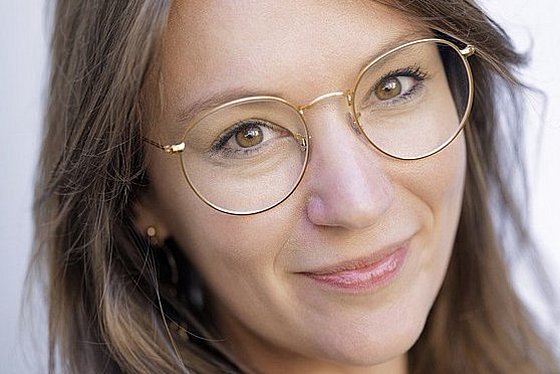
Dr Sabrina Huber / Modern German literary history
Photo: ©Ralf Schultheiß
Fundamental conflicts of modern societies
German scholar Sabrina Huber on the 100th birthday of Siegfried Lenz
He was one of the best-known German-language narrators of post-war and contemporary literature and would have celebrated his 100th birthday on 17 March: Siegfried Lenz. He is now part of the compulsory programme in schools. Why is that?
Sabrina Huber: Siegfried Lenz is part of the school canon because his texts exemplify how literature narrates political experiences. These texts make the fundamental conflicts of modern societies visible. A novel like Deutschstunde in particular, which is still "the" Lenz book today, deals with central issues of post-war society: individual responsibility, obedience, guilt and the difficulty of positioning oneself in authoritarian structures. These conflicts are not only historically situated, but also structural: they concern the relationship between the individual and power, conscience and law. In this respect, they are topical.
This is central to teaching because literature not only illustrates history, but also models political experience. It provides food for thought on how and why people act when they are integrated into political orders. Lenz's texts open up a space in which such conflicts can be discussed without moral simplification. They force us to adopt a different perspective and ask where and how room for manoeuvre arises or is blocked, and also that democratic self-understanding is not a matter of course, but must be constantly renegotiated.
The fact that Lenz is still read today is therefore, I believe, related to the topicality of these questions. His texts are part of a literary discourse in which the (young) Federal Republic of Germany came to an understanding about responsibility and its identity. And that is precisely why they remain important for later generations. When young people read German lessons today, they practise finding their own stance between rules and conscience: This is a central democratic competence.
Critics often speak of a special narrative style that Lenz created. What was so special about it?
Sabrina Huber: When people talk about a special narrative style in Lenz's work, they don't mean a formal avant-garde so much as a different approach to storytelling. His prose is sober, linguistically restrained and focusses on moral conflict situations. Instead of pathos or ideological escalation, he creates scenarios in which characters have to make decisions under political and social conditions.
The combination of narrative clarity and ethical complexity was particularly special. Lenz refrains from making unambiguous judgements and forces us readers to position ourselves. Literature thus becomes a space in which political and moral questions are not asserted but played out in plot constellations. It tells a story as if it were a moral experiment: The characters stand in the room and we have to decide what we think of them.
His behaviour in the Second World War was often discussed later. Why?
Sabrina Huber: Siegfried Lenz belonged to the generation of young men who were drafted into the Second World War. He served in the navy and deserted shortly before the end of the war. As with many writers of the post-war generation, the question was later raised as to how they were personally involved in the National Socialist system and how they dealt with their experiences in literature.
The discussion therefore concerns less a singular scandal than a fundamental examination of biographical involvement and individual responsibility. Precisely because Lenz deals with questions of duty, obedience and conscience in his texts, his own life was also considered in a historical context.
After the war, he first went to university, but then worked for the daily newspaper "Die Welt" for a few years without a degree before deciding to become a freelance writer. That was very brave so soon after the war, wasn't it?
Sabrina Huber: In the young Federal Republic of Germany, a freelance writer's existence was by no means guaranteed. But neither is it today. Lenz had started studying after the war and worked as an editor, so initially he had a relatively stable career path. The decision to devote himself entirely to literary writing was therefore definitely a professional risk.
At the same time, it was part of a larger development: In the 1950s, a new literary field emerged in which authors attempted to establish themselves as independent voices. Something like a new literary public was forming. Authors saw themselves not only as storytellers, but also as actors in the public discourse of a newly democratically constituted society. Lenz's move into freelance writing was therefore also a decision in favour of literature as an independent form of public intervention - not in a party-political sense, but as a contribution to the negotiation of what constitutes us as a society.
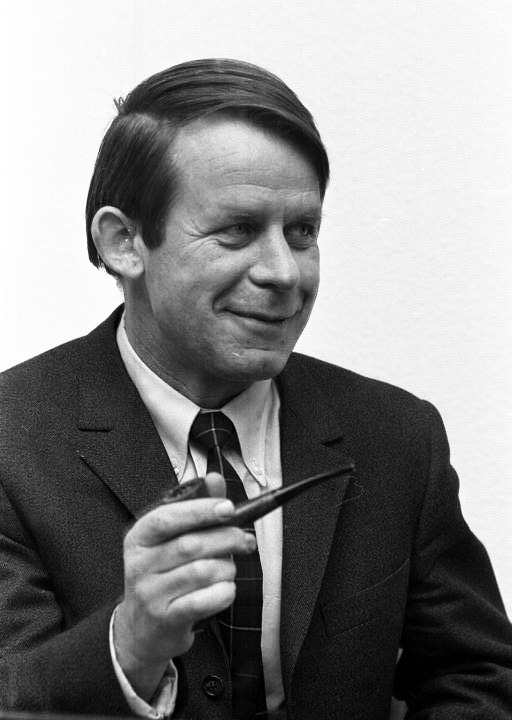
Siegfried Lenz
Photo: Bundesarchiv, B 145 Bild-F030757-0015 / Schaack, Lothar / CC-BY-SA 3.0
Lenz was a regular guest of the literary meeting Gruppe 47. What significance did this group have in German post-war literature?
Sabrina Huber: In the 1950s and 1960s, Gruppe 47 was "the" central forum for West German literature. Here, unpublished texts were read, discussed and debated about literature and society. Recognition was not achieved through institutional authority, but through critical debate within the circle of authors.
Many influential voices in post-war literature - alongside Lenz, for example, Heinrich Böll, Günther Grass, but also the authors of the Ingeborg Bachmann group, of course, who is also celebrating her 100th birthday this year, Ilse Aichinger and Ingrid Bachér, who I had as a guest here at the BUW for a reading in November - set new literary standards in this group and thought about language. After all, how was it possible to speak at all?
Their significance lay less in a common aesthetic programme than in their function as a literary public. In a society that was reorganising itself politically and culturally, the group offered a space in which language, responsibility and the interpretation of the present were negotiated. It made a significant contribution to literature being recognised as a serious instance of public self-understanding in the Federal Republic of Germany.
At the age of 82, Siegfried Lenz wrote his first love story. With around 360,000 copies sold, the novella "Schweigeminute" was the surprise success of 2008. Die Zeit wrote: "Rarely have we read something so chaste, something so erotic." What fascinates readers so much about Lenz's language?
Sabrina Huber: What can fascinate readers about Lenz's language is the combination of extreme restraint and physical intensity. The decisive moments are not exhibited or even embellished, but told almost casually. There is no kitsch, no hackneyed love language. When the first-person narrator Christian says in Schweigeminute, for example: "I felt her breathing, the slightly quickened breath, I felt the touch of her breast, I kissed her once more, and now she released herself from my embrace and moved to the bed without a word", it is neither excessive nor metaphorically exaggerated. The effect arises from the repetition, from the concentration on perception and from the sobriety of the syntax, but also in this break, this casualness; just kissed and then "moved to the bed without a word." This linguistic sobriety creates a peculiar tension that can be perceived as both chaste and erotic. Lenz explains nothing, he trusts his readers to think along with what he has not said.
Shortly before his death, around 80 previously unknown poems by him were found, which are said to have been written between 1947 and 1949. They deal with his war experiences and the problems in post-war Germany. Why have they still not been published?
Sabrina Huber: Lenz did not publish these poems during his lifetime. We don't know why, because he didn't explicitly say anything about it. Presumably because he saw himself early on as a literary narrator. His work is almost exclusively prose. I can't look inside him, but many writers write poetry at a young age without later considering it part of their actual work. The poems obviously belong to a search phase immediately after the war. The fact that these texts are now appearing in the estate makes them interesting in terms of literary history, but their non-publication is not a scandal, but rather an expression of a deliberate work policy. But far be it from me to speculate about internal reasons. That makes literature neither better nor worse, we should simply read it.
How do we remember him on his 100th birthday?
Sabrina Huber: We remember Lenz not only as a writer of great stories, but also as an author who saw literature as a place of moral scrutiny. His texts revolve around responsibility, decision, loyalty and conflicts of conscience. These are themes that are not tied to any one era. And they seem topical and urgent to me right now. When we read it today, it is less with nostalgia than with scrutiny: What does attitude mean? How does individual action have a social impact? What does it mean to be part of a democratic society? Lenz's work reminds us that literature is a space in which political and ethical questions are played out narratively - not with slogans, but with characters - and this seems to me to be urgently necessary in view of the political tendencies, our current concern about democratic attitudes in the face of authoritarian temptations, which we are probably all worried about.
Uwe Blass
Dr Sabrina Huber is a research assistant at the Chair of Modern German Literary History at the University of Wuppertal.