Personnel
New professor strengthens AI research at the university of Wuppertal
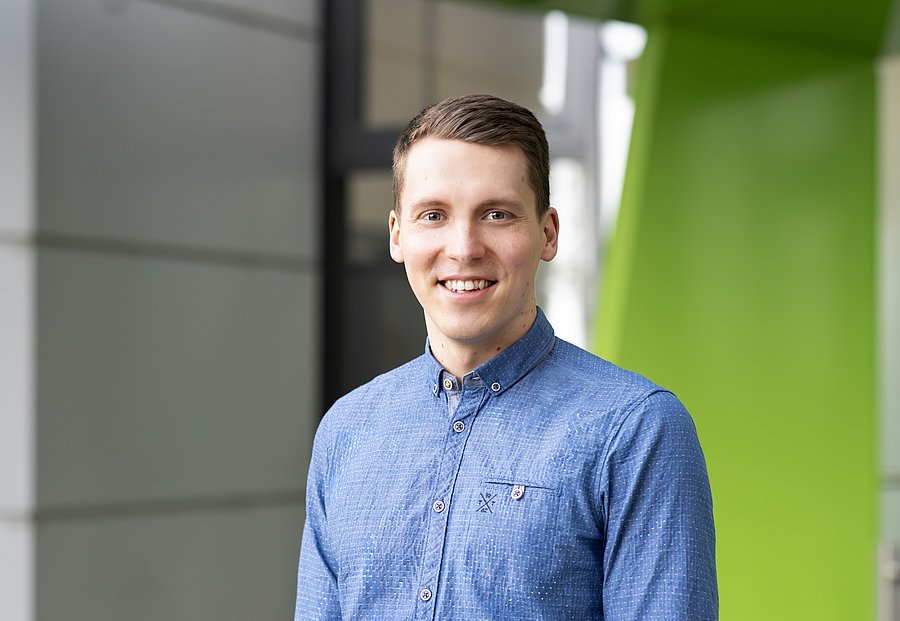
Prof Dr Sebastian Kassing // Photo Friederike von Heyden
"In practice, artificial intelligence often delivers astounding results and significantly simplifies many work processes. But how can we ensure that the decisions and results of AI processes are comprehensible and reliable? My research deals with precisely this question," explains Kassing.
At the centre of this is the precise quantification of uncertainties in data-driven models: How reliable are predictions made by neural networks? How can uncertainties be visualised in an understandable way and incorporated into decisions? And which training methods and architectures lead to stable and generalisable models?
To answer these questions, Kassing combines methods from stochastics, analysis, geometry and optimisation. The aim of his work is to take machine learning out of the black box and create a mathematical basis for comprehensible and responsible AI applications - with relevance for areas such as medicine, mobility, business and industry.
About the person
Sebastian Kassing comes from the Technical University of Berlin, where he most recently headed a junior research group on stochastic analysis and quantitative financial mathematics. Prior to this, he was a postdoctoral researcher at Bielefeld University. The 30-year-old completed his doctorate at the University of Münster with a thesis on stochastic approximation focussing on applications in machine learning.